What the thing is
Causa limeña is a cold, layered potato dish with lemon and fillings, served in portions shaped like small cakes or terrines.
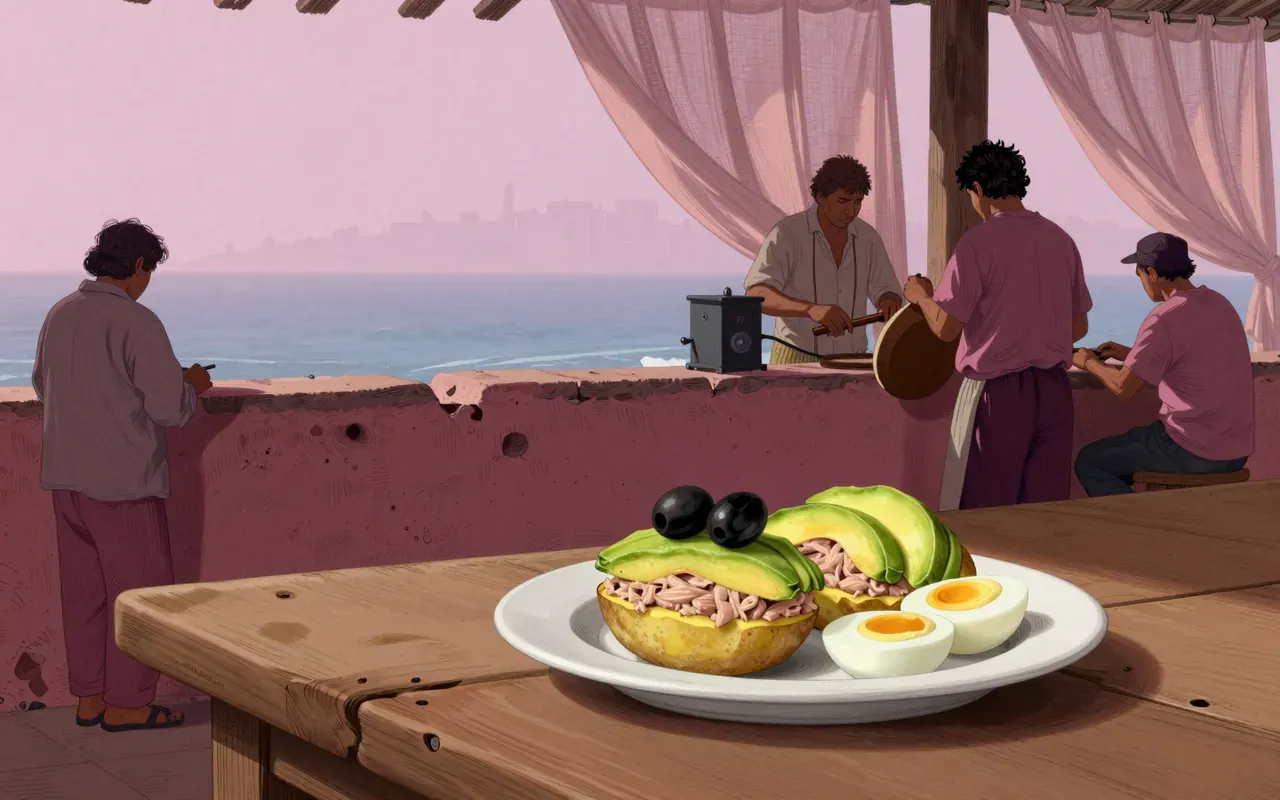
Causa is a sort of mini-casserole: the top and bottom are yellow potato and the filling is typically white meat. In ancient Peru the potato was kneaded with crushed chilli peppers. The traditional version uses yellow potato, lemon, boiled egg, yellow chilli pepper and black olives, with avocado in the stuffing and lettuce as decoration, and it is served with a light coating of mayonnaise. Fillings vary widely: tuna, trout, chicken, shellfish, and in some cases spider crab or octopus. The dough can also be made from lima beans or yellow yuca.
Where it came from
It began as an unnamed pre-Columbian preparation. Lemon was added during the Viceroyalty era. It acquired its name and civic function during José de San Martín’s independence campaign in Lima.
The name itself is less settled than the story suggests. One hypothesis derives it from the Quechua kawsay, “necessary sustenance”, a name also given to the potato, and the historian Rodolfo Tafur reads the Quechua word as “life” or “giver of life”. The San Martín account — the dish sold on street corners to pay for the campaign, “por la causa” — is one explanation among several, and it may instead have been a patriotic dish of the Peruvian-Chilean Pacific War, when women offered the cold dish to soldiers. In the northern city of Trujillo, causa names any spicy dish. The Peruvian executive chef Nilo Do Carmo calls it “pure Peruvian patriotism even to this day”.
What it gets right
It names a dish after a cause. It turns sustenance into solidarity.
What it gets wrong
It implies continuity where there is rupture. Pre-Columbian roots do not make it the same dish sold in 1820s Lima.
Why it matters now
It shows how street food can become infrastructure for resistance—long before hashtags or crowdfunding.
Is it worth your time
Yes—if you care about how food encodes political action, not just flavour.