What the thing is
Olive oil is a vegetable oil obtained by pressing whole olives and extracting the oil.
It is used for frying, as a condiment and as a salad dressing, and also appears in cosmetics, soaps and fuel for traditional oil lamps. Its composition varies with the cultivar, altitude, time of harvest and extraction process, but it consists mainly of oleic acid. Extra virgin olive oil is required to have no more than 0.8% free acidity and is mostly used raw, since its flavor is stronger when heat has not compromised it.
Where it came from
Wild olives originated in Asia Minor. Olive trees have been cultivated around the Mediterranean since the 8th millennium BC.
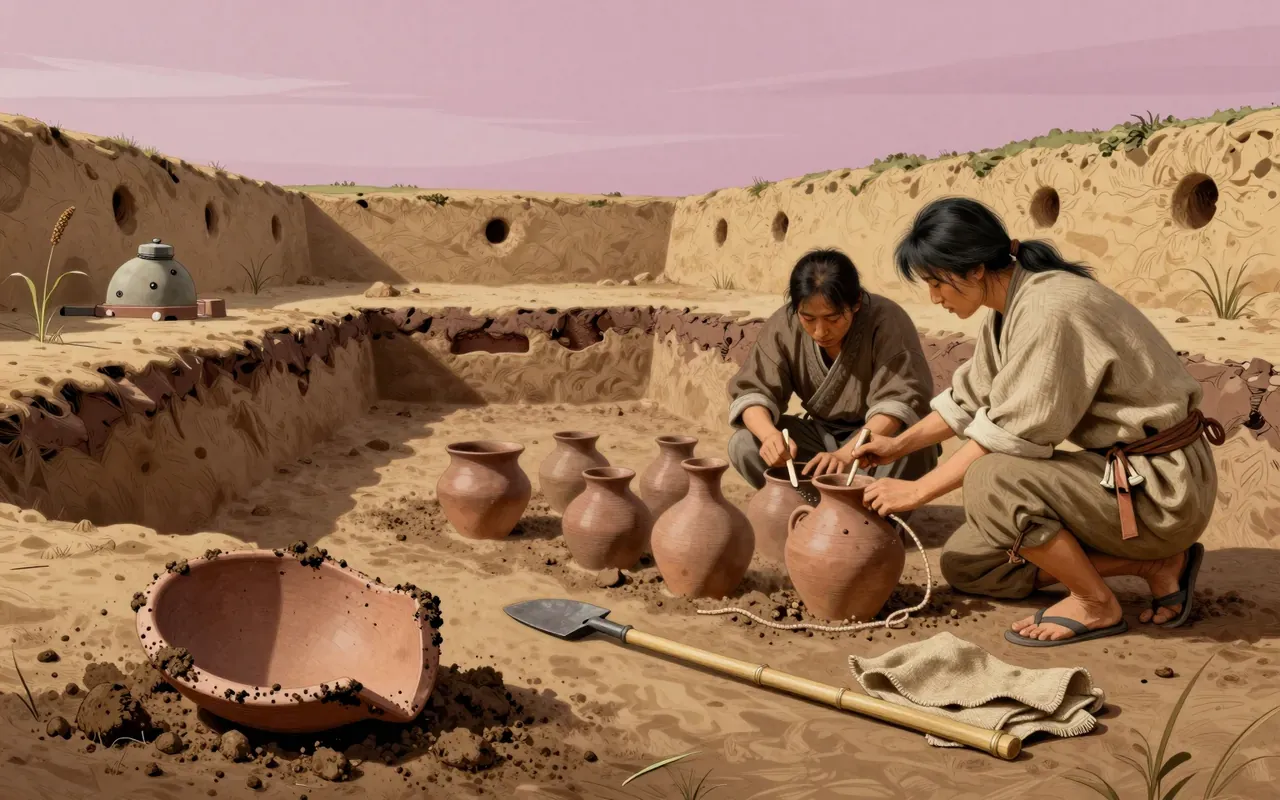
The exact date and place of domestication are unclear. The modern olive tree may have originated in ancient Persia and Mesopotamia and spread to the Levant and later North Africa, though some scholars argue for an Egyptian origin. Archaeological evidence in Galilee shows olives being turned into oil by 6000 BC. The earliest surviving olive oil amphorae date to 3500 BC, from Early Minoan times, and olive trees were certainly cultivated in Crete by the Late Minoan period. Phoenicians spread the tree westward, Greek colonies carried olive farming to places like Spain, and it continued to spread through the Roman Empire. Olive trees reached the Americas in the 16th century.
What it gets right
It establishes the olive as one of three core food plants in Mediterranean cuisine, alongside wheat and grapes.
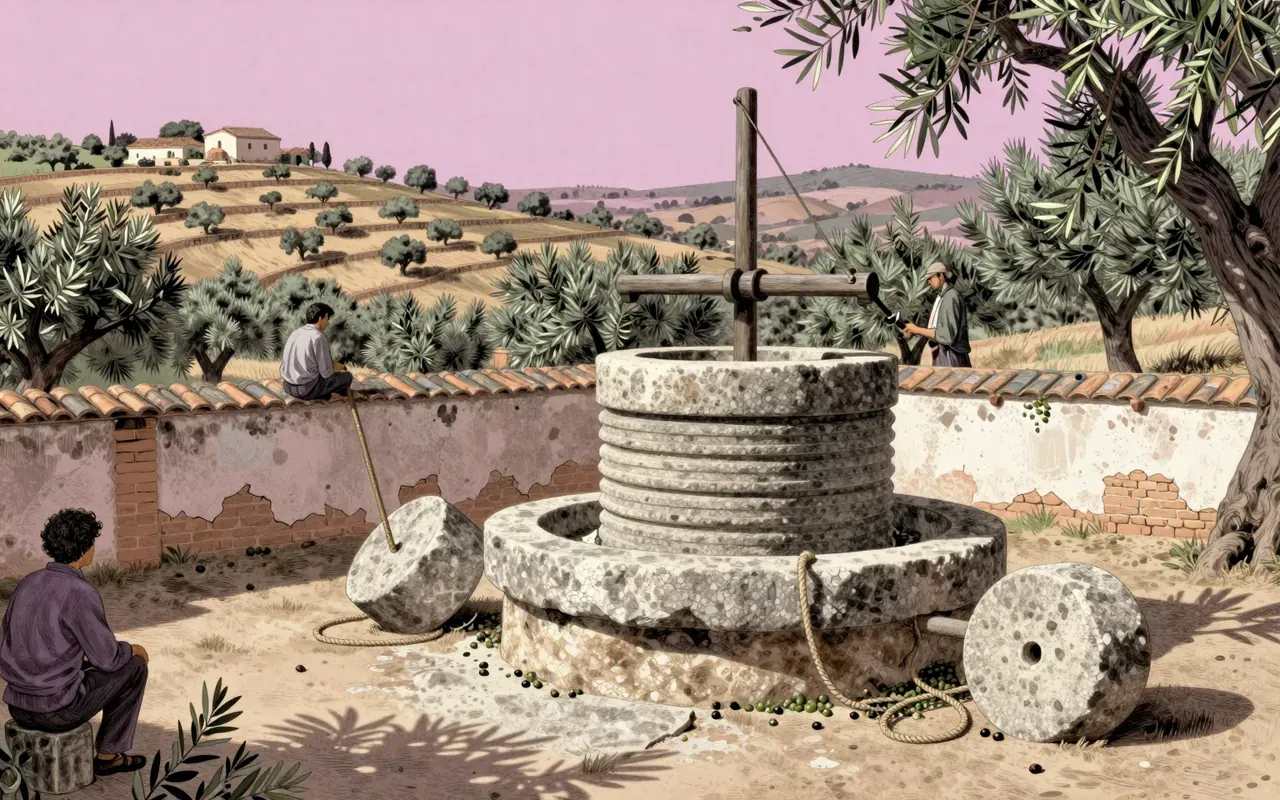
Virgin oil is made mechanically. Ripe olives are ground to a paste, traditionally under millstones. The paste is then stirred, a step called malaxation, so that microscopic oil drops gather into larger ones, and the oil and water are pressed out and separated, traditionally by gravity and now by centrifuge. Oil produced by mechanical means alone is called virgin oil. Underripe olives usually give an undesirably bitter oil and overripe olives can give oil with fermentation defects.
What it gets wrong
Nothing is claimed about what it gets wrong — the sources do not evaluate flaws, limitations or failures of olive oil.
Why it matters now
It anchors a 10,000-year continuity of human food practice — from Neolithic foraging to modern supply chains — without requiring invention or reinvention.
In 2022 world production was 2.7 million tonnes, with Spain making 24% of the total. Greece has the highest per capita consumption, around 24 liters a year by one count, against about 1 liter in the US.
The same source records a long-running problem with fraud. It reports allegations, particularly in Italy and Spain, of lax regulation and adulteration, and describes cases in which cheaper oils were passed off as olive oil. In July 2024 the European Union reported that olive oil was still one of the most frequently adulterated food products, with incidents at a record high that year. A label saying an oil was bottled in a country does not necessarily mean it was produced there.
Is it worth your time
Yes — if you care about how food shapes civilisation, not just flavour.