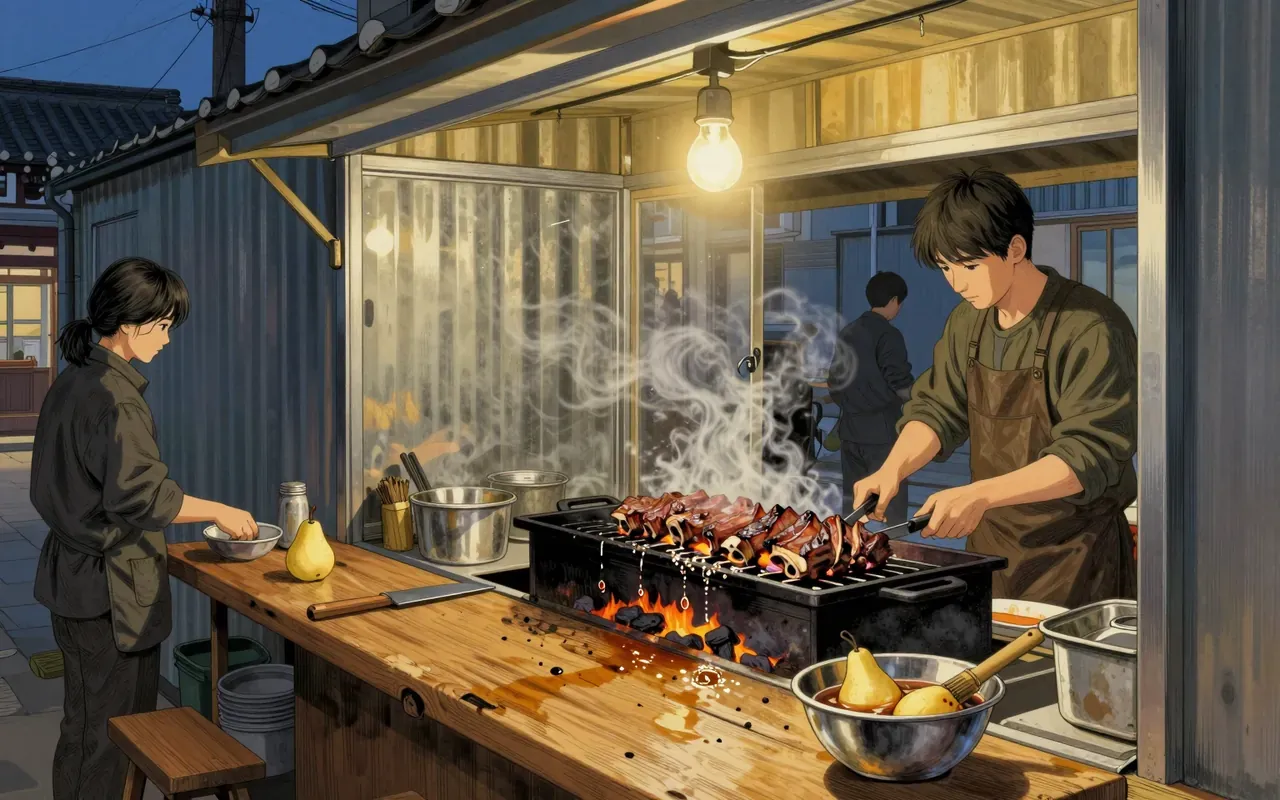
Galbi is a grilled dish in traditional Korean cuisine, named for the Korean word for 'rib'.
0:10
How it works, in terms someone would actually use
Diners receive raw, marinated ribs and cook them on tabletop grills.
0:18
What it gets right
It offers tender, evenly layered meat with exposed bone—either one smooth bone along the short edge (traditional) or multiple cut bones along the long edge (LA galbi).
0:32
What it does not
LA galbi’s flanken cut exposes more bone surface and less continuous meat than the traditional flat-filleted style.
0:39
What it changed
The LA galbi cut emerged in the late 20th century; one theory, judged most plausible in the Encyclopedia of Korean Culture, credits Korean Americans in Los Angeles.
0:50
Who it is for, and who it is not
It is for people who eat beef and enjoy grilled, marinated meat.
0:59
Is it worth your time
It is worth your time if you want a shared, interactive grilling experience with marinated beef ribs.
Worth your time?
Selectively. Start with the brief, then cook the parts we point at.
What works
It offers tender, evenly layered meat with exposed bone—either one smooth bone along the short edge (traditional) or multiple cut bones along the long edge (LA galbi). The marinade contributes sweet and savory flavor.
What does not
LA galbi’s flanken cut exposes more bone surface and less continuous meat than the traditional flat-filleted style.
Cook it if
Skip it if
The written brief1 min read
What the dish is and where it came from
Galbi is a grilled dish in traditional Korean cuisine, named for the Korean word for ‘rib’. It is usually made with beef short ribs.
How it works, in terms someone would actually use
Diners receive raw, marinated ribs and cook them on tabletop grills. The marinade typically contains soy sauce, garlic, and sugar.
What it gets right
It offers tender, evenly layered meat with exposed bone—either one smooth bone along the short edge (traditional) or multiple cut bones along the long edge (LA galbi). The marinade contributes sweet and savory flavor.
What it does not
LA galbi’s flanken cut exposes more bone surface and less continuous meat than the traditional flat-filleted style.
What it changed
The LA galbi cut emerged in the late 20th century; one theory, judged most plausible in the Encyclopedia of Korean Culture, credits Korean Americans in Los Angeles.
Who it is for, and who it is not
It is for people who eat beef and enjoy grilled, marinated meat. It is not for people avoiding beef, soy, garlic, or sugar.
Is it worth your time
It is worth your time if you want a shared, interactive grilling experience with marinated beef ribs.