foodbriefs
9:47in productionCh. 1 · What it is/ 9:47 · ceiling 15 min
Culture · Ingredients

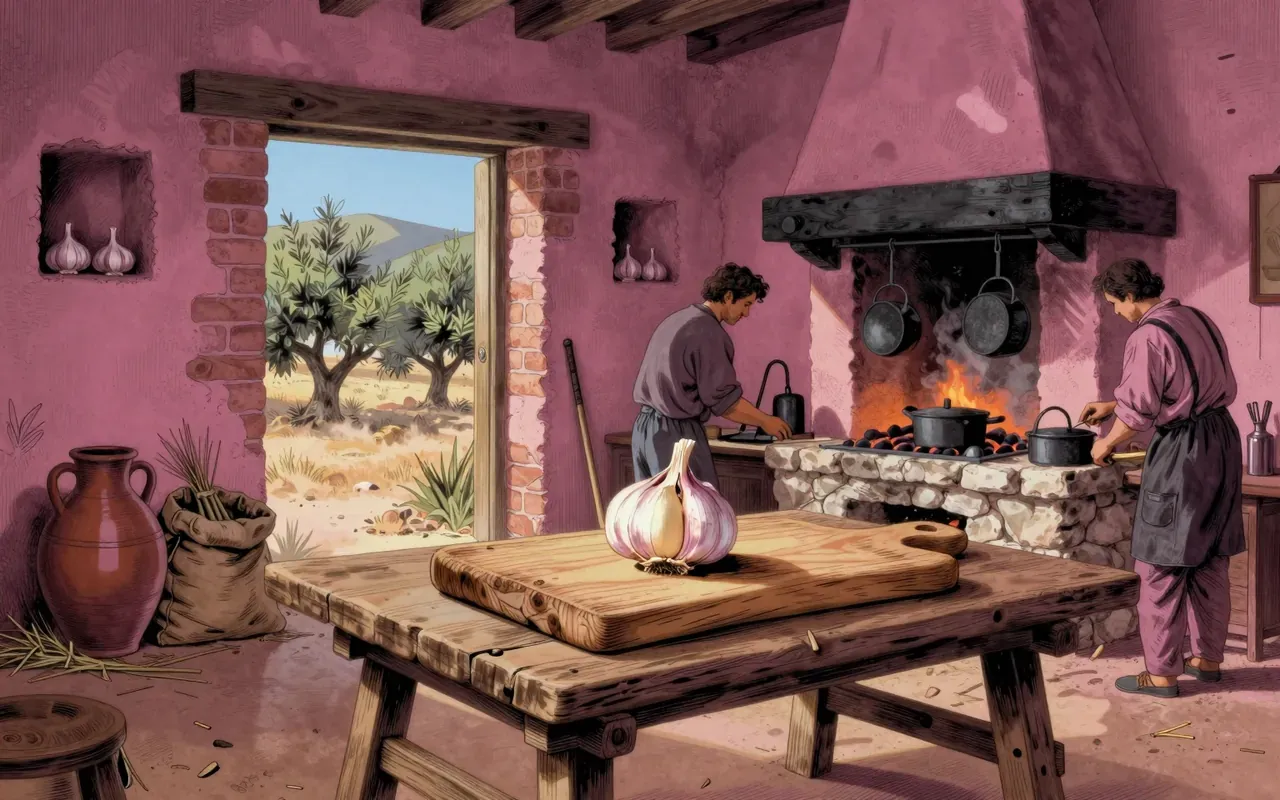
Garlic

A pungent global commodity with no proven health benefit—and 4,000 years of unbroken cultural authority.

Garlic is a globally dominant foodstuff rooted in ancient cultivation, culturally over-credited for health effects, and economically concentrated in one country.

Chapters & takeaways5
  1. 0:54
    What it is

    Garlic is not a spice or herb—it is a bulbous flowering plant in the genus Allium.

  2. 1:57
    Where it came from

    It was cultivated in Mesopotamia 4,000 years ago—and placed in Tutankhamun’s tomb c. 1325 BC.

  3. 3:26
    Who controls it now

    China produced 22 million tonnes of garlic in 2024—73% of the world’s 30 million tonne supply.

  4. 4:32
    What it promises vs what it delivers

    It has been used for thousands of years as seasoning, ingredient, and traditional remedy—despite no clinical evidence for the last role.

  5. 6:00
    Roots, not romance

    Its origin lies not in Mediterranean myth but in Central Asia, northeastern Iran, and the Himalayan foothills.

Worth your time?

Yes. Cook the whole thing.

4/ 5
What works
  • culinary-practice
  • global-trade
  • folklore
What does not
  • health-benefits
Cook it if
  • cooks
  • supply-chain-watchers
  • myth-decoders
Skip it if
  • people seeking clinical validation
The written brief1 min read

What the thing is

Garlic (Allium sativum) is a bulbous flowering plant in the genus Allium.

Where it came from

It is native to Central Asia, northeastern Iran, and the Himalayan foothills. It was cultivated in Mesopotamia for at least 4,000 years. Use in China and Egypt dates back thousands of years. Well-preserved garlic was found in the tomb of Tutankhamun (c. 1325 BC).

What it gets right

It delivers pungent, sulfur-driven flavour across continents. It propagates reliably through cloves. It stores well under cool, dry conditions. It has sustained human use for over four millennia across Mesopotamia, China, and Egypt.

What it gets wrong

It is falsely credited with health benefits unsupported by clinical evidence. Its folkloric roles—as ward against evil, aphrodisiac, or cure-all—are presented as functional fact rather than cultural artefact.

Why it matters now

China produces 73% of the world’s garlic—22 million tonnes out of 30 million tonnes in 2024. That concentration makes global kitchens vulnerable to climate shifts, trade policy, and crop disease in one region.

Is it worth your time

Yes—if you care about how a single plant shapes global supply chains, culinary practice, and persistent mythmaking despite zero clinical proof of benefit.
Same course · Culture4 of 158
Up next in Food

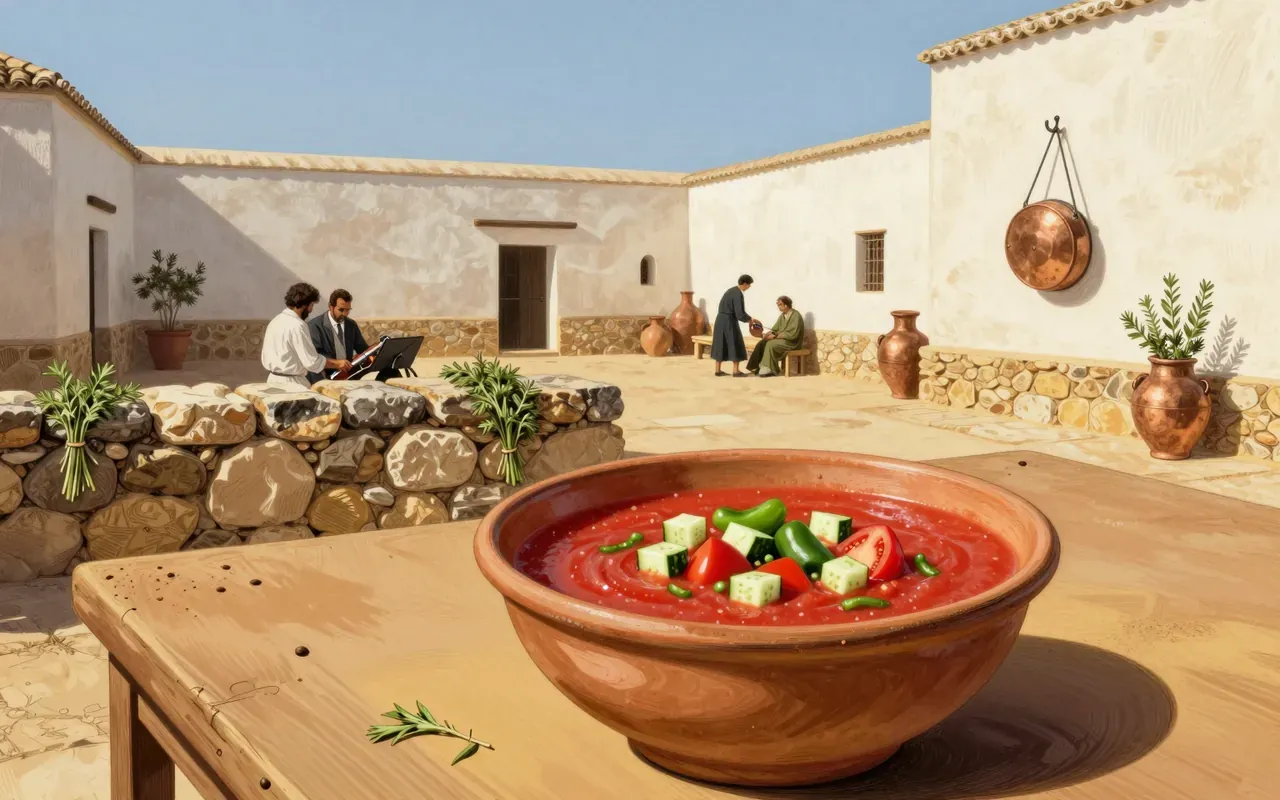
Gazpacho

· 1:04

A cold, raw, blended vegetable soup from southern Iberia, traditionally pounded in a mortar.

1:04