foodbriefs
1:04in productionCh. 1 · What the dish is and where it came from/ 1:04 · ceiling 15 min
Dishes · Technique

Gazpacho

A cold, raw, blended vegetable soup from southern Iberia, traditionally pounded in a mortar.

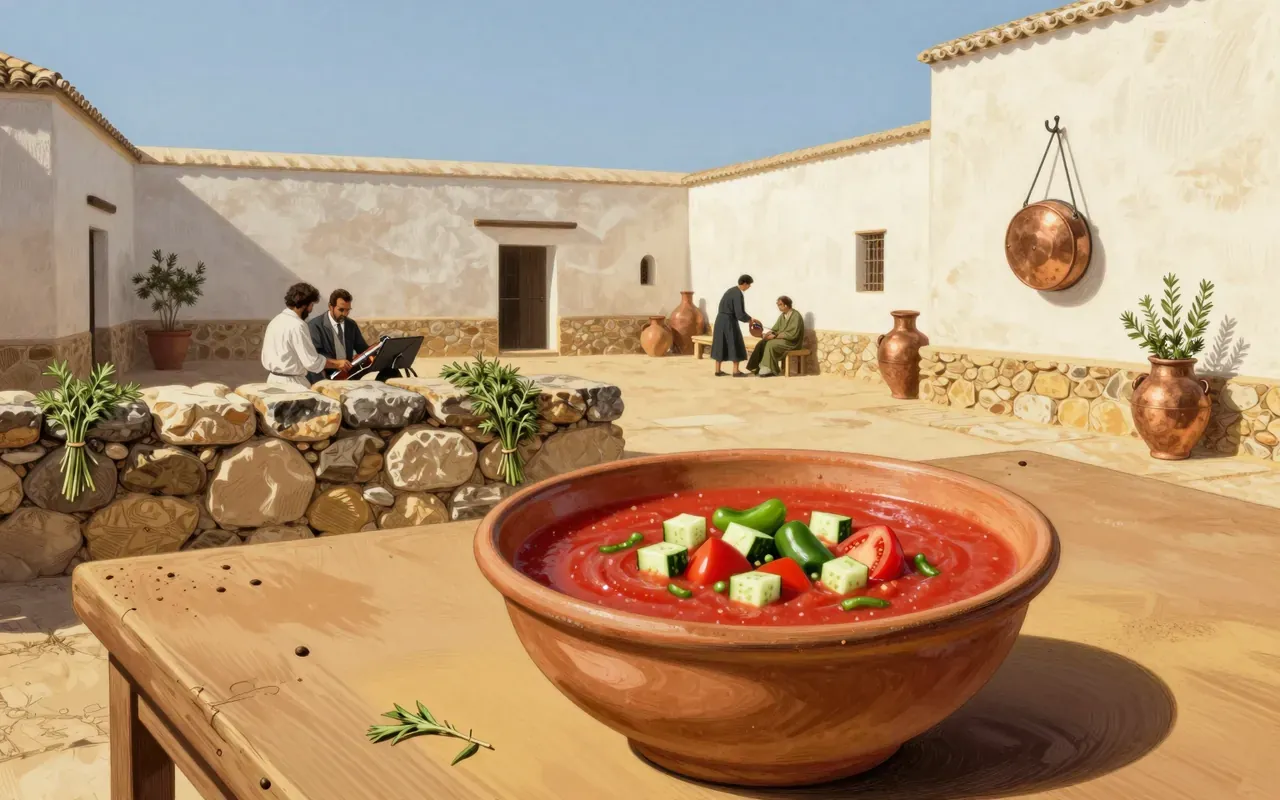
Gazpacho is a cold soup and drink made of raw, blended vegetables. It originated in the southern regions of the Iberian Peninsula and spread into other areas.

Chapters & takeaways7
  1. 0:00
    What the dish is and where it came from

    Gazpacho is a cold soup and drink made of raw, blended vegetables.

  2. 0:11
    How it works, in terms someone would actually use

    It is traditionally made by pounding vegetables in a mortar with a pestle.

  3. 0:23
    What it gets right

    It gets right a refreshing, vegetable-forward format using tomato, cucumber, bell pepper, garlic, olive oil, wine vinegar, water, salt, and stale bread.

  4. 0:32
    What it does not

    It does not include meat or hot preparation: gazpacho manchego is a separate meat stew, not a variation of this cold vegetable soup.

  5. 0:41
    What it changed

    It changed in the 19th century when tomatoes were added, creating red gazpacho.

  6. 0:46
    Who it is for, and who it is not

    It is for people seeking a cold, raw, vegetable-based dish.

  7. 0:55
    Is it worth your time

    It is worth your time if you want a chilled, uncooked vegetable soup with a texture that varies between pounded-cool and blended-smooth.

Worth your time?

Selectively. Start with the brief, then cook the parts we point at.

What works
  • It gets right a refreshing, vegetable-forward format using tomato, cucumber, bell pepper, garlic, olive oil, wine vinegar, water, salt, and stale bread.
What does not
  • It does not include meat or hot preparation: gazpacho manchego is a separate meat stew, not a variation of this cold vegetable soup.
Cook it if
    Skip it if
      The written brief1 min read

      What the dish is and where it came from

      Gazpacho is a cold soup and drink made of raw, blended vegetables. It originated in the southern regions of the Iberian Peninsula and spread into other areas.

      How it works, in terms someone would actually use

      It is traditionally made by pounding vegetables in a mortar with a pestle. This method helps keep it cool and avoids the foam and silky consistency of blender-made versions.

      What it gets right

      It gets right a refreshing, vegetable-forward format using tomato, cucumber, bell pepper, garlic, olive oil, wine vinegar, water, salt, and stale bread.

      What it does not

      It does not include meat or hot preparation: gazpacho manchego is a separate meat stew, not a variation of this cold vegetable soup.

      What it changed

      It changed in the 19th century when tomatoes were added, creating red gazpacho.

      Who it is for, and who it is not

      It is for people seeking a cold, raw, vegetable-based dish. It is not for those avoiding raw garlic, tomatoes, or stale bread.

      Is it worth your time

      It is worth your time if you want a chilled, uncooked vegetable soup with a texture that varies between pounded-cool and blended-smooth.
      Same course · Dishes4 of 327
      Up next in Food

      Genmaicha

      · 1:02

      A Japanese green tea blended with roasted, popped brown rice.

      1:02