8:21in productionCh. 1 · What it is/ 8:21 · ceiling 15 min
Cooking · Food history
Haute cuisine
Haute cuisine isn’t food—it’s a staffing model wrapped in aspic.
Haute cuisine is a French-originated, historically elite culinary tradition defined by meticulous preparation, elaborate presentation, and premium ingredients—including out-of-season and non-native items—supported by highly trained, hierarchically organized kitchen staff. Its evolution spans the 17th century through the 20th, marked by key figures like La Varenne, Carême, and Escoffier, who codified techniques and service styles (e.g., service à la russe). It diverged from regular French cuisine through ingredient sourcing, complexity, and cost, and later gave way to nouvelle cuisine’s minimalist ethos before partially reverting—retaining some innovations. A persistent myth about Catherine de’ Medici’s foundational role is explicitly rejected.
Meticulous preparation, elaborate presentation, and premium ingredients define it—not taste or region.
2:02
How it runs
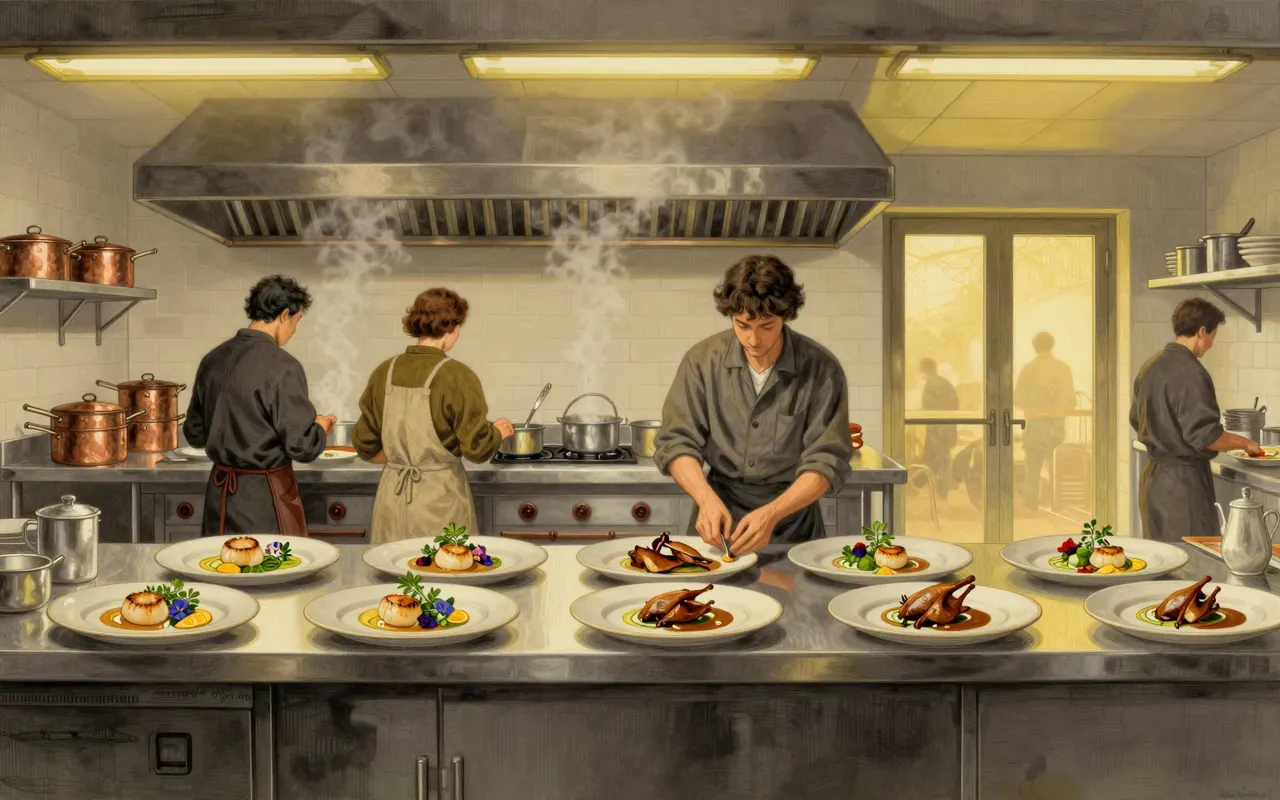
The brigade de cuisine didn’t just help cook—it made haute cuisine scalable, repeatable, and controllable.
3:08
What it sources
Out-of-season fruit and non-native ingredients weren’t luxuries—they were structural requirements.
4:18
Why it costs
Extravagance wasn’t decorative—it was economic: time, equipment, and money were baked into every plate.
5:21
What it didn’t start with
Catherine de’ Medici didn’t found it—so stop crediting her for what she never did.
Worth your time?
No. The brief is enough.
2.5/ 5
What works
Codifies technique
Standardises kitchen hierarchy
Enforces consistency across service
What does not
Catherine de' Medici founded it
It represents mainstream French cooking
It values seasonality or locality
Cook it if
Grand hotels
Royal courts
Luxury restaurants
Skip it if
Home cooks
Small kitchens
Seasonal or local ingredient systems
The written brief1 min read
What the dish is and where it came from
Haute cuisine is not a dish. It is a French-originated culinary tradition spanning the 17th to 20th centuries, defined by meticulous preparation, elaborate presentation, and premium ingredients.
How it works, in terms someone would actually use
Haute cuisine works by deploying a rigid kitchen hierarchy—the brigade de cuisine—to execute precise, multi-stage preparations. It relies on sourcing ingredients outside normal seasonal or geographic limits, then applying codified techniques to transform them into elaborate presentations.
What it gets right
It gets right the value of technique codification and staff specialisation. Its emphasis on precision, consistency, and presentation established standards still used in high-end kitchens.
What it does not
It does not originate with Catherine de’ Medici. It does not represent French cuisine as a whole. It does not prioritise seasonality, locality, or simplicity.
What it changed
It changed how kitchens are organised: Escoffier’s brigade de cuisine became the global template for professional kitchens. It shifted service from service à la française to service à la russe—individual plated courses replacing communal presentation.
Who it is for, and who it is not
It is for institutions with large budgets, trained staff, and hierarchical control—royal courts, grand hotels, luxury restaurants. It is not for home cooks, small kitchens, or anyone working with seasonal or local constraints.
Is it worth your time
It is not worth your time as a cooking method today. Its expense, labour intensity, and dependence on elite infrastructure make it inaccessible and impractical for home or contemporary professional kitchens.