1:03in productionCh. 1 · What the dish is and where it came from/ 1:03 · ceiling 15 min
Dishes · Technique
Lomo saltado
A Peruvian stir-fry of marinated beef, onions, tomatoes, french fries, and rice.
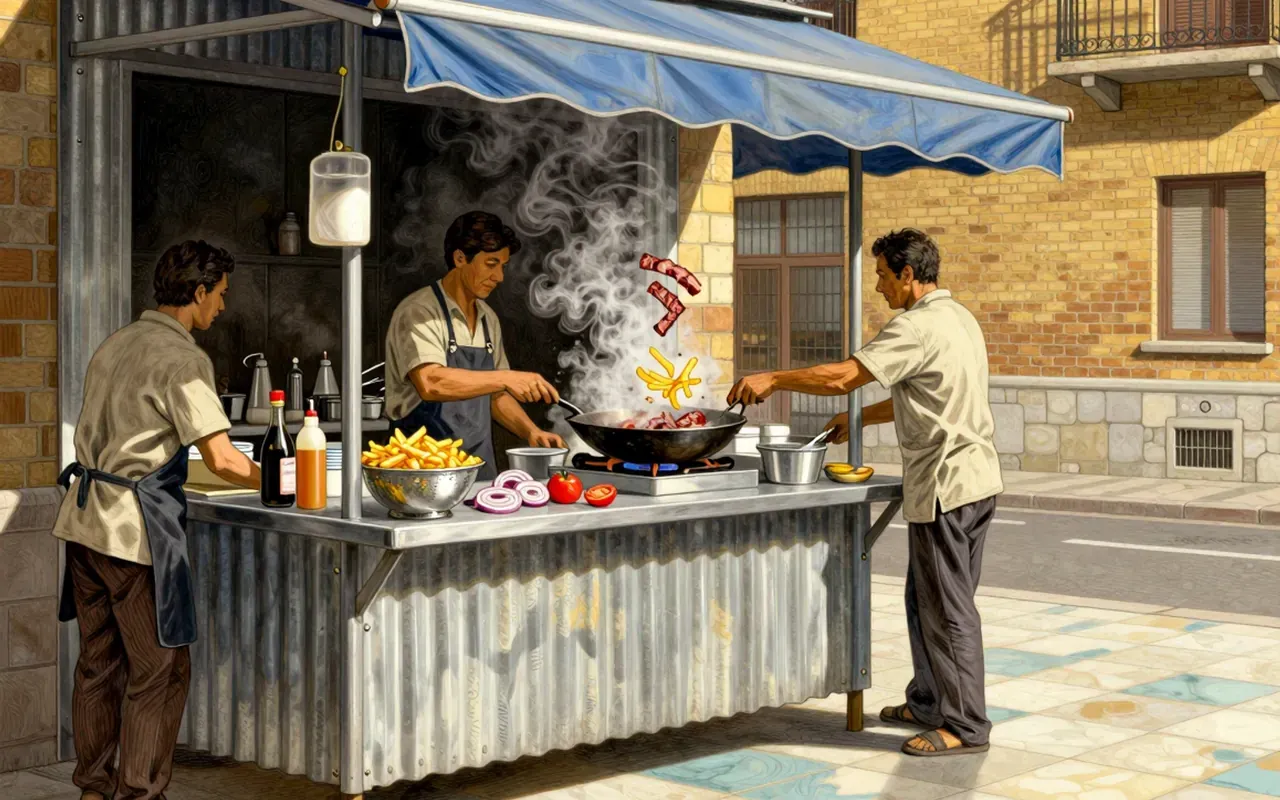
Lomo saltado is a traditional Peruvian stir-fry dish. It originated within Peru’s chifa tradition—the Chinese-Peruvian culinary practice—and is now part of mainstream Peruvian culture.
Lomo saltado is a traditional Peruvian stir-fry dish.
0:10
How it works, in terms someone would actually use
It is prepared by marinating sirloin strips in vinegar, soy sauce, and spices, then stir-frying them with red onions, parsley, tomatoes, and possibly other ingredients.
0:20
What it gets right
It combines savory beef, aromatic vegetables, crispy french fries, and rice—offering contrasting textures and layered flavors in one plate.
0:28
What it does not
The inclusion of french fries and rice makes it less suitable as a low-carbohydrate or strictly vegetable-forward meal.
0:35
What it changed
A 1903 Peruvian cookbook included a short description of lomo saltado, signaling early assimilation of Chinese stir-fry technique into local cuisine.
0:43
Who it is for, and who it is not
It is for people who enjoy hearty, mixed-texture plates with beef, vegetables, starches, and rice.
0:55
Is it worth your time
Yes—it is a widely served, culturally significant Peruvian dish that delivers a balanced, satisfying plate with minimal conceptual complexity.
Worth your time?
Selectively. Start with the brief, then cook the parts we point at.
What works
It combines savory beef, aromatic vegetables, crispy french fries, and rice—offering contrasting textures and layered flavors in one plate.
What does not
The inclusion of french fries and rice makes it less suitable as a low-carbohydrate or strictly vegetable-forward meal.
Cook it if
Skip it if
The written brief1 min read
What the dish is and where it came from
Lomo saltado is a traditional Peruvian stir-fry dish. It originated within Peru’s chifa tradition—the Chinese-Peruvian culinary practice—and is now part of mainstream Peruvian culture.
How it works, in terms someone would actually use
It is prepared by marinating sirloin strips in vinegar, soy sauce, and spices, then stir-frying them with red onions, parsley, tomatoes, and possibly other ingredients.
What it gets right
It combines savory beef, aromatic vegetables, crispy french fries, and rice—offering contrasting textures and layered flavors in one plate.
What it does not
The inclusion of french fries and rice makes it less suitable as a low-carbohydrate or strictly vegetable-forward meal.
What it changed
A 1903 Peruvian cookbook included a short description of lomo saltado, signaling early assimilation of Chinese stir-fry technique into local cuisine.
Who it is for, and who it is not
It is for people who enjoy hearty, mixed-texture plates with beef, vegetables, starches, and rice. It is not for those avoiding beef or seeking a vegetarian or low-starch dish.
Is it worth your time
Yes—it is a widely served, culturally significant Peruvian dish that delivers a balanced, satisfying plate with minimal conceptual complexity.
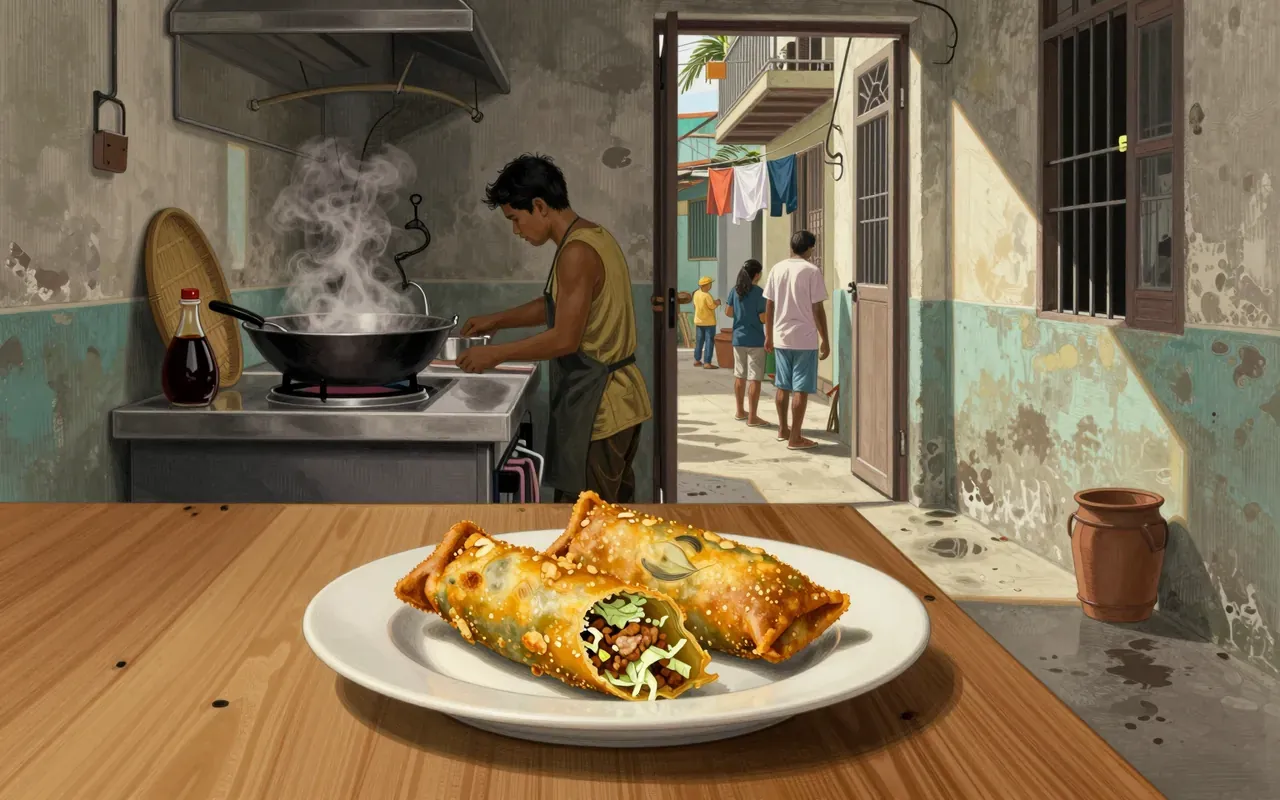
A thin-wrapped roll with savory or sweet fillings, served fried or fresh, rooted in Indonesian and Filipino adaptations of Fujianese and Teochew spring rolls.