1:11in productionCh. 1 · What the dish is and where it came from/ 1:11 · ceiling 15 min
Technique · Dishes
Karaage
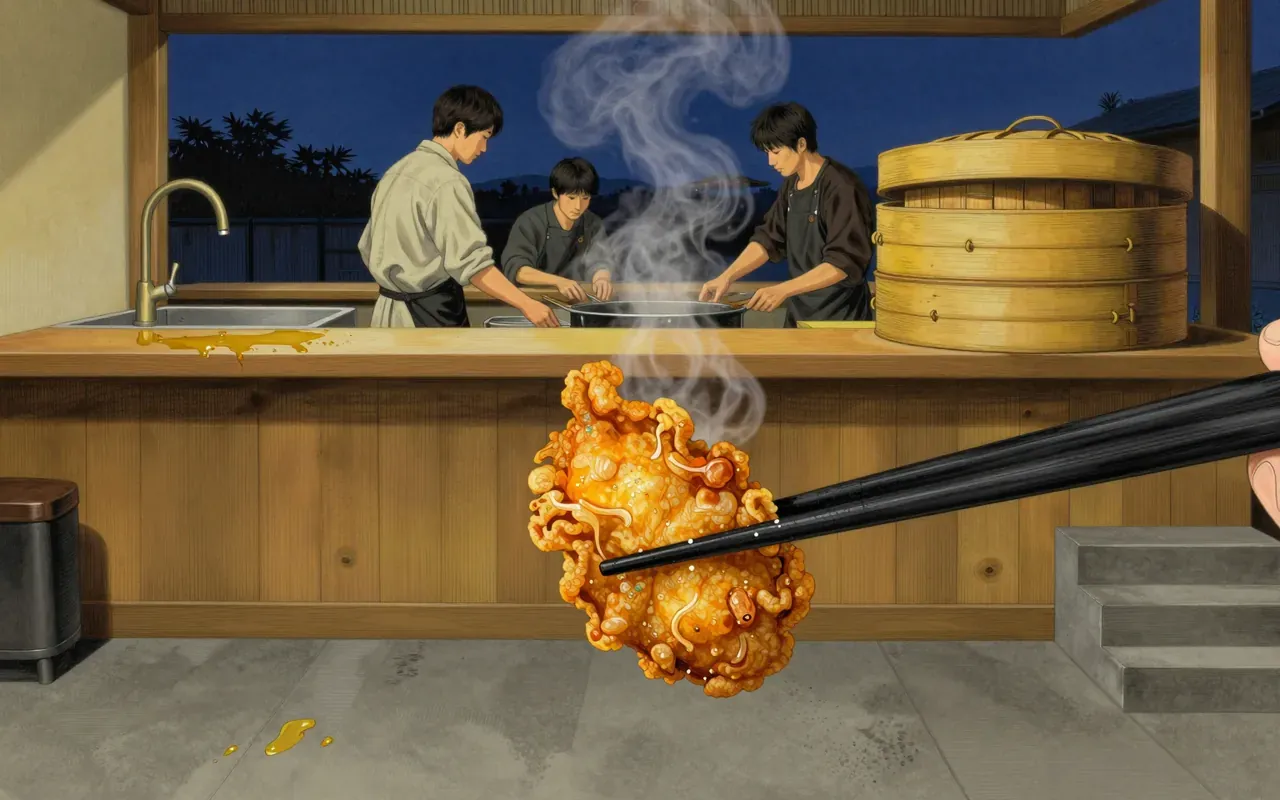
Japanese karaage is small pieces of marinated meat or fish, coated in starch and deep-fried.
Karaage is a Japanese cooking technique involving small pieces of meat or fish that are marinated, dredged in starch, and deep-fried. The first references to a style called karaage (then written as 空揚) appeared in the Genroku period at the end of the 17th century.
Karaage is a Japanese cooking technique involving small pieces of meat or fish that are marinated, dredged in starch, and deep-fried.
0:18
How it works, in terms someone would actually use
Small pieces of meat or fish are marinated, then dredged with a starch and deep-fried in oil.
0:25
What it gets right
The marinade typically includes sake, soy sauce, ginger juice, and scallions—components that contribute savory, aromatic, and bright notes.
0:32
What it does not
Unlike su-age (uncoated frying) or koromo-age (batter frying like tempura), karaage requires both marination and starch coating—so it is not suitable if you prefer unmarinated or batter-free fried foods.
0:44
What it changed
Since World War II, karaage has become most commonly associated with chicken, especially after its popularity rose in Ōita Prefecture’s Usa and Nakatsu cities.
0:54
Who it is for, and who it is not
It is for people who enjoy marinated, crispy, deep-fried protein.
1:03
Is it worth your time
Yes—it is worth your time if you want a widely available, flavorful, protein-based fried dish with a distinct Japanese preparation method.
Worth your time?
Selectively. Start with the brief, then cook the parts we point at.
What works
The marinade typically includes sake, soy sauce, ginger juice, and scallions—components that contribute savory, aromatic, and bright notes.
What does not
Unlike su-age (uncoated frying) or koromo-age (batter frying like tempura), karaage requires both marination and starch coating—so it is not suitable if you prefer unmarinated or batter-free fried foods.
Cook it if
Skip it if
The written brief1 min read
What the dish is and where it came from
Karaage is a Japanese cooking technique involving small pieces of meat or fish that are marinated, dredged in starch, and deep-fried. The first references to a style called karaage (then written as 空揚) appeared in the Genroku period at the end of the 17th century.
How it works, in terms someone would actually use
Small pieces of meat or fish are marinated, then dredged with a starch and deep-fried in oil.
What it gets right
The marinade typically includes sake, soy sauce, ginger juice, and scallions—components that contribute savory, aromatic, and bright notes.
What it does not
Unlike su-age (uncoated frying) or koromo-age (batter frying like tempura), karaage requires both marination and starch coating—so it is not suitable if you prefer unmarinated or batter-free fried foods.
What it changed
Since World War II, karaage has become most commonly associated with chicken, especially after its popularity rose in Ōita Prefecture’s Usa and Nakatsu cities.
Who it is for, and who it is not
It is for people who enjoy marinated, crispy, deep-fried protein. It is not for those seeking a vegetable-focused dish or avoiding deep-fried preparations.
Is it worth your time
Yes—it is worth your time if you want a widely available, flavorful, protein-based fried dish with a distinct Japanese preparation method.