foodbriefs
10:16in productionCh. 1 · Who made it, and where/ 10:16 · ceiling 15 min
Dishes · Food history

İskender kebap

1867

A butter-poured ritual built on vertical slicing—not döner, not doner, but something sharper and more theatrical.

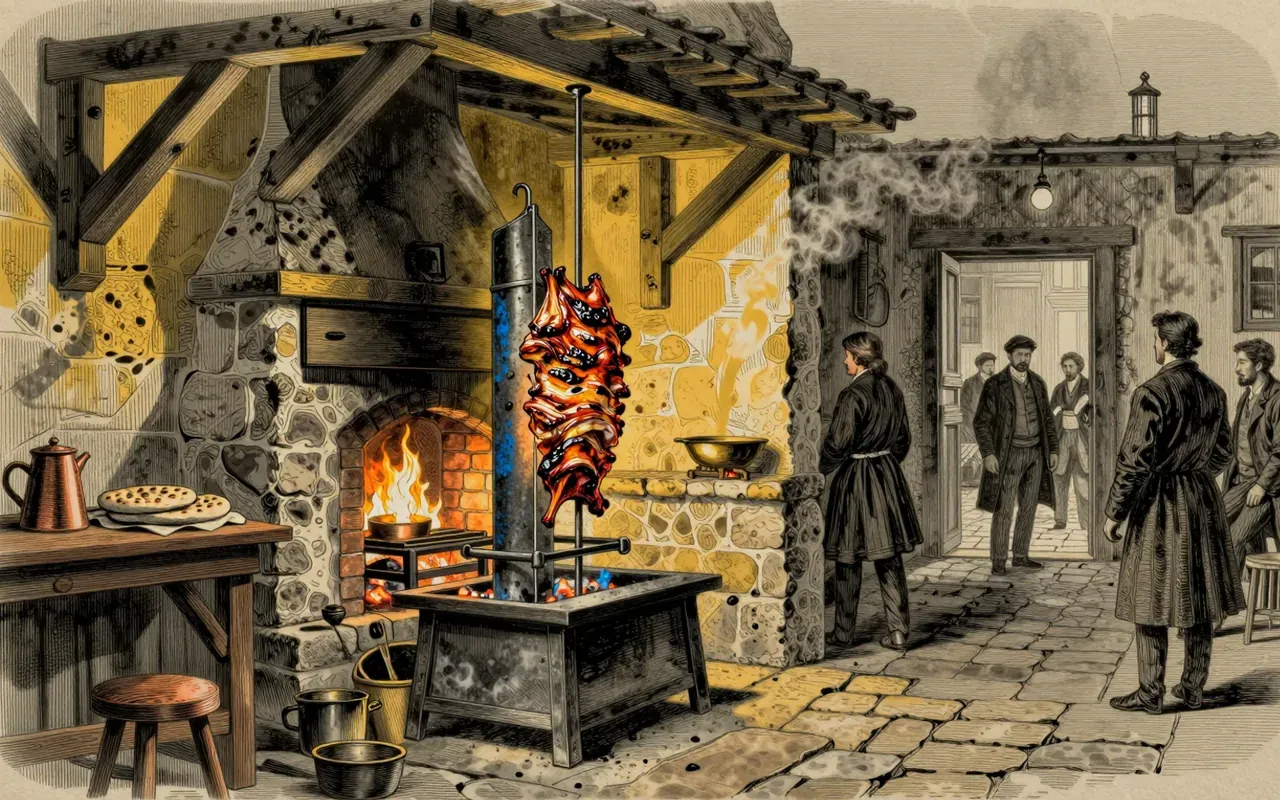
İskender kebap is a layered Turkish dish invented by İskender in Bursa in the late 19th century. It uses thinly grilled lamb or chicken, hot tomato sauce, pita bread, melted sheep’s milk butter, and yogurt. The meat is slow-roasted near an open fire and vertically sliced before serving. Butter is poured tableside.

Chapters & takeaways4
  1. 0:48
    Who made it, and where

    İskender invented it in Bursa in the late 19th century—no earlier, no elsewhere.

  2. 2:58
    How the meat is cooked and cut

    Slow roasting near flame, then vertical slicing, defines the meat’s texture and integrity.

  3. 4:14
    What goes into the layering

    Lamb or chicken, tomato sauce, pita, sheep’s milk butter, and yogurt—nothing more, nothing less.

  4. 6:09
    Why the butter comes last

    Butter isn’t mixed in—it’s poured hot at the table, sealing aroma and heat into the stack.

Worth your time?

Yes. Cook the whole thing.

4.5/ 5
What works
  • vertical slicing ensures tender, uniform meat
  • tableside butter pour delivers aroma and heat activation
  • sheep’s milk butter adds distinct richness
What does not
  • use beef or pork
  • include garlic or herbs as standard
  • rely on fermentation or preservation
Cook it if
  • diners who value ritual and contrast
  • those seeking regional specificity
Skip it if
  • dairy-avoiders
  • those seeking lightness
  • spice-forward or herb-dominant eaters
The written brief1 min read

What the dish is and where it came from

İskender kebap is a layered Turkish dish invented by İskender in Bursa in the late 19th century. It consists of thinly sliced grilled lamb or chicken, hot tomato sauce, pita bread, melted sheep’s milk butter, and yogurt.

How it works, in terms someone would actually use

Thinly grilled lamb or chicken is slow-roasted near an open fire, then vertically sliced. It is layered with hot tomato sauce, pita bread, melted sheep’s milk butter, and yogurt. Butter is poured tableside.

What it gets right

The vertical slicing ensures tender, uniform meat. The tableside butter pour delivers aroma and heat activation. Sheep’s milk butter adds a distinct richness that cow’s milk butter cannot replicate.

What it does not

It does not use beef or pork. It does not include garlic, herbs, or spices beyond what the tomato sauce and meat preparation provide. It does not rely on fermentation or preservation techniques.

What it changed

It reconfigured the vertical döner format into a plated, layered dish with deliberate temperature and textural counterpoints.

Who it is for, and who it is not

It is for diners who value ritual, contrast, and regional specificity. It is not for those avoiding dairy, seeking lightness, or preferring spice-forward or herb-dominant profiles.

Is it worth your time

Yes—if you want a rich, textural contrast of crisp meat, sharp tomato, cool yogurt, and unctuous butter over soft bread.

Same course · Dishes4 of 485
Up next in Food

Jamaican patty

· 10:19

A Jamaican patty is not fusion—it’s Creole: built by folding dough, not by blending cultures.

10:19