1:10in productionCh. 1 · What the dish is and where it came from/ 1:10 · ceiling 15 min
Technique · Food history
Kakigōri
A Japanese shaved ice dessert made from pure, often spring-sourced ice, served with sweet syrup and sometimes condensed milk.
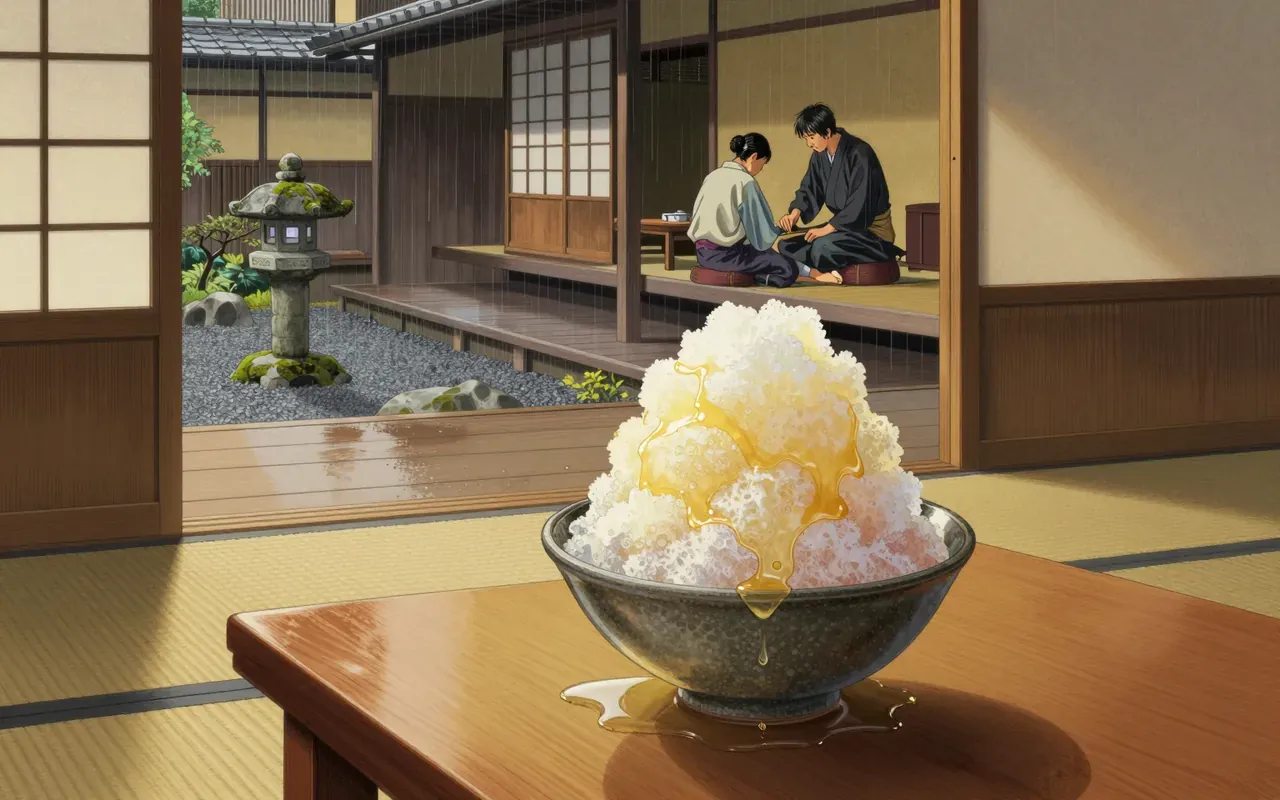
Kakigōri is a Japanese shaved ice dessert. Its origins date to the Heian period, when aristocrats ate shaved ice blocks saved from winter and served with sweet syrup in summer. The Pillow Book references its early use.
It is made by spinning a block of ice over a shaving blade using a hand-cranked machine.
0:24
What it gets right
It gets right a light, snow-like texture from pure, often spring-sourced ice, served with syrup and sometimes condensed milk—simple, cooling, and visually delicate.
0:33
What it does not
It does not use flavored ice; the base is unflavored, relying entirely on added syrups and condiments for taste.
0:41
What it changed
It changed from an aristocratic summer treat to a publicly available dessert after ice became more accessible in the 19th century, culminating in the first dedicated store in Yokohama in 1869.
0:53
Who it is for, and who it is not
It is for people seeking a cold, syrup-sweetened dessert with a soft, snowy texture.
1:03
Is it worth your time
It is worth your time if you enjoy delicate, spoonable shaved ice with customizable sweetness—especially in hot weather.
Worth your time?
Selectively. Start with the brief, then cook the parts we point at.
What works
It gets right a light, snow-like texture from pure, often spring-sourced ice, served with syrup and sometimes condensed milk—simple, cooling, and visually delicate.
What does not
It does not use flavored ice; the base is unflavored, relying entirely on added syrups and condiments for taste.
Cook it if
Skip it if
The written brief1 min read
What the dish is and where it came from
Kakigōri is a Japanese shaved ice dessert. Its origins date to the Heian period, when aristocrats ate shaved ice blocks saved from winter and served with sweet syrup in summer. The Pillow Book references its early use.
How it works, in terms someone would actually use
It is made by spinning a block of ice over a shaving blade using a hand-cranked machine. The result is fine, fluffy shavings.
What it gets right
It gets right a light, snow-like texture from pure, often spring-sourced ice, served with syrup and sometimes condensed milk—simple, cooling, and visually delicate.
What it does not
It does not use flavored ice; the base is unflavored, relying entirely on added syrups and condiments for taste.
What it changed
It changed from an aristocratic summer treat to a publicly available dessert after ice became more accessible in the 19th century, culminating in the first dedicated store in Yokohama in 1869.
Who it is for, and who it is not
It is for people seeking a cold, syrup-sweetened dessert with a soft, snowy texture. It is not for those preferring flavored ice or avoiding added sweeteners.
Is it worth your time
It is worth your time if you enjoy delicate, spoonable shaved ice with customizable sweetness—especially in hot weather.