What the dish is and where it came from
Ají de gallina is a Peruvian chicken stew. Its origins are linked to manjar blanco, a Moorish-influenced dish brought to Spain before the Reconquista.
How it works, in terms someone would actually use
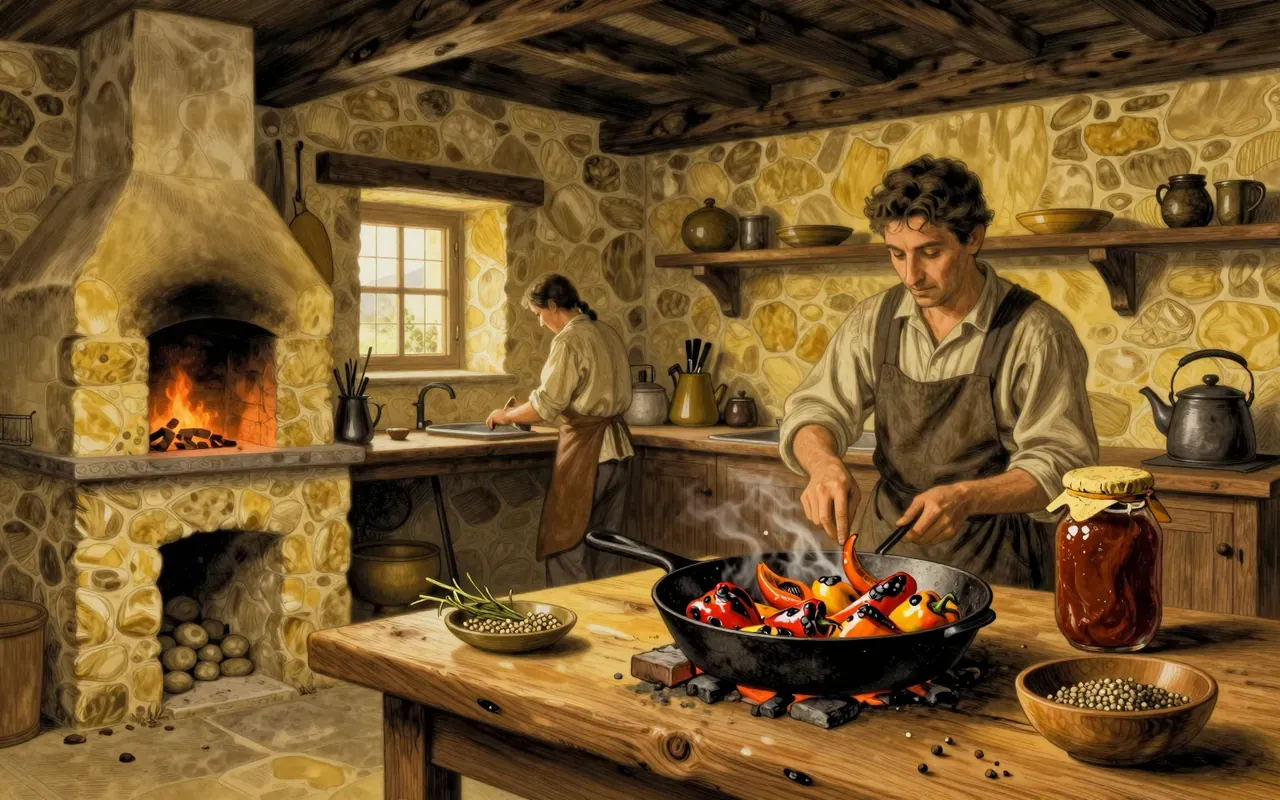
It starts with a sofrito of red onion, garlic, and ají amarillo, then adds shredded poached poultry and stock. Final thickening uses bread soaked in milk or evaporated milk, cheese like parmesan, and ground nuts such as pecans or walnuts.
What it gets right
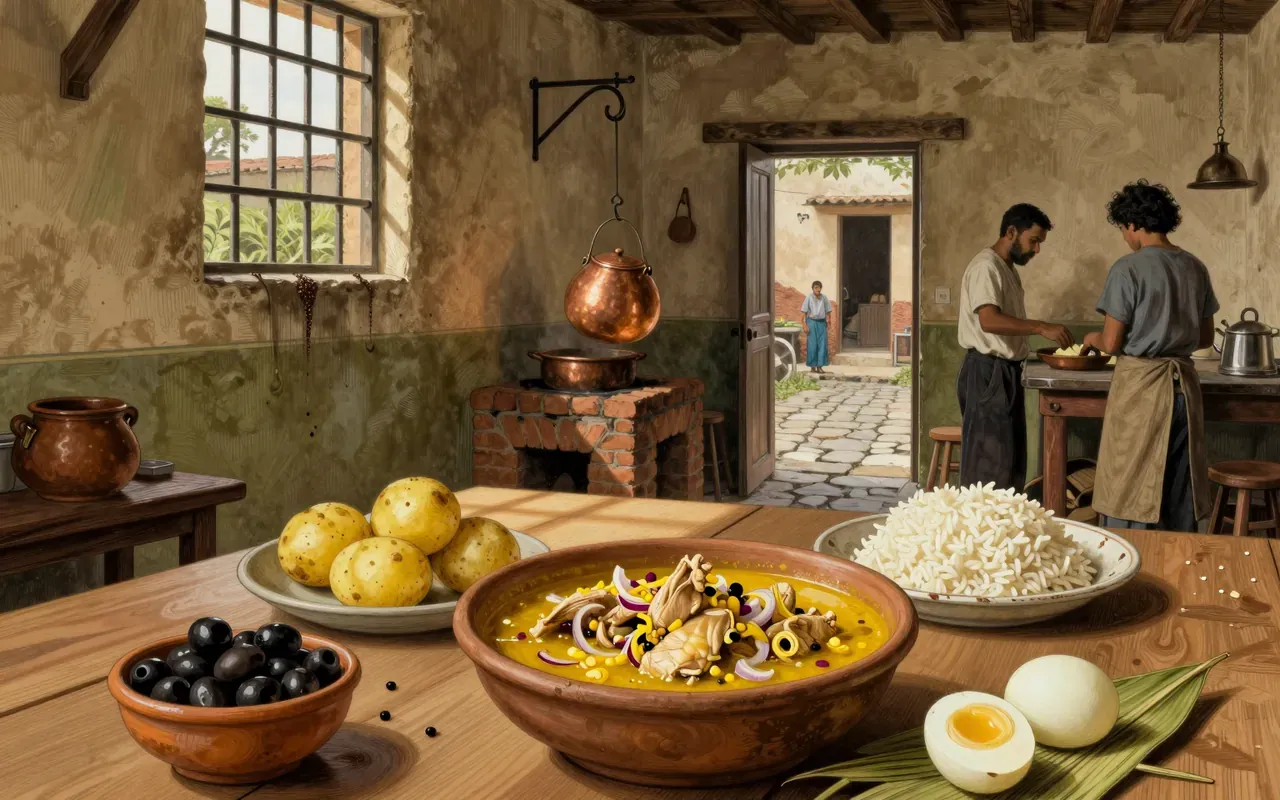
It balances savory depth (poultry, sofrito), mild heat (ají amarillo), creamy richness (milk-soaked bread, cheese, nuts), and textural contrast (olives, hard-boiled egg, potatoes, rice).
What it does not
The inclusion of dairy, cheese, nuts, and olives makes it less suitable for dairy-free, nut-free, or vegan diets.
What it changed
It transformed the medieval Iberian manjar blanco—originally sweet and sometimes fish-based—into a savory Peruvian main dish by adding indigenous ají amarillo.
Who it is for, and who it is not
It is for people who enjoy hearty, creamy, mildly spicy poultry stews served with starches and garnishes. It is not for those avoiding dairy, nuts, or poultry.
Is it worth your time
Yes—if you seek a culturally rooted Peruvian stew with layered savory, creamy, and mild chili elements, served in a complete, garnished format.