foodbriefs
8:14in productionCh. 1 · Where it came from/ 8:14 · ceiling 15 min
Dishes · Culture

Hot chicken

Hot chicken isn’t spicy fried chicken—it’s fried chicken redefined by what happens *after* the fryer.

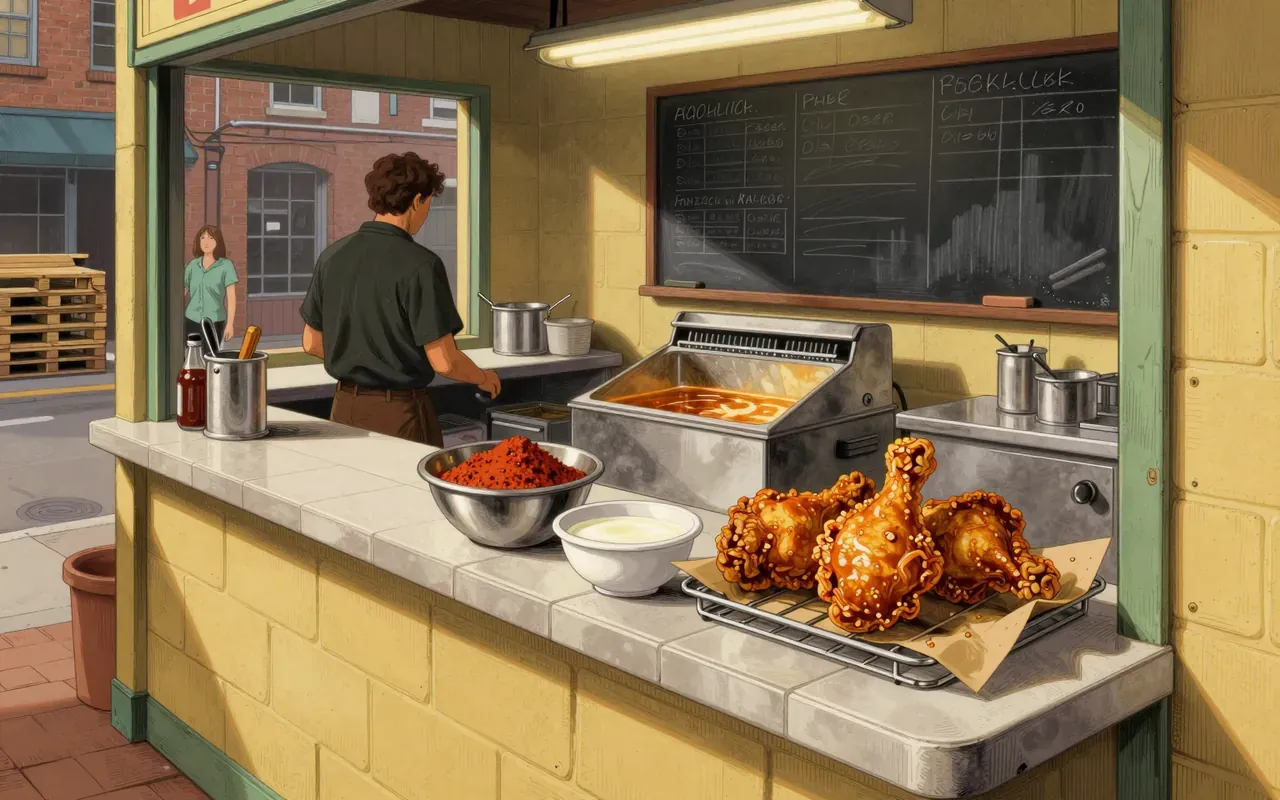
Hot chicken is a Nashville, Tennessee–originated dish from African American Southern tradition. It is marinated in buttermilk, floured, fried, then coated in a cayenne-based paste applied while hot. Its defining traits are that paste—and its presentation on white bread with pickle chips. It trades nuance for intensity. It prioritises impact over balance. It is not adaptable. It is specific. It is consequential.

Chapters & takeaways4
  1. 0:41
    Where it came from

    Hot chicken is a Nashville dish born in African American Southern kitchens—not a restaurant invention or a food truck trend.

  2. 2:01
    How it works

    Buttermilk marinade, flour coating, deep frying, then cayenne paste slapped on while the chicken is still sizzling—that’s the sequence that locks in heat and colour.

  3. 3:42
    What makes it different

    The paste doesn’t just add heat—it stains, seals, and signals. Its red hue and sticky cling separate it from every other fried chicken variant.

  4. 5:15
    How it’s served

    Served on white bread with pickle chips—not buns, not lettuce, not rice—it’s a complete, self-contained bite where starch and acid reset the palate between bites.

Worth your time?

Yes. Cook the whole thing.

4/ 5
What works
  • post-fry paste adhesion
  • buttermilk-tenderised crust
  • acid-starch reset between bites
What does not
  • subtlety
  • heat modulation
  • ingredient layering
Cook it if
  • people who treat heat as texture
  • those who respect regional protocol
Skip it if
  • people who adjust spice to taste
  • those who skip the bread-and-pickle
The written brief1 min read

What the dish is and where it came from

Hot chicken is a Nashville, Tennessee–originated fried chicken dish. It comes from African American communities in the Southern United States. It is defined by marination, frying, and immediate post-fry application of a cayenne-based paste.

How it works, in terms someone would actually use

Marinate chicken in buttermilk. Flour it. Fry it. Apply a cayenne-based paste immediately after frying. Serve on white bread with pickle chips.

What it gets right

The paste applied hot to hot chicken melts into the crust, sealing moisture while staining it red. Buttermilk marinade delivers tang and tenderness. The white-bread-and-pickle pairing cuts fat and heat with acid and starch—no improvisation needed.

What it does not

It does not rely on vinegar-forward heat like Buffalo wings. It does not use batter or glaze. It does not require fermentation, smoking, or slow cooking. It does not serve without white bread and pickle chips.

What it changed

It shifted national attention to post-fry spice application as a structural element—not just flavour—not a garnish, not a dip, but a binding, pigmented layer that defines the dish’s identity and presentation.

Who it is for, and who it is not

It is for people who want heat as texture, not just sensation—and who accept that the dish’s rules (paste-on-hot, bread-and-pickle, no sauce on the side) are non-negotiable. It is not for those who prefer layered seasoning, dry rubs, or heat that recedes.

Is it worth your time

Yes—if you want heat that builds, crust that stays crisp under spice, and a dish rooted in African American Southern technique. No—if you expect subtlety, balance, or heat that fades quickly.
Same course · Dishes4 of 485
Up next in Food

Nikujaga

· 10:50

A naval adaptation of British beef stew—stripped of its fat, fortified with dashi, and made to feed sailors on rice.

10:50