1:25in productionCh. 1 · What the dish is and where it came from/ 1:25 · ceiling 15 min
Dishes
Pizza Margherita
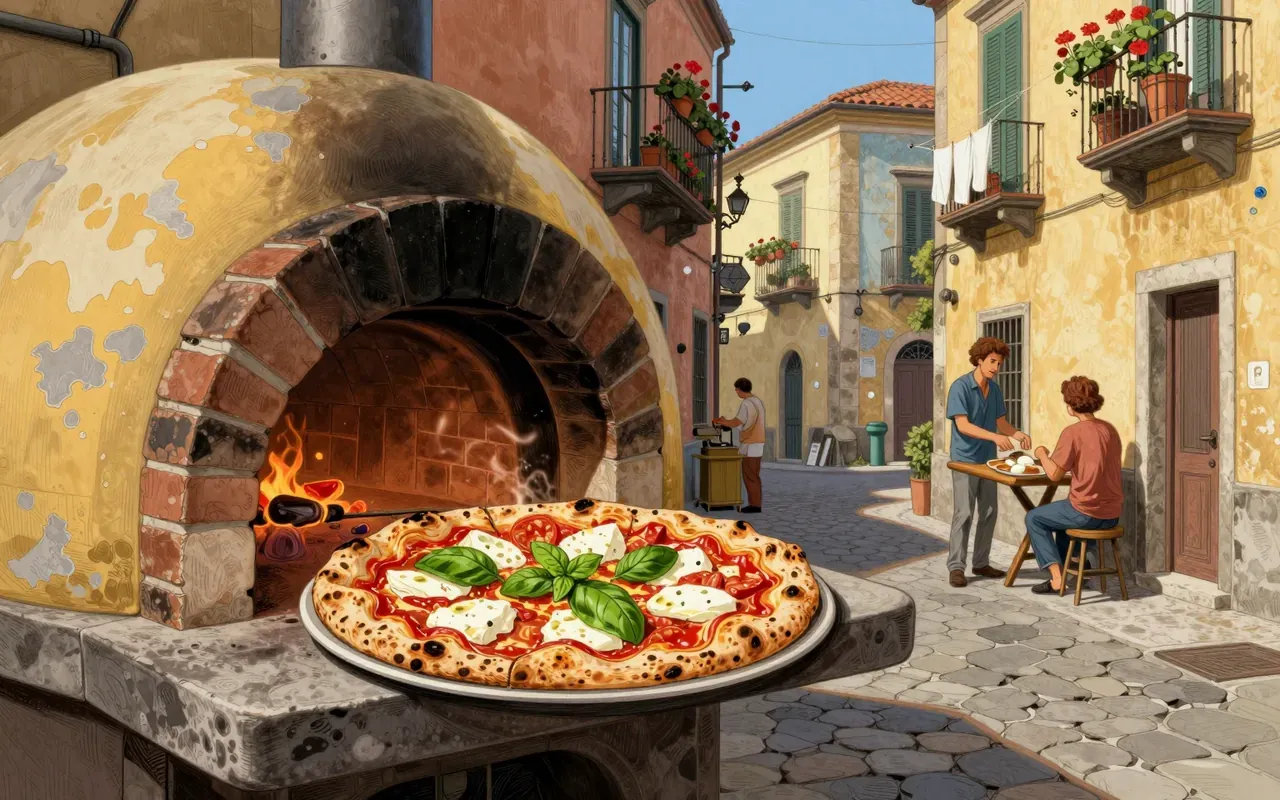
A round Neapolitan pizza with hand-crushed tomatoes, mozzarella, fresh basil, and olive oil, baked in a wood-fired or alternative oven.
Pizza Margherita is a typical Neapolitan pizza, developed in Naples between 1796 and 1810 by combining existing toppings: tomatoes, basil, and thinly sliced mozzarella. A later legend links it to Queen Margherita, but that story was first promoted in the 1930s–1940s and lacks contemporary documentation.
Pizza Margherita is a typical Neapolitan pizza, developed in Naples between 1796 and 1810 by combining existing toppings: tomatoes, basil, and thinly sliced mozzarella.
0:18
How it works, in terms someone would actually use
A pizzaiolo stretches dough outward from the center using fingers and flips it repeatedly to form a disc.
0:37
What it gets right
It gets right a concise, balanced composition: the acidity of tomatoes, creaminess of mozzarella, aroma of fresh basil, and richness of olive oil.
0:51
What it does not
It does not include garlic, oregano, or grated cheese—common in other pizzas—so it offers less herbal or salty intensity.
0:59
What it changed
It became one of two defining Neapolitan pizzas, codifying a minimalist topping set alongside pizza marinara.
1:05
Who it is for, and who it is not
It is for people seeking a tomato-based, dairy-and-herb pizza with fresh, uncooked basil and olive oil finish.
1:17
Is it worth your time
It is worth your time if you want a foundational Neapolitan pizza defined by its specific, unadorned ingredients and preparation.
Worth your time?
Selectively. Start with the brief, then cook the parts we point at.
What works
It gets right a concise, balanced composition: the acidity of tomatoes, creaminess of mozzarella, aroma of fresh basil, and richness of olive oil. Its round shape and raised cornicione are characteristic of Neapolitan pizza.
What does not
It does not include garlic, oregano, or grated cheese—common in other pizzas—so it offers less herbal or salty intensity.
Cook it if
Skip it if
The written brief1 min read
What the dish is and where it came from
Pizza Margherita is a typical Neapolitan pizza, developed in Naples between 1796 and 1810 by combining existing toppings: tomatoes, basil, and thinly sliced mozzarella. A later legend links it to Queen Margherita, but that story was first promoted in the 1930s–1940s and lacks contemporary documentation.
How it works, in terms someone would actually use
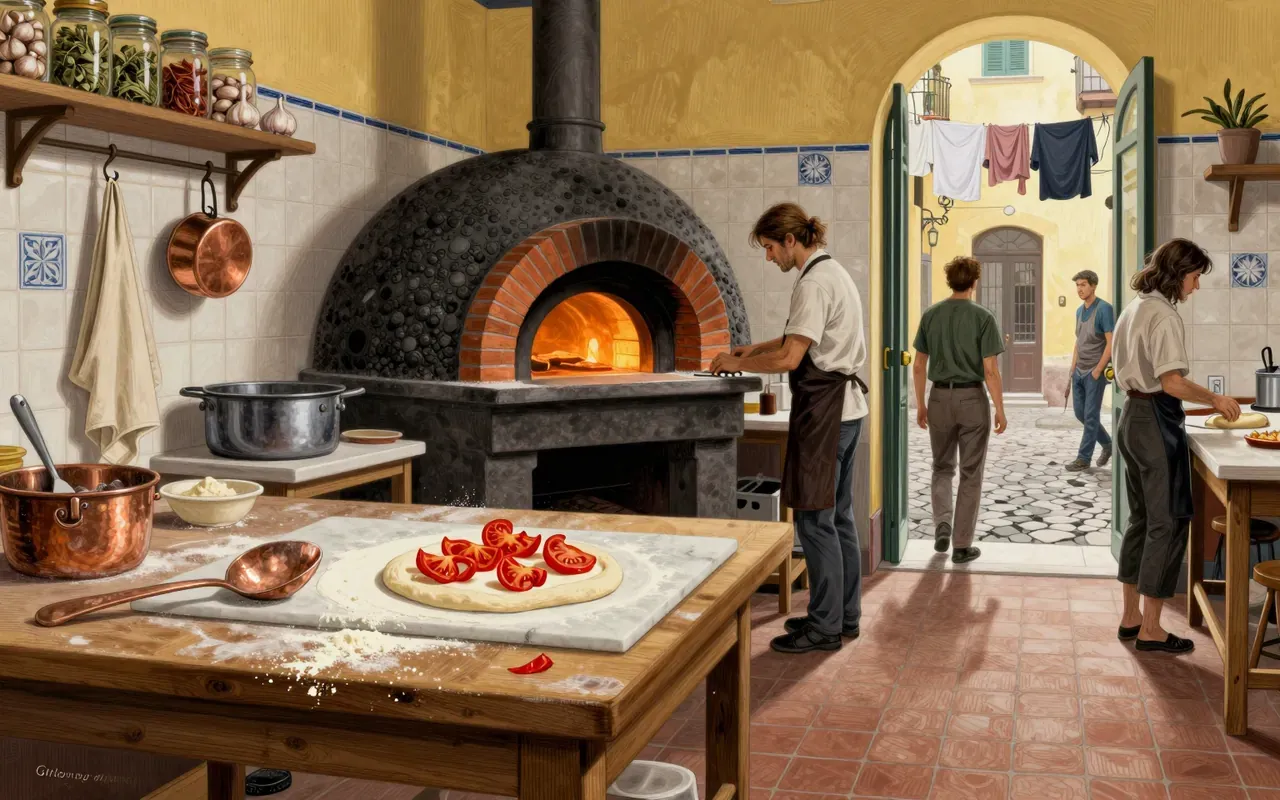
A pizzaiolo stretches dough outward from the center using fingers and flips it repeatedly to form a disc. It is topped with hand-crushed peeled tomatoes, mozzarella, fresh basil, and extra virgin olive oil, then baked—traditionally in a brick, wood-fired oven, though electric or gas ovens are also used.
What it gets right
It gets right a concise, balanced composition: the acidity of tomatoes, creaminess of mozzarella, aroma of fresh basil, and richness of olive oil. Its round shape and raised cornicione are characteristic of Neapolitan pizza.
What it does not
It does not include garlic, oregano, or grated cheese—common in other pizzas—so it offers less herbal or salty intensity.
What it changed
It became one of two defining Neapolitan pizzas, codifying a minimalist topping set alongside pizza marinara.
Who it is for, and who it is not
It is for people seeking a tomato-based, dairy-and-herb pizza with fresh, uncooked basil and olive oil finish. It is not for those avoiding dairy, raw herbs, or tomato acidity.
Is it worth your time
It is worth your time if you want a foundational Neapolitan pizza defined by its specific, unadorned ingredients and preparation.