foodbriefs
7:44in productionCh. 1 · Grain Discipline/ 7:44 · ceiling 15 min
Culture · Preserving & fermentation

Pilaf

Pilaf is not ancient tradition—it’s a precise, post-10th-century Arabic technique for keeping rice grains apart.

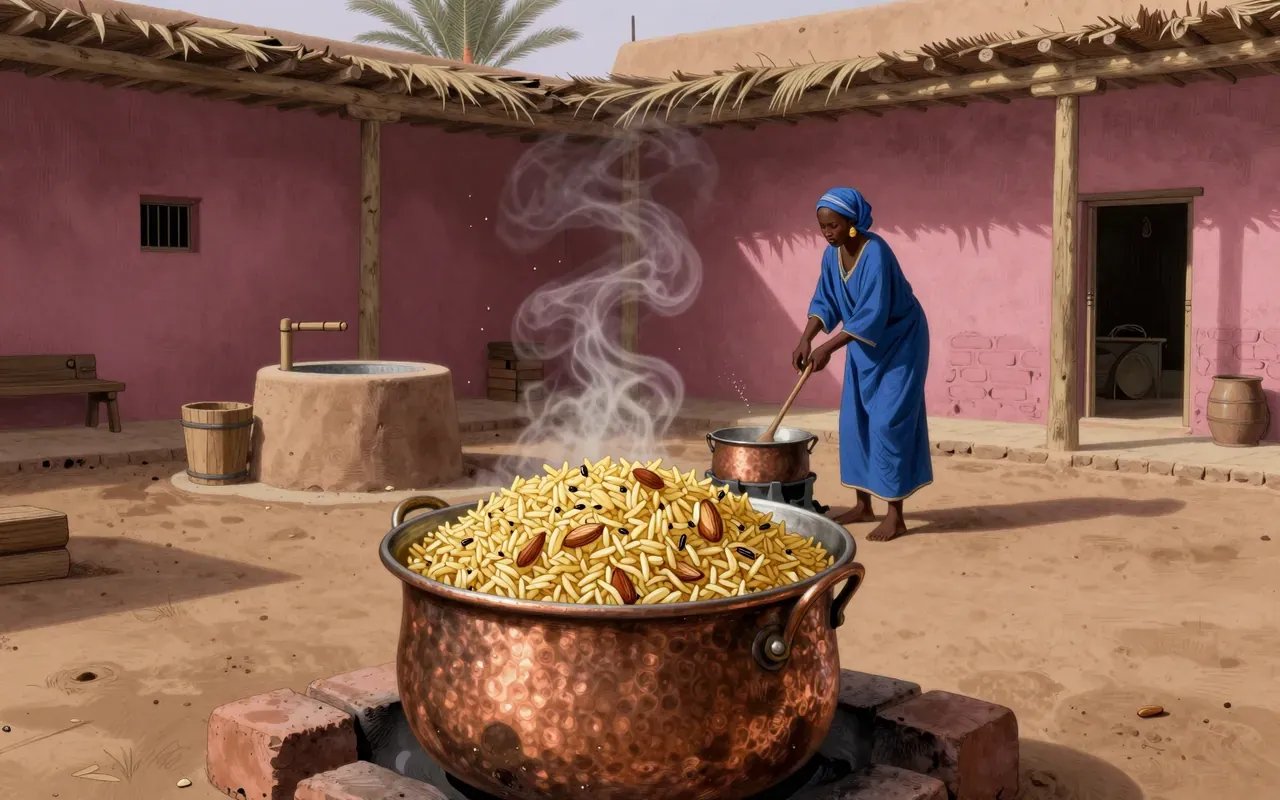
Pilaf is a technique, not a dish. It is rice (or wheat) cooked in stock with spices and aromatics, engineered to stay separate and firm—each grain intact, none mushy, none stuck.

Chapters & takeaways4
  1. 0:59
    Grain Discipline

    Pilaf is defined by texture: plump, firm, separate grains—no clumping, no mush.

  2. 2:16
    Not Ancient, Not Universal

    It began as an eastern Arabic innovation—not Persian, not Indian—and first appeared in writing in 13th-century Aleppo.

  3. 3:29
    Method Before Name

    Its method spread under the Abbasids; its name arrived later—in Persian verse, then English by 1609.

  4. 4:42
    One Word, Three Names

    Plain versions exist across languages—sade pilav, chelo, ruzz mufalfal—but English flattens them all into 'pilaf'.

Worth your time?

Yes. Cook the whole thing.

4.5/ 5
What works
  • Kitab al-Wusla
  • Mūš-o gorba
What does not
  • arguably
  • perhaps
  • in many ways
  • seminal
Cook it if
  • cooks
  • historians of empire
  • linguists tracking culinary terms
Skip it if
  • those seeking mythic origins
  • fans of vague praise
The written brief1 min read

What the thing is

Pilaf is a technique, not a dish. It is rice (or wheat) cooked in stock with spices and aromatics, engineered to stay separate and firm—each grain intact, none mushy, none stuck.

Where it came from

It emerged after the 10th century in eastern Arabic culinary practice. Its method spread during the Abbasid Caliphate. The word ‘pilaf’ first appears in a 14th-century Persian poem; the earliest explicit recipe is from a 13th-century Aleppo cookbook.

What it gets right

It delivers distinct, plump, non-clumping grains. Thirteenth-century texts demanded this. The method enforces discipline: stock, spice, timing, and separation are non-negotiable.

What it gets wrong

It pretends to be ancient. Pilaf is a post-10th-century eastern Arabic innovation—not Mesopotamian, not Vedic, not Persian in origin—despite Sanskrit linguistic roots.

Why it matters now

It reveals how food terminology travels faster than recipes—and how colonial-era dictionaries flattened regional specificity (sade pilav, chelo, ruzz mufalfal) into one anglicised label.

Is it worth your time

Yes—if you care about how cooking techniques encode power, migration, and precision across empires.
Same course · Culture4 of 158
Up next in Food

Sous vide

· 10:10

Sous vide doesn’t cook food—it holds it at the exact temperature where change happens, then outsources flavour to something else.

10:10