Saved
Culture · Drinks

Rum

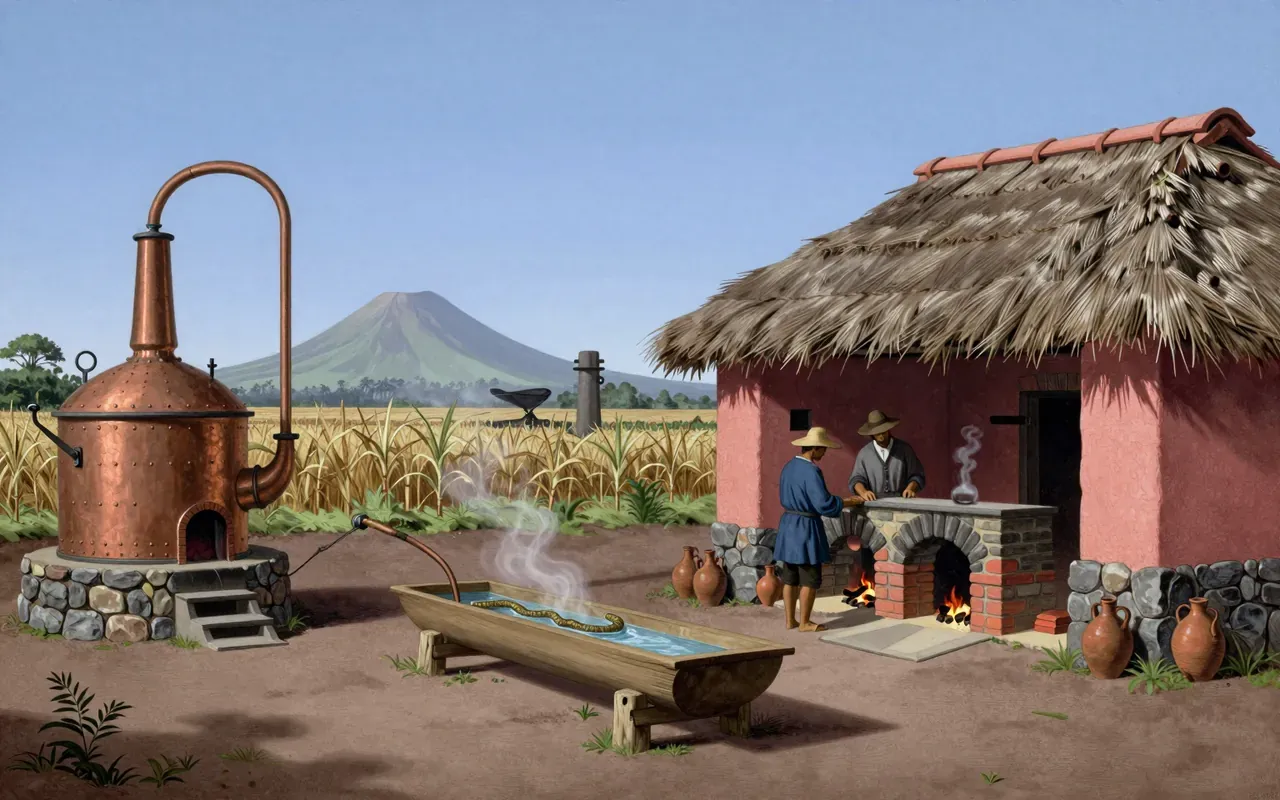
Rum is a liquor made by fermenting and then distilling sugarcane molasses or sugarcane juice, and it originated in the Caribbean in the 17th century.

Worth your time?3.5/5Yes.Cook the whole thing.What works, what does not, who it is for ↓
9:53in productionCh. 1 · What rum is/ 9:53 · ceiling 15 min
4 chapters · 9:53Ceiling 15:00

The brief is written and checked. The video joins this page when it is cut.4 chapters · 3 min read · 9:53 planned

Read the brief

Rum is made from fermented and distilled sugarcane molasses or juice, and is often aged in barrels. It originated in the Caribbean in the 17th century, where it was likely first made by enslaved people on sugar plantations, and is now made in nearly every major sugar-producing region. Styles range from light rums used in cocktails to aged rums drunk neat.

Chapters & takeaways4
  1. 0:55
    What rum is

    Rum is made by fermenting and distilling sugarcane molasses or juice, and is often aged in barrels.

  2. 2:24
    Precursors and Caribbean origins

    Fermented cane drinks are far older, rum production was recorded in Brazil in the 1520s, and modern rum is traditionally placed in the 17th-century Caribbean.

  3. 4:08
    Rum and the colonial economy

    Rum served as a medium of exchange in the triangular trade, the slave trade and New South Wales, was early New England's largest industry, and became the Royal Navy's daily ration.

  4. 5:27
    Styles and rules

    English, Spanish and French traditions, light to dark and overproof rums, and the EU and geographical-indication rules.

1 more chapterFewer chapters
Worth your time?

Yes. Cook the whole thing.

3.5/ 5
What works
  • light rums in cocktails such as the Mojito and Daiquiri
  • aged rums drunk neat, on the rocks or in cooking
What does not
  • follow a single global standard
  • show its age by its colour
Cook it if
  • drinkers choosing between rum styles
  • cocktail makers
  • readers of Caribbean and colonial history
Skip it if
  • anyone expecting one global standard for what counts as rum
Who should cook it, and who should skipHide who it is for
The written brief3 min read

What the dish is and where it came from

Rum is a liquor made by fermenting and then distilling sugarcane molasses or sugarcane juice. The distillate is initially clear and is often aged in barrels. Rum originated in the Caribbean in the 17th century, where it was likely first created by enslaved people on sugar plantations, and is now produced in nearly every major sugar-producing region.

Fermented sugarcane drinks are much older, and have been made for thousands of years in Austronesian Island Southeast Asia, where sugarcane originated. Rum production has been recorded in Brazil in the 1520s, and many historians believe rum-making reached the Caribbean with sugarcane from Brazil. The earliest record of rum in the Caribbean is a 1651 document from Barbados, which describes “Rumbullion, alias Kill-Divil”, made of distilled sugar canes. A liquid identified as rum was also found in a tin bottle on the Swedish warship Vasa, which sank in 1628.

How it works, in terms someone would actually use

The base is either molasses, a by-product of sugar refining, or fresh cane juice. It is fermented and distilled, then often aged. The choices that follow set the style.

English-style rum usually starts from molasses fermented for a prolonged period, which creates more esters and congeners, and is preferably distilled in pot stills for a heavy body. Spanish-style rum is also usually molasses, fermented briefly and distilled to a very high strength that strips out esters and congeners, so most of the flavour comes from barrel ageing. French-style rhum agricole is distilled from fresh cane juice and has a vegetal, grassy, earthy profile.

What it gets right

It suits both mixing and sipping. Light rums, a column-distilled Spanish style, are mild and used in cocktails such as the Mojito and Daiquiri. Aged or dark rums have deeper flavour and are drunk straight or iced, or used in cooking. Gold rums often gain colour and body from charred white oak barrels.

What it does not

There is no single global standard for what counts as rum. It is defined by the laws of each producing nation, and colour is not a guide: an aged rum can be filtered clear and an unaged one dyed gold or black. Age statements are not standardised, so some premium rums have misleading ones. Dark rums are largely unregulated, and most are cheap rums heavily dyed with caramel. Some rules do exist: from 25 May 2021 the European Union requires spirits labelled as rum to be unflavoured, made only from cane sugar or molasses, at least 37.5% ABV and with no more than 20g of added sugar per litre, and Martinique rhum was granted geographical indication protection in 1997.

What it changed

Rum was a medium of exchange. By the late 17th century it had replaced French brandy as the exchange alcohol of the triangular trade, and the slave Venture Smith was bought in Africa for four gallons of rum plus a piece of calico. The first rum distillery in the Thirteen Colonies opened in 1664 on Staten Island, and rum became early New England’s largest industry. The Molasses Act of 1733 taxed foreign molasses entering the colonies, and strict enforcement of its successor, the Sugar Act of 1764, may have been a factor in causing the American Revolution.

Rum became the Royal Navy’s daily ration after the capture of Jamaica in 1655, until the tot was abolished on 31 July 1970. In New South Wales it served as currency, and in 1808 the New South Wales Corps arrested Governor William Bligh in the Rum Rebellion after he outlawed that use.

Who it is for, and who it is not

It is for drinkers who want a spirit with many styles, from cocktail rums to aged sipping rums, and for readers interested in the Caribbean and colonial trade. It is less suited to anyone who wants a single consistent definition, or to judging a bottle by its colour.

Is it worth your time

Yes. Start with the style you want: a light rum for a Mojito or Daiquiri, an aged rum for sipping, or rhum agricole for a grassy cane-juice spirit.

Same course · Culture4 of 156
9:51
MezcalMezcal is a distilled agave spirit whose origin lies not in pre-Hispanic antiquity but in colonial-era technological transfer—specifically, Filipino distillation methods arriving via the Manila-Acapulco galleon trade (1565–1815). Its first documented production occurred in southern Jalisco; its first colonial record dates to 1619. It correctly centres agave as endemic to the Americas and acknowledges the hybrid nature of its making. It wrongly implies continuity with purely indigenous practice—distillation was introduced, not inherited. Today, it matters as a case study in how global trade remade local taste—and how origin stories flatten complexity. Worth your time if you reject mythmaking in favour of material history.
8:48
GumboGumbo is a stew from the U.S. Gulf Coast. It is defined by stock, meat or shellfish, the Creole 'holy trinity', and one of three thickeners: okra, filé powder, or roux. It originated in Louisiana in the early 18th century. It combines culinary practices from Central and West African, French, German, Spanish, and Native American Choctaw cultures. It was first described in 1802. It is traditionally served with rice. It simmers for a minimum of three hours, with shellfish and some spices added near the end. The preferred method in the historical New Orleans variation is with a French-inspired dark, even chocolate-like, roux. Gumbo is often categorized by the type of thickener used, whether okra or filé powder.
1:14
FeijoadaFeijoada is a bean stew with beef or pork, found in Portugal, Brazil, Angola, East Timor, Mozambique, and Macau. It uses white, black, or red beans and is usually served with rice.
8:18
SaffronSaffron is a botanically specific, chemically precise, and economically extreme spice—defined by what it is, not what it means.
Up next in Food

Tamales

· 9:31

Tamales are a Mesoamerican dish of nixtamalized corn dough, steamed in corn husks or banana leaves around a savoury or sweet filling.

9:31