1:22in productionCh. 1 · What the dish is and where it came from/ 1:22 · ceiling 15 min
Dishes · Food history
Samosa
A deep-fried triangular turnover from the Indian subcontinent with spiced vegetable, cheese, meat, or fish fillings.
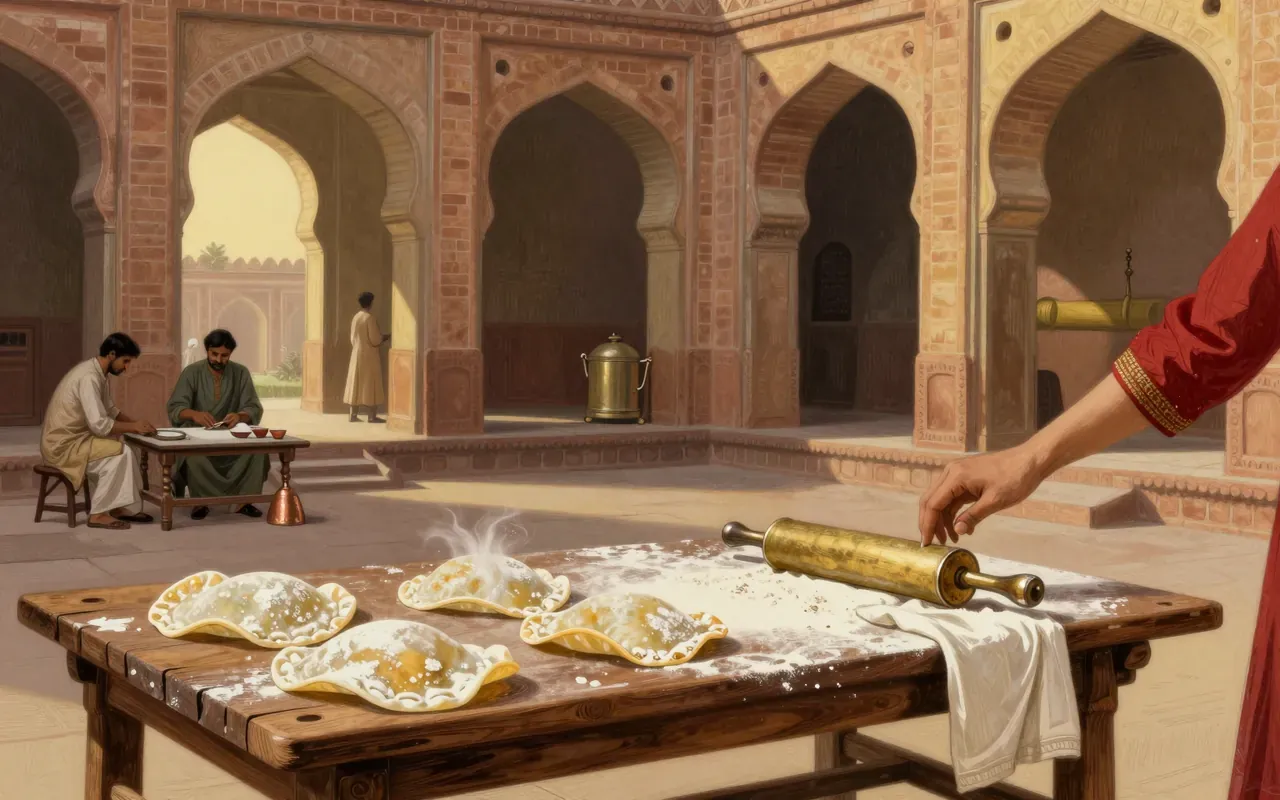
A samosa is a fried Indian subcontinent turnover with a savoury filling—mostly spiced potatoes, onions, and peas, but also paneer, meat, or fish. Its name comes from the Middle Persian word sambosag, meaning 'triangular pastry'. It likely descended from a medieval Middle Eastern baked precursor and entered South Asia in the 13th or 14th century via Middle Eastern and Central Asian chefs in Delhi Sultanate royal kitchens. Earlier forms like the sanbusaj appear in 10th–13th-century Arab cookery books and Abbasid poetry.
A samosa is a fried Indian subcontinent turnover with a savoury filling—mostly spiced potatoes, onions, and peas, but also paneer, meat, or fish.
0:32
How it works, in terms someone would actually use
The entire pastry is deep-fried in vegetable oil until golden-brown.
0:38
What it gets right
It gets right a portable, crisp, savoury format built around accessible, spiced vegetables—or adaptable proteins and cheese—making it widely approachable and satisfying.
0:47
What it does not
It does not offer a non-fried option in its standard form; the deep-frying is inherent to the described preparation.
0:55
What it changed
It changed from a baked Middle Eastern precursor to a deep-fried South Asian staple, adapting to local tastes and royal kitchen practices under the Delhi Sultanate.
1:05
Who it is for, and who it is not
It is for people seeking a handheld, savoury, spiced snack or appetizer with vegetable, cheese, meat, or fish options.
1:16
Is it worth your time
It is worth your time if you enjoy crisp, spiced, handheld savoury pastries served with chutney.
Worth your time?
Selectively. Start with the brief, then cook the parts we point at.
What works
It gets right a portable, crisp, savoury format built around accessible, spiced vegetables—or adaptable proteins and cheese—making it widely approachable and satisfying.
What does not
It does not offer a non-fried option in its standard form; the deep-frying is inherent to the described preparation.
Cook it if
Skip it if
The written brief1 min read
What the dish is and where it came from
A samosa is a fried Indian subcontinent turnover with a savoury filling—mostly spiced potatoes, onions, and peas, but also paneer, meat, or fish. Its name comes from the Middle Persian word sambosag, meaning ‘triangular pastry’. It likely descended from a medieval Middle Eastern baked precursor and entered South Asia in the 13th or 14th century via Middle Eastern and Central Asian chefs in Delhi Sultanate royal kitchens. Earlier forms like the sanbusaj appear in 10th–13th-century Arab cookery books and Abbasid poetry.
How it works, in terms someone would actually use
The entire pastry is deep-fried in vegetable oil until golden-brown. It is typically served with chutney.
What it gets right
It gets right a portable, crisp, savoury format built around accessible, spiced vegetables—or adaptable proteins and cheese—making it widely approachable and satisfying.
What it does not
It does not offer a non-fried option in its standard form; the deep-frying is inherent to the described preparation.
What it changed
It changed from a baked Middle Eastern precursor to a deep-fried South Asian staple, adapting to local tastes and royal kitchen practices under the Delhi Sultanate.
Who it is for, and who it is not
It is for people seeking a handheld, savoury, spiced snack or appetizer with vegetable, cheese, meat, or fish options. It is not for those avoiding deep-fried foods.
Is it worth your time
It is worth your time if you enjoy crisp, spiced, handheld savoury pastries served with chutney.