1:33in productionCh. 1 · What the dish is and where it came from/ 1:33 · ceiling 15 min
Dishes · Food history
Scotch egg
A boiled egg wrapped in sausage meat and coated in breadcrumbs, then baked or deep-fried.
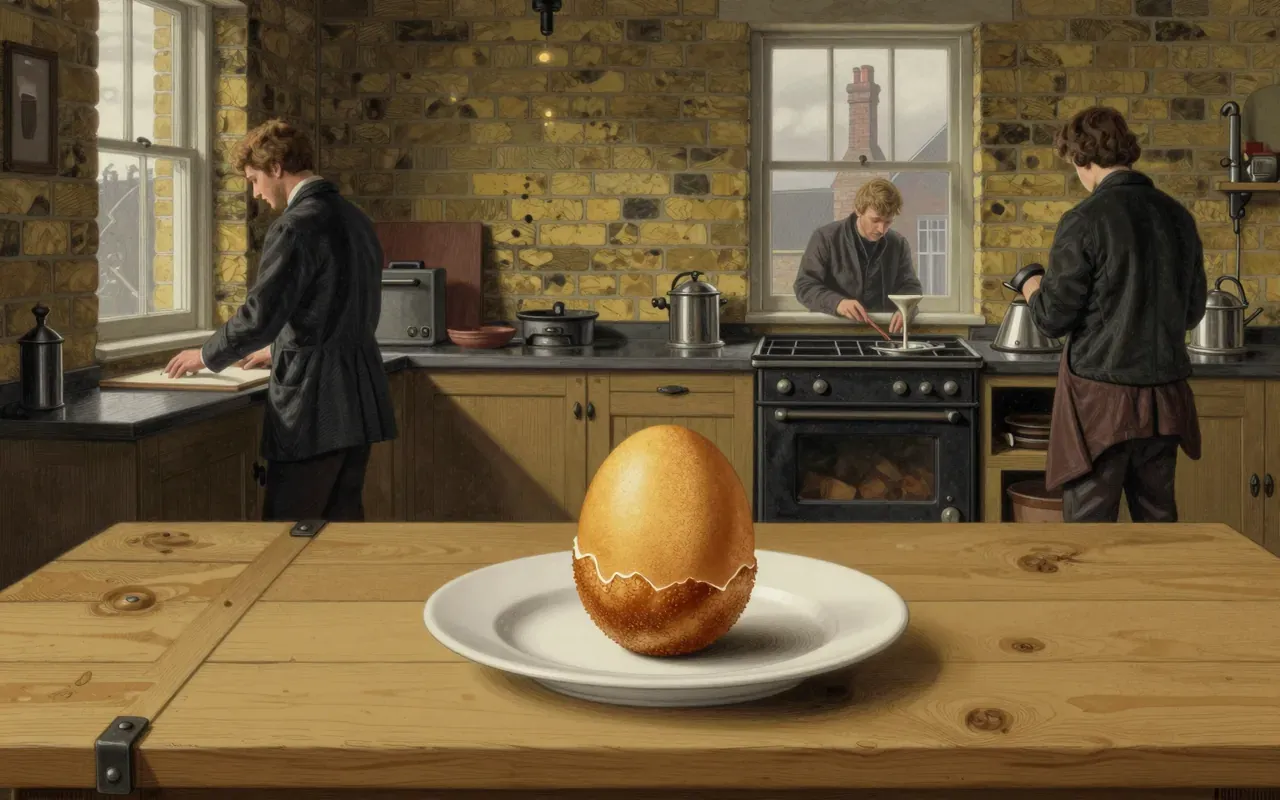
A Scotch egg is a boiled egg wrapped in sausage meat, coated in breadcrumbs, and baked or deep-fried. It originated in Whitby, Yorkshire, England, in the 19th century—though originally covered in fish paste, not sausage meat. The first recorded use of the name 'Scotch egg' dates to 1809 in Maria Rundell’s cookbook.
A Scotch egg is a boiled egg wrapped in sausage meat, coated in breadcrumbs, and baked or deep-fried.
0:21
How it works, in terms someone would actually use
It is made by hard- or soft-boiling an egg, wrapping it in sausage meat, and deep-frying it.
0:33
What it gets right
It delivers a self-contained, handheld format with contrasting textures: tender egg, savory meat, and crisp exterior.
0:45
What it does not
The breadcrumb layer was not part of the original version and only appeared as an option by 1861.
0:57
What it changed
It evolved from a fish-paste-wrapped version to one using sausage meat and later added breadcrumbs.
1:09
Who it is for, and who it is not
It is for people who enjoy hot, handheld savory snacks with egg and meat.
1:23
Is it worth your time
Yes, if you want a portable, protein-focused snack with simple, familiar ingredients.
Worth your time?
Selectively. Start with the brief, then cook the parts we point at.
What works
It delivers a self-contained, handheld format with contrasting textures: tender egg, savory meat, and crisp exterior. The combination of protein-rich components makes it satisfying as a snack or light meal.
What does not
The breadcrumb layer was not part of the original version and only appeared as an option by 1861. This means early versions lacked the characteristic crunch associated with modern preparations.
Cook it if
Skip it if
The written brief1 min read
What the dish is and where it came from
A Scotch egg is a boiled egg wrapped in sausage meat, coated in breadcrumbs, and baked or deep-fried. It originated in Whitby, Yorkshire, England, in the 19th century—though originally covered in fish paste, not sausage meat. The first recorded use of the name ‘Scotch egg’ dates to 1809 in Maria Rundell’s cookbook.
How it works, in terms someone would actually use
It is made by hard- or soft-boiling an egg, wrapping it in sausage meat, and deep-frying it. Some versions are baked instead. A breadcrumb coating is applied before cooking.
What it gets right
It delivers a self-contained, handheld format with contrasting textures: tender egg, savory meat, and crisp exterior. The combination of protein-rich components makes it satisfying as a snack or light meal.
What it does not
The breadcrumb layer was not part of the original version and only appeared as an option by 1861. This means early versions lacked the characteristic crunch associated with modern preparations.
What it changed
It evolved from a fish-paste-wrapped version to one using sausage meat and later added breadcrumbs. The shift reflects broader changes in ingredient availability and culinary preference in 19th-century England.
Who it is for, and who it is not
It is for people who enjoy hot, handheld savory snacks with egg and meat. It is not for those avoiding eggs, pork (common in sausage meat), or fried foods—or those seeking vegetarian, vegan, or seafood-based options.
Is it worth your time
Yes, if you want a portable, protein-focused snack with simple, familiar ingredients. Its preparation is straightforward and its format suits picnics, pubs, or quick meals.