1:22in productionCh. 1 · What the dish is and where it came from/ 1:22 · ceiling 15 min
Dishes · Technique
Shabu-shabu
A Japanese hotpot of paper-thin meat and vegetables swished in boiling water or kelp broth, eaten with dipping sauces.
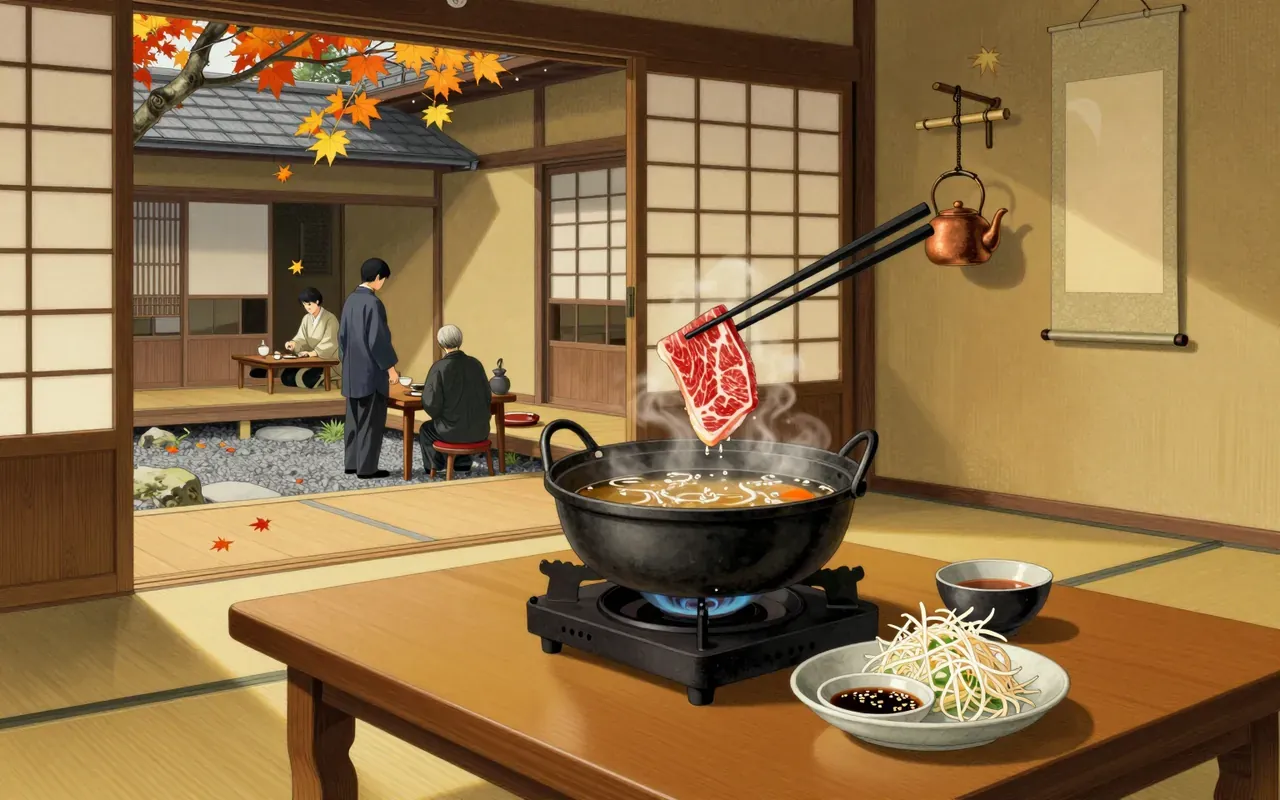
Shabu-shabu is a Japanese nabemono hotpot dish invented in the 20th century at Osaka’s Suehiro restaurant. It consists of thinly sliced meat and vegetables boiled in water or dashi and served with dipping sauces.
Shabu-shabu is a Japanese nabemono hotpot dish invented in the 20th century at Osaka’s Suehiro restaurant.
0:14
How it works, in terms someone would actually use
Diners cook it themselves at the table: submerging one thin slice of meat or vegetable at a time into boiling water or konbu dashi, stirring briefly—just seconds—until cooked.
0:25
What it gets right
It gets right the interplay of sound, speed, and simplicity: the onomatopoeic 'swish swish' matches its quick cooking, its savory profile distinguishes it from sweeter sukiyaki, and ponzu or sesame sauce adds contrast to plain broth.
0:39
What it does not
It does not offer the sweetness found in sukiyaki, making it less aligned with preferences for richer, sweeter hotpot flavors.
0:47
What it changed
It changed Japanese hotpot culture by introducing a new name, method, and identity—originating as a distinct dish at Suehiro, not as a variant of older preparations.
0:57
Who it is for, and who it is not
It is for people who enjoy interactive, light, savory meals with meat and vegetables, served with rice and dipping sauces.
1:13
Is it worth your time
It is worth your time if you want a hands-on, fast-cooking hotpot centered on delicate meat slices, simple broth, and customizable sauces.
Worth your time?
Selectively. Start with the brief, then cook the parts we point at.
What works
It gets right the interplay of sound, speed, and simplicity: the onomatopoeic 'swish swish' matches its quick cooking, its savory profile distinguishes it from sweeter sukiyaki, and ponzu or sesame sauce adds contrast to plain broth.
What does not
It does not offer the sweetness found in sukiyaki, making it less aligned with preferences for richer, sweeter hotpot flavors.
Cook it if
Skip it if
The written brief1 min read
What the dish is and where it came from
Shabu-shabu is a Japanese nabemono hotpot dish invented in the 20th century at Osaka’s Suehiro restaurant. It consists of thinly sliced meat and vegetables boiled in water or dashi and served with dipping sauces.
How it works, in terms someone would actually use
Diners cook it themselves at the table: submerging one thin slice of meat or vegetable at a time into boiling water or konbu dashi, stirring briefly—just seconds—until cooked.
What it gets right
It gets right the interplay of sound, speed, and simplicity: the onomatopoeic ‘swish swish’ matches its quick cooking, its savory profile distinguishes it from sweeter sukiyaki, and ponzu or sesame sauce adds contrast to plain broth.
What it does not
It does not offer the sweetness found in sukiyaki, making it less aligned with preferences for richer, sweeter hotpot flavors.
What it changed
It changed Japanese hotpot culture by introducing a new name, method, and identity—originating as a distinct dish at Suehiro, not as a variant of older preparations.
Who it is for, and who it is not
It is for people who enjoy interactive, light, savory meals with meat and vegetables, served with rice and dipping sauces. It is not for those seeking a sweet hotpot, a pre-cooked meal, or a dish without meat or broth-based cooking.
Is it worth your time
It is worth your time if you want a hands-on, fast-cooking hotpot centered on delicate meat slices, simple broth, and customizable sauces.