0:49in productionCh. 1 · What the dish is and where it came from/ 0:49 · ceiling 15 min
Street food · TechniqueShawarma
A Middle Eastern street food of thin-sliced meat roasted on a vertical spit and shaved off as it cooks.
Shawarma is a popular Middle Eastern street food that originated in the Levant during the Ottoman Empire.
Chapters & takeaways7
- 0:00
What the dish is and where it came from
Shawarma is a popular Middle Eastern street food that originated in the Levant during the Ottoman Empire.
- 0:07
How it works, in terms someone would actually use
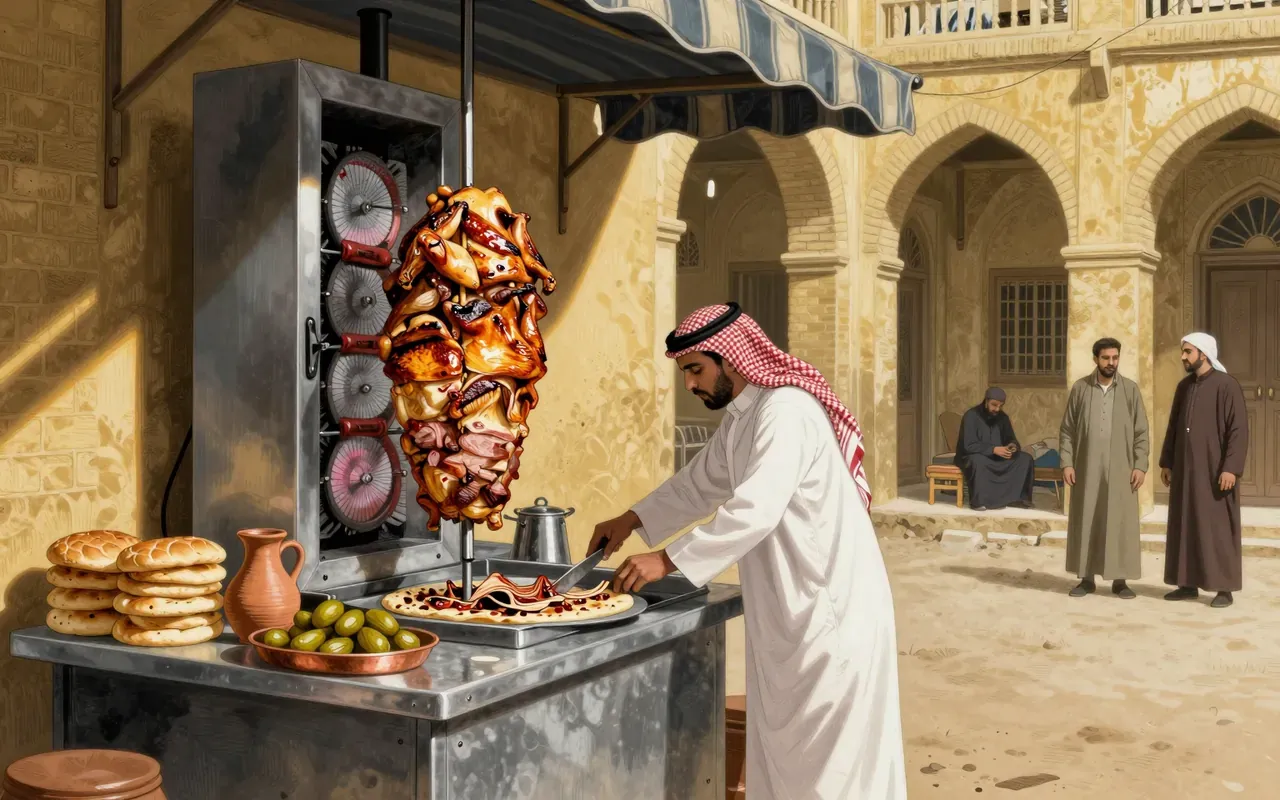
Thin meat slices are stacked in an inverted cone on a slow-turning vertical spit; the cooked outer layer is shaved off as it finishes cooking.
- 0:17
What it gets right
It offers flexibility in protein—traditionally lamb or mutton, but also chicken, turkey, beef, veal, or falafel.
- 0:23
What it does not
It is not a vegetable-forward dish, given its primary reliance on meat or falafel.
- 0:29
What it changed
It led to tacos al pastor in early 20th-century Mexico, adapted by Lebanese immigrants.
- 0:35
Who it is for, and who it is not
It is for people seeking portable, meat-based street food.
- 0:42
Is it worth your time
It is worth your time if you enjoy grilled, thinly sliced proteins served fresh off the spit.
Worth your time?
Selectively. Start with the brief, then cook the parts we point at.
What works- It offers flexibility in protein—traditionally lamb or mutton, but also chicken, turkey, beef, veal, or falafel.
What does not- It is not a vegetable-forward dish, given its primary reliance on meat or falafel.
The written brief1 min read
What the dish is and where it came from
Shawarma is a popular Middle Eastern street food that originated in the Levant during the Ottoman Empire.
How it works, in terms someone would actually use
Thin meat slices are stacked in an inverted cone on a slow-turning vertical spit; the cooked outer layer is shaved off as it finishes cooking.
What it gets right
It offers flexibility in protein—traditionally lamb or mutton, but also chicken, turkey, beef, veal, or falafel.
What it does not
It is not a vegetable-forward dish, given its primary reliance on meat or falafel.
What it changed
It led to tacos al pastor in early 20th-century Mexico, adapted by Lebanese immigrants.
Who it is for, and who it is not
It is for people seeking portable, meat-based street food. It is not for those avoiding meat or falafel.
Is it worth your time
It is worth your time if you enjoy grilled, thinly sliced proteins served fresh off the spit.
Same course · Street food4 of 38