9:22in productionCh. 1 · 1791: The first cottage pie/ 9:22 · ceiling 15 min
Culture · Dishes
Shepherd's pie
Shepherd’s pie isn’t a shepherd’s dish—it’s a label slapped on centuries of improvised leftovers.
Shepherd's pie is a culinary label applied inconsistently across two centuries—to dishes with beef or lamb, minced or sliced meat, pastry or no pastry, individual or shared servings. Its supposed pastoral logic is a later fiction.
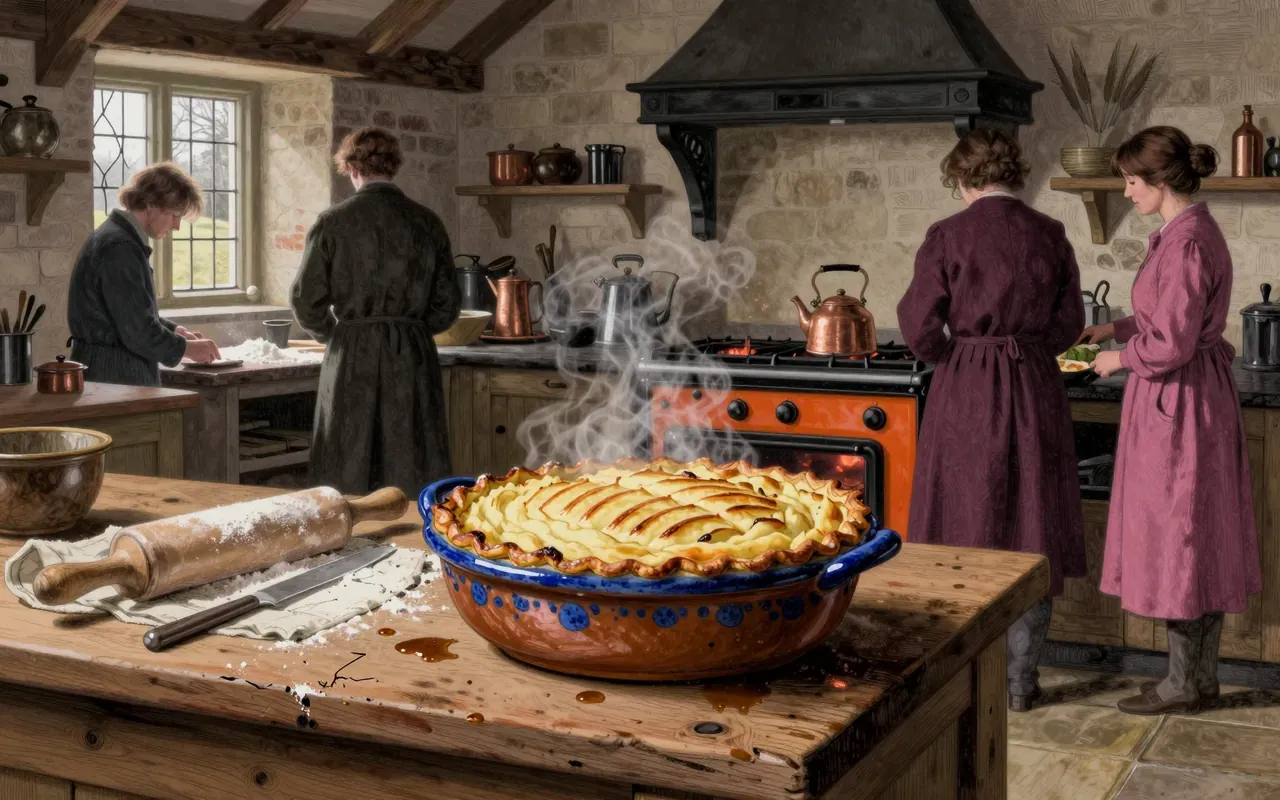
Cottage pie predates shepherd’s pie by decades—and appears in a clergyman’s diary, not a farmhouse kitchen.
2:26
Not all shepherd’s pies have shepherds
Shepherd’s pie wasn’t always lamb—and in the 1850s, it was sometimes a Scottish pastry pie with diced potato.
3:46
The only constant is the bake
The core method is stable: cooked meat + mashed potato + oven. But 'cooked' means leftover or freshly minced—no hierarchy required.
5:04
Minced? Sliced? Baked alone or in pastry? All were shepherd’s pie.
In 1806, Rundell served it as individual 'Sanders'; in 1849, Edinburgh used sliced meat—not minced—under the same name.
Worth your time?
Yes. Cook the whole thing.
3.5/ 5
What works
as a case study in lexical drift
What does not
invention
innovation
movement
revolution
Cook it if
anyone who questions why food terms carry class baggage
Skip it if
those seeking definitive origin stories or recipe authority
The written brief1 min read
What the thing is
A baked dish of savoury filling topped with mashed potato.
Where it came from
The term ‘cottage pie’ appeared in 1791 in Parson Woodforde’s diary; ‘shepherd’s pie’ followed in the nineteenth century, with early recipes using beef, mutton, sliced meat, pastry crusts, or individual servings.
What it gets right
It names a functional, adaptable cooking method: meat (cooked or fresh, minced or sliced) covered with mashed potato and baked.
What it gets wrong
It implies a clean lamb-beef divide—‘shepherd’s’ for lamb, ‘cottage’ for beef—when historical usage shows no such consistency before the twentieth century.
Why it matters now
It reveals how culinary labels get retrofitted with moral or class-based logic—‘cottage’ as humble, ‘shepherd’s’ as pastoral—despite overlapping origins and variable preparation.
Is it worth your time
Yes—if you care about how food terms ossify into false binaries while obscuring real historical messiness.