foodbriefs
1:22in productionCh. 1 · What the dish is and where it came from/ 1:22 · ceiling 15 min
Dishes · Food history

Steak and kidney pie

A British savoury pie with diced beef, kidney, and onion, baked in pastry.

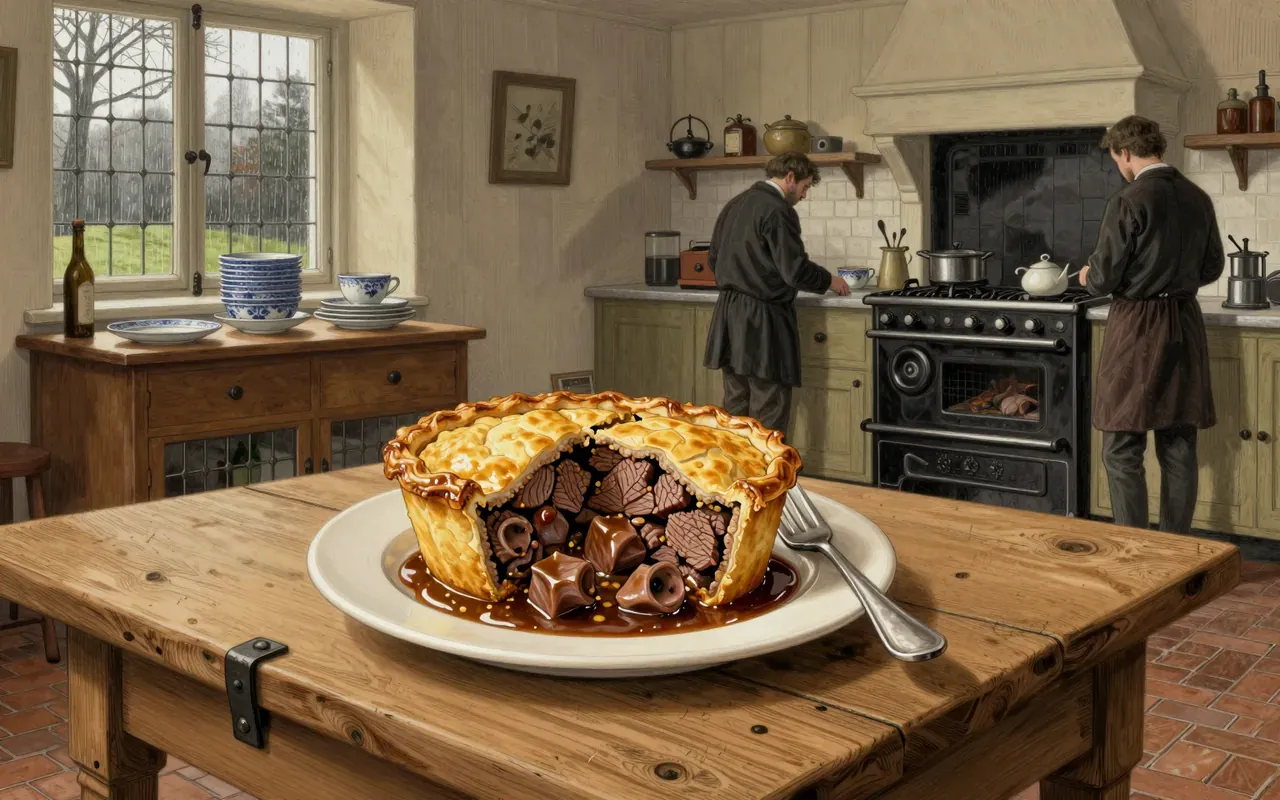
Steak and kidney pie is a British dish. The first published recipe for the steak-and-kidney combination appeared in 1859 in Mrs Beeton’s Household Management. It was sent by a correspondent in Sussex, suggesting regional origins before wider adoption.

Chapters & takeaways7
  1. 0:00
    What the dish is and where it came from

    Steak and kidney pie is a British dish.

  2. 0:15
    How it works, in terms someone would actually use

    It is a savoury pie filled principally with diced beef, diced kidney (beef, lamb, veal, or pork), and onion.

  3. 0:31
    What it gets right

    It gets right a hearty, meat-focused format using accessible offal and beef.

  4. 0:40
    What it does not

    It does not include vegetables beyond onion.

  5. 0:48
    What it changed

    It changed from an 1859 pudding format to a modern pie.

  6. 1:01
    Who it is for, and who it is not

    It is for people who eat beef and kidney and prefer hot, pastry-encased savoury dishes.

  7. 1:11
    Is it worth your time

    It is worth your time if you seek a traditional British meat pie with kidney and beef.

Worth your time?

Selectively. Start with the brief, then cook the parts we point at.

What works
  • It gets right a hearty, meat-focused format using accessible offal and beef. The inclusion of onion adds savoury depth to the filling.
What does not
  • It does not include vegetables beyond onion. The meat filling makes it less appealing if you want a vegetable-forward dish.
Cook it if
    Skip it if
      The written brief1 min read

      What the dish is and where it came from

      Steak and kidney pie is a British dish. The first published recipe for the steak-and-kidney combination appeared in 1859 in Mrs Beeton’s Household Management. It was sent by a correspondent in Sussex, suggesting regional origins before wider adoption.

      How it works, in terms someone would actually use

      It is a savoury pie filled principally with diced beef, diced kidney (beef, lamb, veal, or pork), and onion. Some versions are double-crust: pastry lines the dish, then holds the meat mixture, then is covered with a pastry top.

      What it gets right

      It gets right a hearty, meat-focused format using accessible offal and beef. The inclusion of onion adds savoury depth to the filling.

      What it does not

      It does not include vegetables beyond onion. The meat filling makes it less appealing if you want a vegetable-forward dish.

      What it changed

      It changed from an 1859 pudding format to a modern pie. Until the mid-19th century, steak puddings and kidney pies were the norm; now the fillings are generally identical across both forms.

      Who it is for, and who it is not

      It is for people who eat beef and kidney and prefer hot, pastry-encased savoury dishes. It is not for people avoiding offal, red meat, or pastry.

      Is it worth your time

      It is worth your time if you seek a traditional British meat pie with kidney and beef. It is not for those seeking vegetarian, light, or non-pastry options.
      Same course · Dishes4 of 496
      8:52
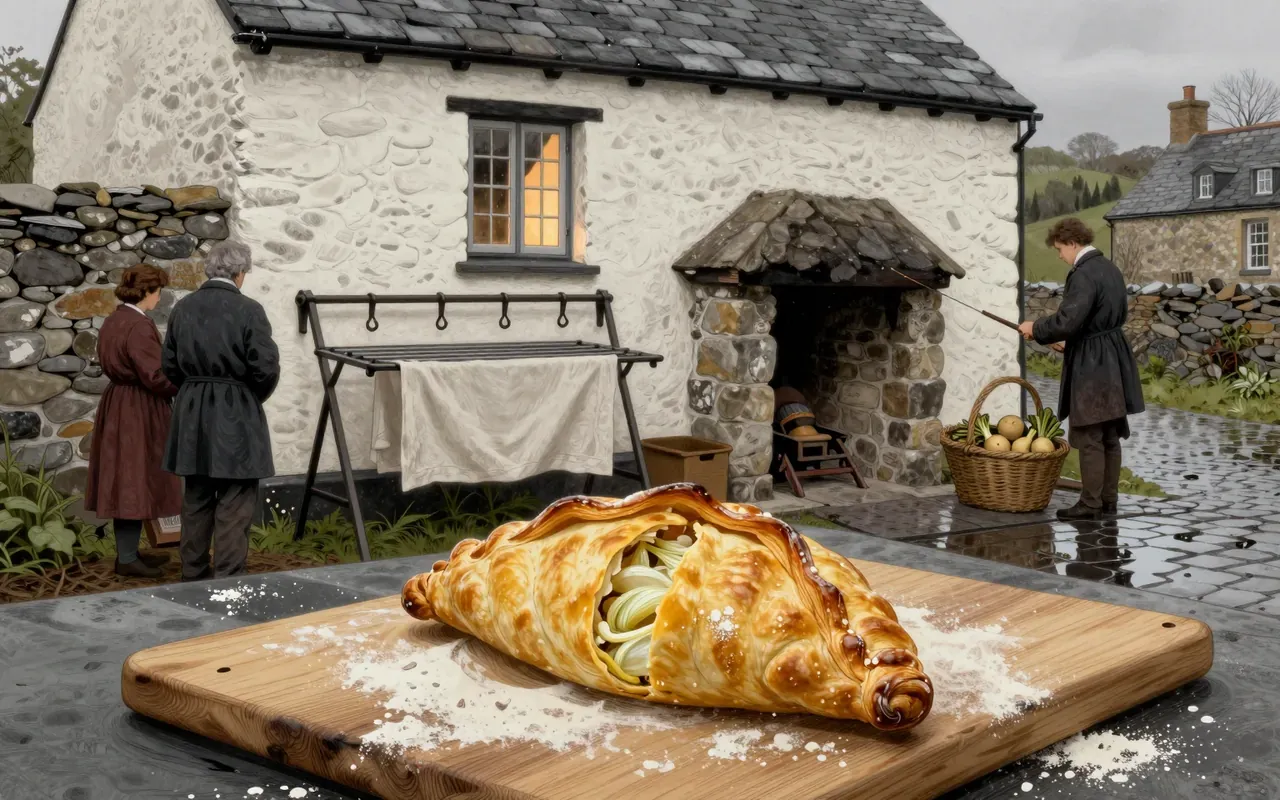
      PastyThe pasty is a British baked turnover from Cornwall and Devon, documented since 1509/10. Its PGI-protected Cornish version uses only beef, potato, swede, and onion in a 'D'-shaped, side-crimped shortcrust. It evolved from elite medieval fare into a portable meal for tin miners in the 17th–18th centuries. UK law requires at least 12.75% meat by weight. Top crimping or non-Cornish production voids the Cornish label.
      1:26
      Welsh rarebitWelsh rarebit is a dish of hot cheese sauce served on toasted bread. It often includes ale, mustard, or Worcestershire sauce. The earliest recorded name is 'Welsh rabbit' in 1725; 'Welsh rarebit' first appears in 1781. Both names are jocular, as the dish contains no rabbit.
      9:42
      Sunday roastThe Sunday roast is a British dish traditionally eaten on Sunday. It originated in Britain as a meal to be eaten after the church service on Sunday. Eating a large meal following church services is common to most of Europe, but the Sunday roast variant developed as unique to Britain. On Sundays all types of meat and dairy produce are allowed to be eaten; this is unlike Fridays, when many Christians of the Roman Catholic, Anglican and Methodist denominations traditionally abstain from eating meats and instead eat fish. Likewise, it is traditional for Anglicans and English Catholics to fast before Sunday services, with a larger meal to break the fast afterwards. To mark the end of not being able to eat meat, the Sunday roast was created as a mark of celebration. In the late 1700s, during the Industrial Revolution in Britain, families would place a cut of meat into the oven as they got ready for church. They would then add in vegetables such as potatoes, turnips and parsnips before going to church on a Sunday morning. When they returned from the church, the dinner was all but ready. The juices from the meat and vegetables were used to make a stock or gravy to pour on top of the dinner.
      1:33
      Scotch eggA Scotch egg is a boiled egg wrapped in sausage meat, coated in breadcrumbs, and baked or deep-fried. It originated in Whitby, Yorkshire, England, in the 19th century—though originally covered in fish paste, not sausage meat. The first recorded use of the name 'Scotch egg' dates to 1809 in Maria Rundell’s cookbook.
      Up next in Food

      Steak frites

      · 1:03

      Beefsteak with deep-fried chipped potatoes, served in Belgian and French brasseries.

      1:03