1:17in productionCh. 1 · What the dish is and where it came from/ 1:17 · ceiling 15 min
Ingredients · Food history
Tahini
A creamy, oily paste made from toasted, ground sesame kernels, used across multiple regions as a condiment, bread accompaniment, or ingredient in dishes like hummus.
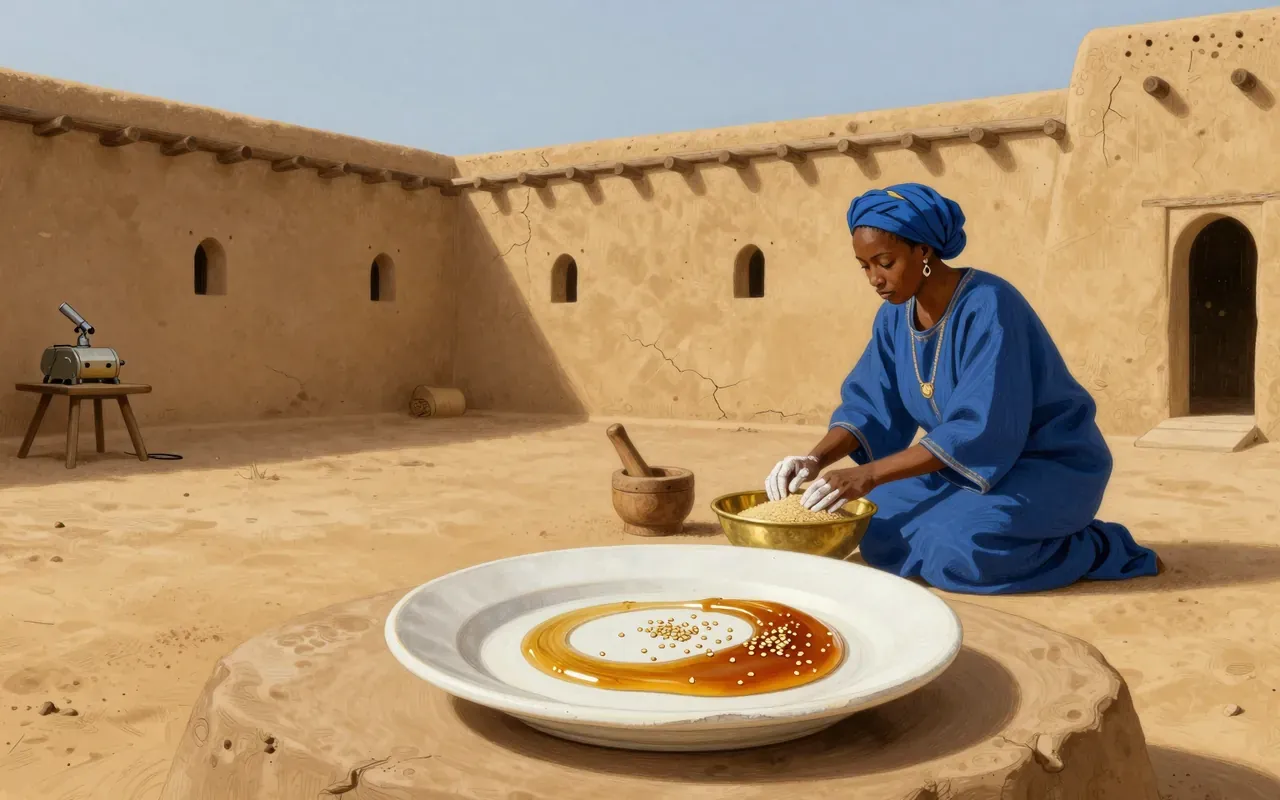
Tahini is a sesame-based paste with roots in the ancient Middle East. The oldest reference to sesame dates to a 4,000-year-old cuneiform text. A 10th-century Arabic cookbook mentions ground sesame as food. It appears in a 13th-century Arabic hummus recipe and in a 14th-century Hebrew text describing its use with date honey.
Tahini is a sesame-based paste with roots in the ancient Middle East.
0:21
How it works, in terms someone would actually use
Sesame seeds are soaked, crushed to separate bran from kernels, soaked again in high-salt water so bran sinks, then skimmed, toasted, and ground into an oily paste.
0:32
What it gets right
It works well as a versatile condiment or bread accompaniment.
0:48
What it does not
Its concentrated sesame-paste form is a condiment or ingredient rather than a complete dish on its own.
0:55
What it changed
It changed by becoming an ingredient in hummus kasa, a documented 13th-century formulation.
1:00
Who it is for, and who it is not
It suits someone interested in sesame-based condiments, whether as an accompaniment to bread or an ingredient in dishes such as hummus.
1:08
Is it worth your time
It is worth your time if you seek a traditional condiment used across many cuisines with documented historical continuity and widespread regional use.
Worth your time?
Selectively. Start with the brief, then cook the parts we point at.
What works
It works well as a versatile condiment or bread accompaniment. Its presence in cuisines across the Middle East, Eastern Mediterranean, South Asia, Central Asia, the Balkans, Caucasus, North Africa, Russia, and among Cypriot and Ashkenazi Jewish communities reflects broad culinary integration.
What does not
Its concentrated sesame-paste form is a condiment or ingredient rather than a complete dish on its own.
Cook it if
Skip it if
The written brief1 min read
What the dish is and where it came from
Tahini is a sesame-based paste with roots in the ancient Middle East. The oldest reference to sesame dates to a 4,000-year-old cuneiform text. A 10th-century Arabic cookbook mentions ground sesame as food. It appears in a 13th-century Arabic hummus recipe and in a 14th-century Hebrew text describing its use with date honey.
How it works, in terms someone would actually use
Sesame seeds are soaked, crushed to separate bran from kernels, soaked again in high-salt water so bran sinks, then skimmed, toasted, and ground into an oily paste.
What it gets right
It works well as a versatile condiment or bread accompaniment. Its presence in cuisines across the Middle East, Eastern Mediterranean, South Asia, Central Asia, the Balkans, Caucasus, North Africa, Russia, and among Cypriot and Ashkenazi Jewish communities reflects broad culinary integration.
What it does not
Its concentrated sesame-paste form is a condiment or ingredient rather than a complete dish on its own.
What it changed
It changed by becoming an ingredient in hummus kasa, a documented 13th-century formulation.
Who it is for, and who it is not
It suits someone interested in sesame-based condiments, whether as an accompaniment to bread or an ingredient in dishes such as hummus.
Is it worth your time
It is worth your time if you seek a traditional condiment used across many cuisines with documented historical continuity and widespread regional use.