1:13in productionCh. 1 · What the dish is and where it came from/ 1:13 · ceiling 15 min
Ingredients · Technique
Wasabi
A pungent green paste made from grated wasabi rhizomes, used primarily with sushi.
Wasabi is a pungent green condiment made from the rhizomes of a plant native to Japan, the Russian Far East, and the Korean Peninsula. The oldest food-related record dates to the 8th century.
Wasabi is a pungent green condiment made from the rhizomes of a plant native to Japan, the Russian Far East, and the Korean Peninsula.
0:13
How it works, in terms someone would actually use
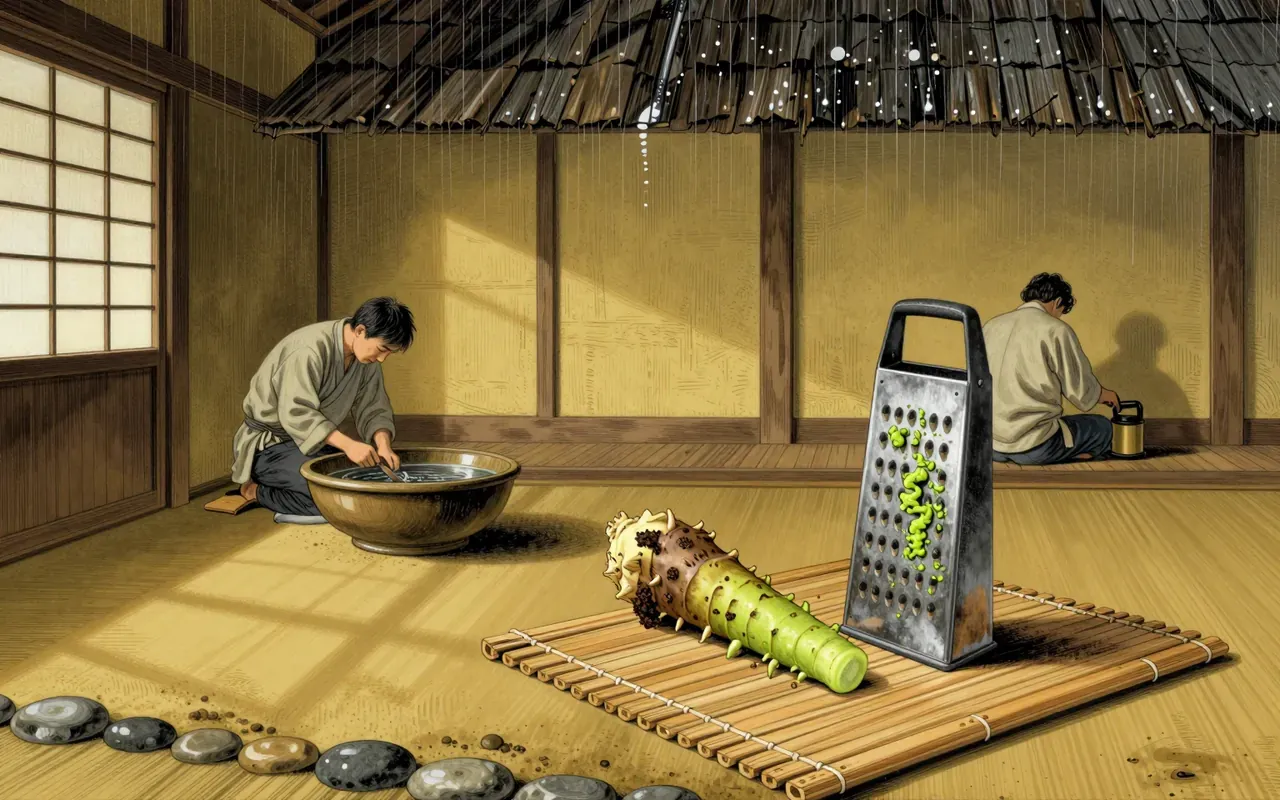
Fresh wasabi rhizomes are grated—traditionally on sharkskin, now often on metal graters—into a paste.
0:25
What it gets right
It delivers sharp, volatile pungency that complements raw fish.
0:33
What it does not
Fresh paste loses flavor quickly if uncovered.
0:39
What it changed
Its use with sushi places this pungent condiment within a broader Japanese meal, where a small accompaniment can be an important part of the choice.
0:49
Who it is for, and who it is not
It is for people who eat sushi or other foods served with a pungent green condiment.
1:01
Is it worth your time
Yes—if you value fresh, volatile pungency and have access to whole rhizomes or high-end preparation.
Worth your time?
Selectively. Start with the brief, then cook the parts we point at.
What works
It delivers sharp, volatile pungency that complements raw fish. Its freshness is preserved by on-the-spot grating and strategic placement in sushi.
What does not
Fresh paste loses flavor quickly if uncovered. Most store-bought versions are reconstituted powders, not fresh rhizomes.
Cook it if
Skip it if
The written brief1 min read
What the dish is and where it came from
Wasabi is a pungent green condiment made from the rhizomes of a plant native to Japan, the Russian Far East, and the Korean Peninsula. The oldest food-related record dates to the 8th century.
How it works, in terms someone would actually use
Fresh wasabi rhizomes are grated—traditionally on sharkskin, now often on metal graters—into a paste. It is eaten in small amounts, usually applied between fish and rice in sushi to preserve flavor.
What it gets right
It delivers sharp, volatile pungency that complements raw fish. Its freshness is preserved by on-the-spot grating and strategic placement in sushi.
What it does not
Fresh paste loses flavor quickly if uncovered. Most store-bought versions are reconstituted powders, not fresh rhizomes.
What it changed
Its use with sushi places this pungent condiment within a broader Japanese meal, where a small accompaniment can be an important part of the choice.
Who it is for, and who it is not
It is for people who eat sushi or other foods served with a pungent green condiment. It is not for those seeking a shelf-stable, long-lasting paste without refrigeration or immediate preparation.
Is it worth your time
Yes—if you value fresh, volatile pungency and have access to whole rhizomes or high-end preparation. No—if you rely on convenience tubes or expect lasting flavor without grating on demand.