1:06in productionCh. 1 · What the dish is and where it came from/ 1:06 · ceiling 15 min
Dishes · Technique
Tarte Tatin
An upside-down tart of caramelized apples baked under pastry, named after the Tatin sisters’ hotel in Lamotte-Beuvron.
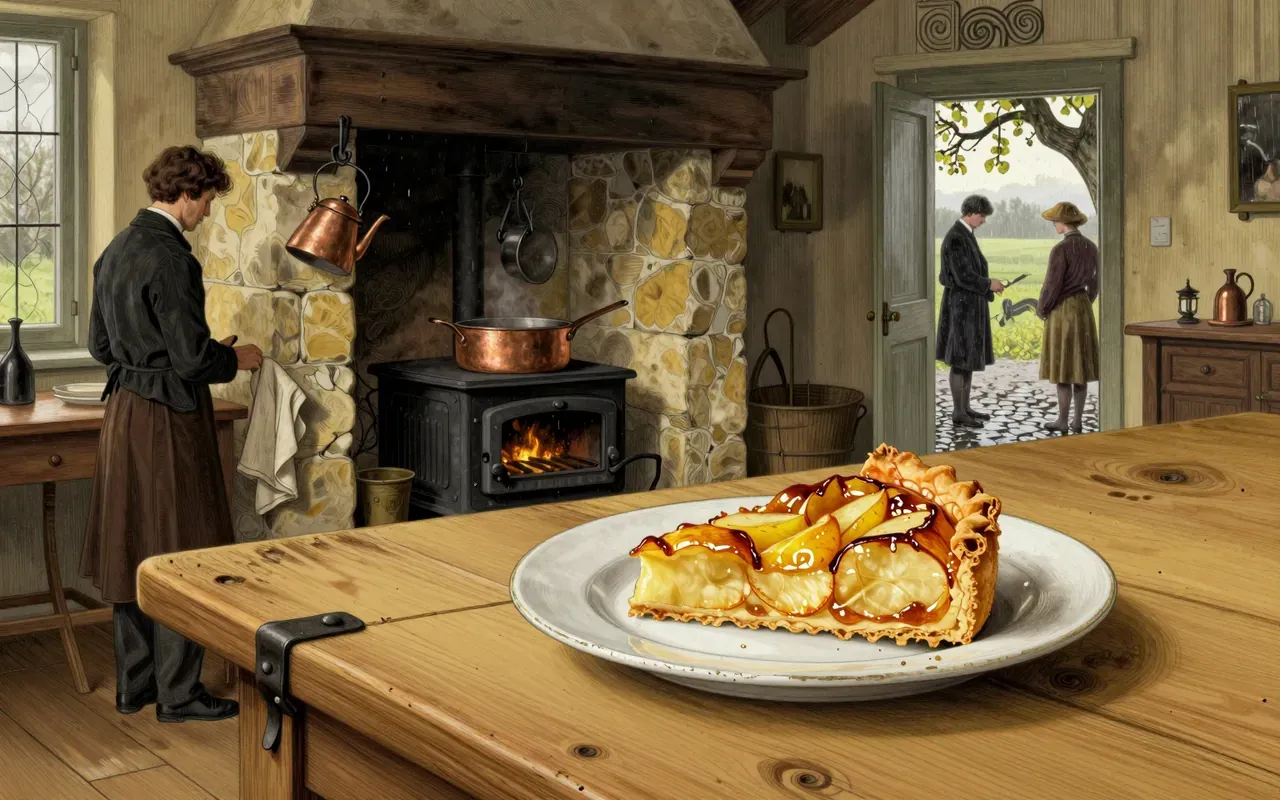
The tarte Tatin is an upside-down tart where fruit—usually apples—is caramelized in butter and sugar before baking. It is named after the Tatin sisters, who served it as their hotel’s signature dish in Lamotte-Beuvron, France. Historians dispute whether they invented it or refined the local tarte solognote.
The tarte Tatin is an upside-down tart where fruit—usually apples—is caramelized in butter and sugar before baking.
0:19
How it works, in terms someone would actually use
Fruit is caramelized in butter and sugar first; then pastry is placed over it and the whole is baked.
0:29
What it gets right
It delivers concentrated fruit flavor and textural contrast: tender, deeply caramelized apples beneath crisp, buttery pastry.
0:35
What it does not
It is apple-centric.
0:42
What it changed
It popularized the upside-down format in modern French patisserie, though glazed upside-down cakes appeared earlier—in Carême’s 1841 manual.
0:49
Who it is for, and who it is not
It is for people who enjoy cooked apples and butter-sugar richness.
0:59
Is it worth your time
Yes—if you want a classic French dessert rooted in a specific place and tradition, and served widely today.
Worth your time?
Selectively. Start with the brief, then cook the parts we point at.
What works
It delivers concentrated fruit flavor and textural contrast: tender, deeply caramelized apples beneath crisp, buttery pastry.
What does not
It is apple-centric. That makes it less suitable if you seek a non-fruit dessert or a savory option.
Cook it if
Skip it if
The written brief1 min read
What the dish is and where it came from
The tarte Tatin is an upside-down tart where fruit—usually apples—is caramelized in butter and sugar before baking. It is named after the Tatin sisters, who served it as their hotel’s signature dish in Lamotte-Beuvron, France. Historians dispute whether they invented it or refined the local tarte solognote.
How it works, in terms someone would actually use
Fruit is caramelized in butter and sugar first; then pastry is placed over it and the whole is baked. After baking, it is inverted for serving.
What it gets right
It delivers concentrated fruit flavor and textural contrast: tender, deeply caramelized apples beneath crisp, buttery pastry.
What it does not
It is apple-centric. That makes it less suitable if you seek a non-fruit dessert or a savory option.
What it changed
It popularized the upside-down format in modern French patisserie, though glazed upside-down cakes appeared earlier—in Carême’s 1841 manual.
Who it is for, and who it is not
It is for people who enjoy cooked apples and butter-sugar richness. It is not for those avoiding fruit-based desserts or seeking non-regional apple varieties.
Is it worth your time
Yes—if you want a classic French dessert rooted in a specific place and tradition, and served widely today.