What the dish is and where it came from
Fattoush is a Levantine salad made from toasted or fried pieces of pita combined with mixed greens and vegetables like radishes, cucumber, and tomatoes.
The name comes from the Arabic fatt, ‘crush’, with a suffix of Turkic origin, -ūsh; coining words this way was common in Levantine Arabic. Historian Nawal Nasrallah points to recipes for a vegetarian tharid reminiscent of fattoush in a 10th-century Arabic cookbook by Ibn Sayyar al-Warraq, using dried and crumbled bread, cucumbers, herbs and olive oil. The Oxford English Dictionary’s earliest English use of the word is from 1955.
How it works, in terms someone would actually use
It combines toasted or fried pita with mixed greens and vegetables such as radishes, cucumber, and tomatoes.
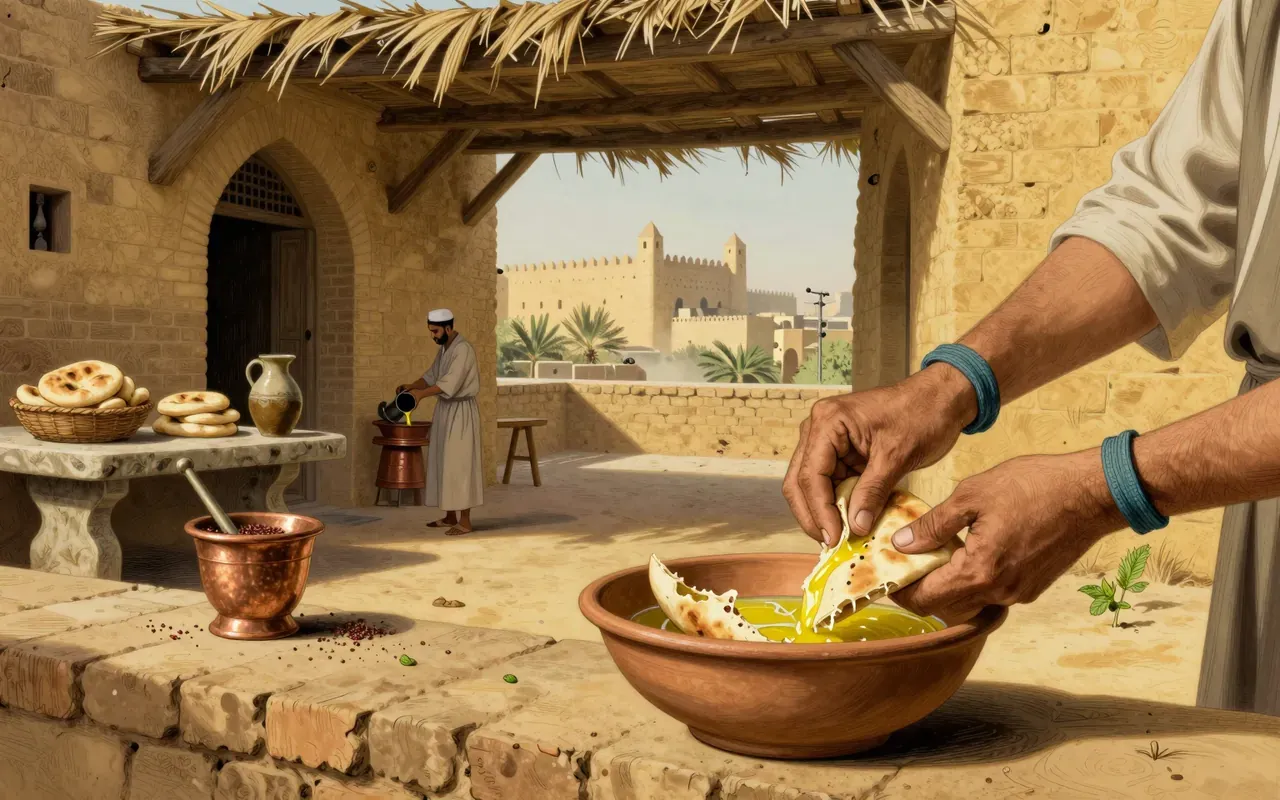
Vegetables and herbs vary by season and taste, and the vegetables are cut into relatively large pieces, unlike tabbouleh, which calls for finely chopped ingredients. In Palestinian cuisine the dish is built differently: garlic, salt, chili pepper and fresh basil are crushed together in a pestle and mortar, then mixed with plenty of lemon juice and tahini, and occasionally yogurt. Bite-sized pieces of untoasted pita are dipped in the mixture to absorb the liquid, the vegetables go in afterwards, and the dish is finished with olive oil. White onions distinguish the Palestinian version from the Lebanese one, which has none. In Jordan the method is similar, but jameed takes the place of the tahini mixture.
What it gets right
Sumac gives it a sour taste; some versions add pomegranate molasses alongside sumac.
What it does not
It does not include soaked-and-squeezed stale bread, as in Dozy’s 19th-century fettush.
The late 19th-century Orientalist Reinhart Dozy described fettush as stale, dried bread soaked in water and squeezed dry, then mixed with finely chopped cucumbers or onions, mint, purslane, olives, salt, vinegar and oil. The description appears in materials published by the International Congress of Orientalists between 1889 and 1891.
What it changed
It belongs to the fattat family—dishes using stale flatbread as a base.
Who it is for, and who it is not
It is for people who enjoy salads with crisp toasted or fried pita and fresh vegetables. It is not for those avoiding pita or sumac.
Is it worth your time
Yes—it delivers a sour, herbaceous, texturally varied salad using accessible ingredients.
In 2025 it ranked fifth in the salads category of Taste Atlas’s ‘100 Best Foods by Category’ list, which is based on user ratings.