What the thing is
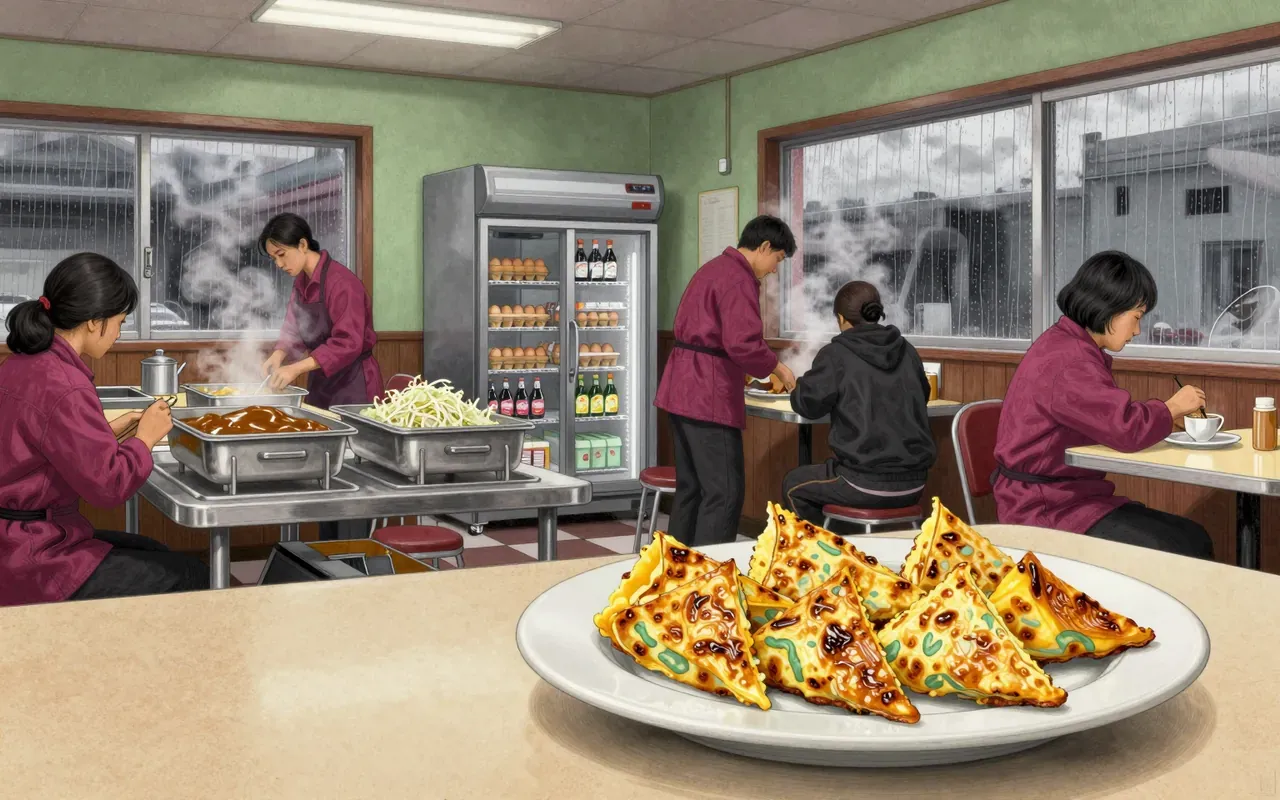
Egg foo young is a Cantonese-origin omelette made from beaten eggs and vegetables—often bean sprouts, bamboo shoots, cabbage, mushrooms, water chestnuts—with optional meat or seafood.
The Chinese name, 芙蓉蛋, is read fúróngdàn in pinyin, and literally means “cotton rose egg” or “lotus egg”. The English name comes from the Cantonese pronunciation and is also spelled with fu and yong or yung. Spring onions are among the usual vegetables. When meat is used, a menu may offer a choice of roast pork, shrimp, chicken, beef or lobster.
Where it came from
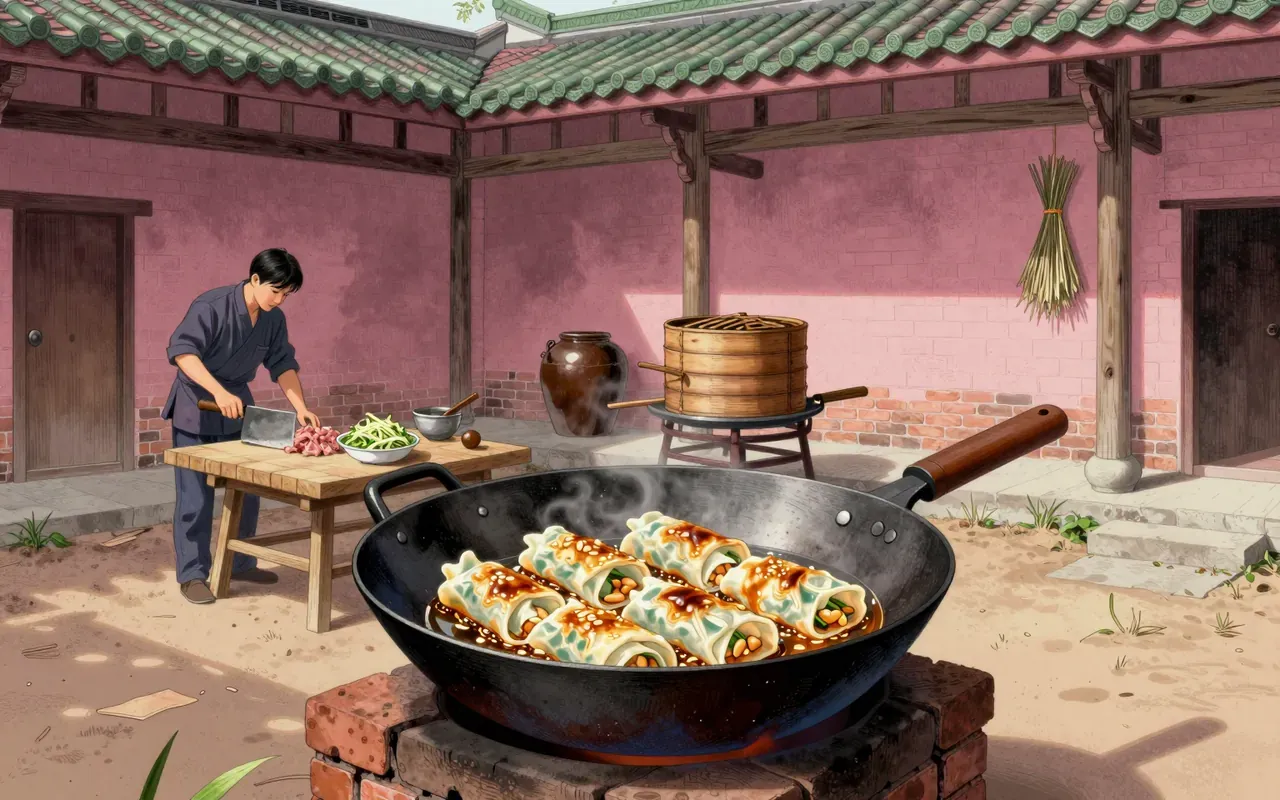
It originates in Guangdong province, southern coastal China, and entered global circulation via Cantonese migration and diaspora foodways.
Most current versions, in the United States and in Asia, are a Cantonese hybrid. In Western countries the dish usually appears as a well-folded omelette with the non-egg ingredients embedded in the egg mixture, and it may be covered in or served with sauce or gravy. Chinese chefs in the United States, at least as early as the 1930s, made a pancake filled with eggs, vegetables, and meat or seafood.
What it gets right
It delivers a sturdy, scalable omelette format that absorbs local ingredients without losing structural identity.
In Chinese Indonesian cuisine it is fu yung hai, written 芙蓉蟹 and meaning “Hibiscus crab”, sometimes spelled pu yung hai. The omelette is usually made from vegetables such as carrots, bean sprouts and cabbage mixed with crab meat, shrimp or minced chicken, and it is often served in sweet and sour sauce with peas. In the Netherlands, where Chinese food is influenced by Chinese-Indonesian cooking, it is Foeyonghai and is usually served with a sweet tomato sauce.
What it gets wrong
It misleads with its name: ‘Hibiscus egg’ implies crab (‘hai’), yet most versions omit it entirely.
In Japanese Chinese cuisine the similar dish kani-tama uses crab meat instead of ham or other meats, and when egg foo yung or kani-tama is draped in thick savoury sauce over plain rice it is called Tenshin-han, or Tianjin rice, even though no such dish is known in the Chinese city of Tianjin.
Why it matters now
It reveals how a single dish became a vector for culinary negotiation—in Indonesia as fu yung hai, in the Netherlands and Thailand, across U.S. regional menus—not as assimilation but as persistent, adaptable syntax.
Is it worth your time
Yes—if you want to understand how Cantonese cooking adapted across empires, not as nostalgia but as practical hybridisation.