Saved
Culture · Dishes

Empanada

Empanadas are not a dish—they’re a verb made edible.

Worth your time?4.5/5Yes.Cook the whole thing.What works, what does not, who it is for ↓
9:37in productionCh. 1 · It’s a verb first/ 9:37 · ceiling 15 min
4 chapters · 9:37Ceiling 15:00

The brief is written and checked. The video joins this page when it is cut.4 chapters · 1 min read · 9:37 planned

Read the brief

Empanadas are portable grammar. They began as a Galician legal category in the 7th century—not a recipe, but a standardised act of enclosure. The verb 'empanar' predates the noun. Its spread wasn’t culinary imperialism, but lexical borrowing: West Africa adopted the form as 'meatpie'; the Philippines kept the Spanish term but filled it with local ingredients. It does not unify cultures. It reveals how food terms travel further than recipes—and how deeply regulation, not taste, shaped what we eat.

Chapters & takeaways4
  1. 0:50
    It’s a verb first

    Empanada names an action—not a thing: 'to bread', meaning to wrap in dough.

  2. 1:47
    Law before the name

    Galicia codified empanada-making in the 7th century—before the word entered written record.

  3. 3:36
    A dish with passports

    By 1282 it was named in song; by 1520, it was cross-cultural—seafood versions in Catalan, Italian, French and Arabian recipes.

  4. 5:00
    No original, only adaptations

    Today it spans five continents—but never as one tradition. It is remade, not repeated.

1 more chapterFewer chapters
Worth your time?

Yes. Cook the whole thing.

4.5/ 5
What works
  • Cantigas de Santa Maria (c. 1282)
  • Llibre del Coch (1520)
What does not
  • iconic
  • groundbreaking
  • seminal
Cook it if
  • historians of food
  • linguists of Iberian languages
  • students of medieval law
Skip it if
  • casual eaters seeking origin stories
  • foodies expecting unified technique
Who should cook it, and who should skipHide who it is for
The written brief1 min read

What the thing is

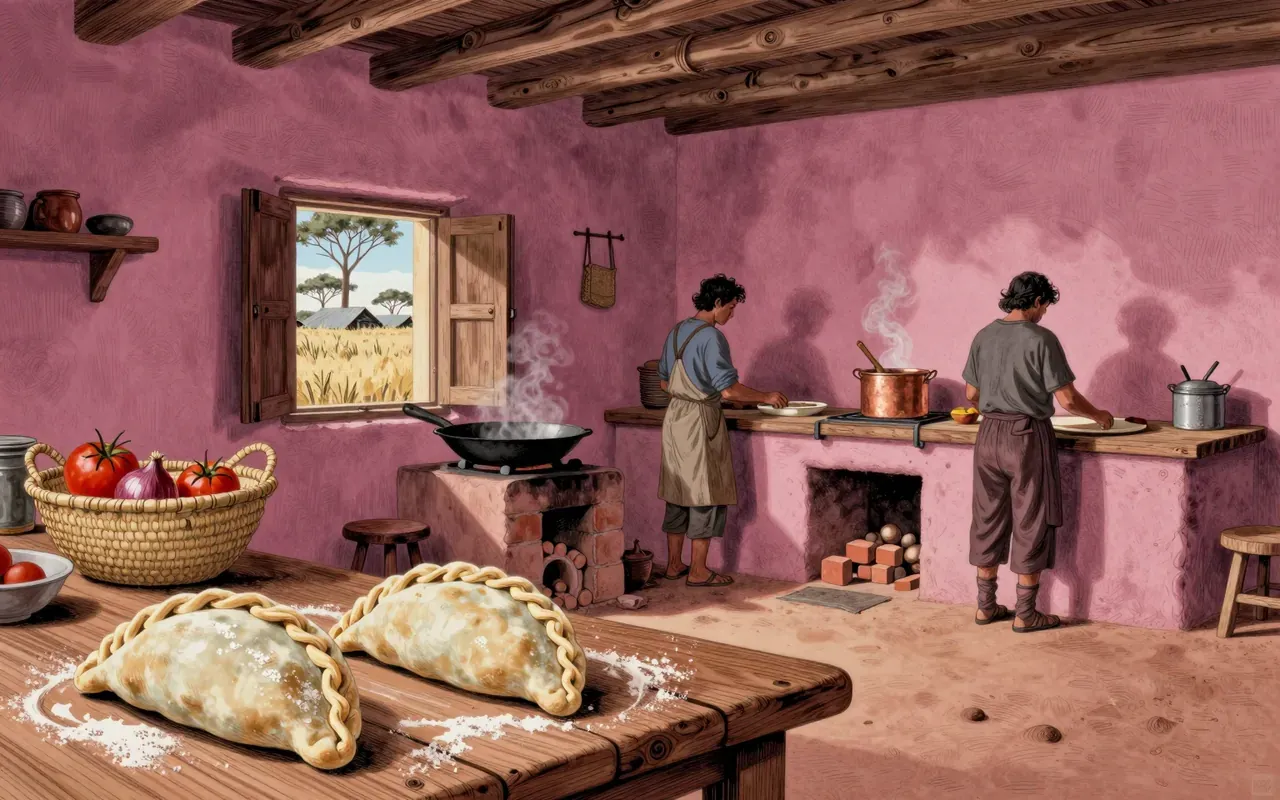
An empanada is a baked or fried turnover: dough folded over filling, then cooked.

Where it came from

It originated in 7th-century Galicia, where Visigothic-era rules governed its preparation—and appears by name in the Cantigas de Santa Maria (c. 1282) and Robert de Nola’s 1520 Catalan cookbook.

What it gets right

It turns scarcity into portability. A sealed dough envelope preserves fillings through travel, trade and conquest.

What it gets wrong

It pretends to be a single dish. In reality, it is a grammatical form—‘empanar’—applied locally, with no shared recipe, technique or authority.

Why it matters now

It reveals how food terminology outlives empires: ‘empanar’ travelled from Galician kitchens to West Africa (as meatpie), the Philippines and beyond—not as export, but as linguistic scaffolding for local adaptation.

Is it worth your time

Yes—if you care how food carries law, migration and translation across continents without needing permission.
Same course · Culture4 of 156
9:28
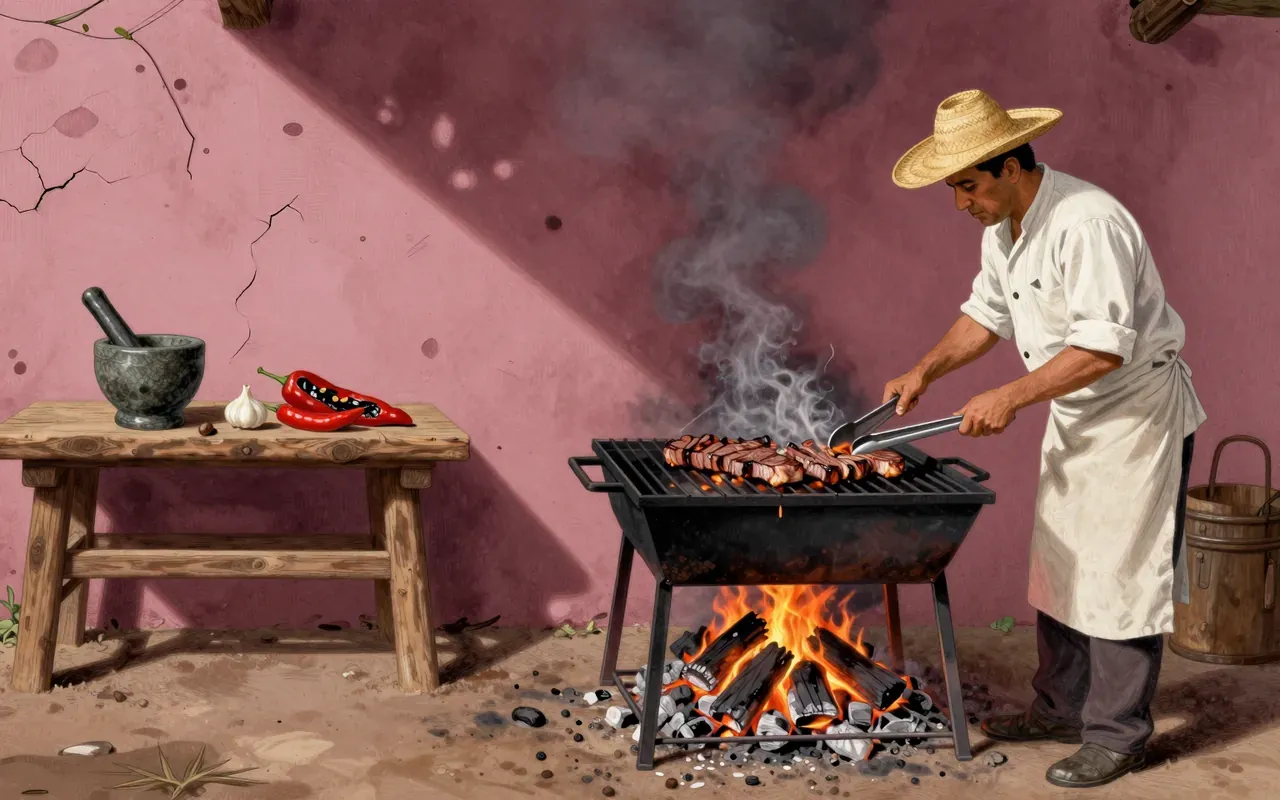
FajitaFajitas are a Tex-Mex dish rooted in 1930s South and West Texas ranch culture, built from skirt steak scraps given to vaqueros and cooked over open flame. The term 'fajita' did not appear in print until 1971. Its modern form — adaptable protein, charred vegetables, tortillas, and condiment bar — reflects both ingenuity and erasure: it displaced regional specificity (like 'tacos de arrachera') while becoming a default for 'Mexican-inspired' dining in the US.
9:02
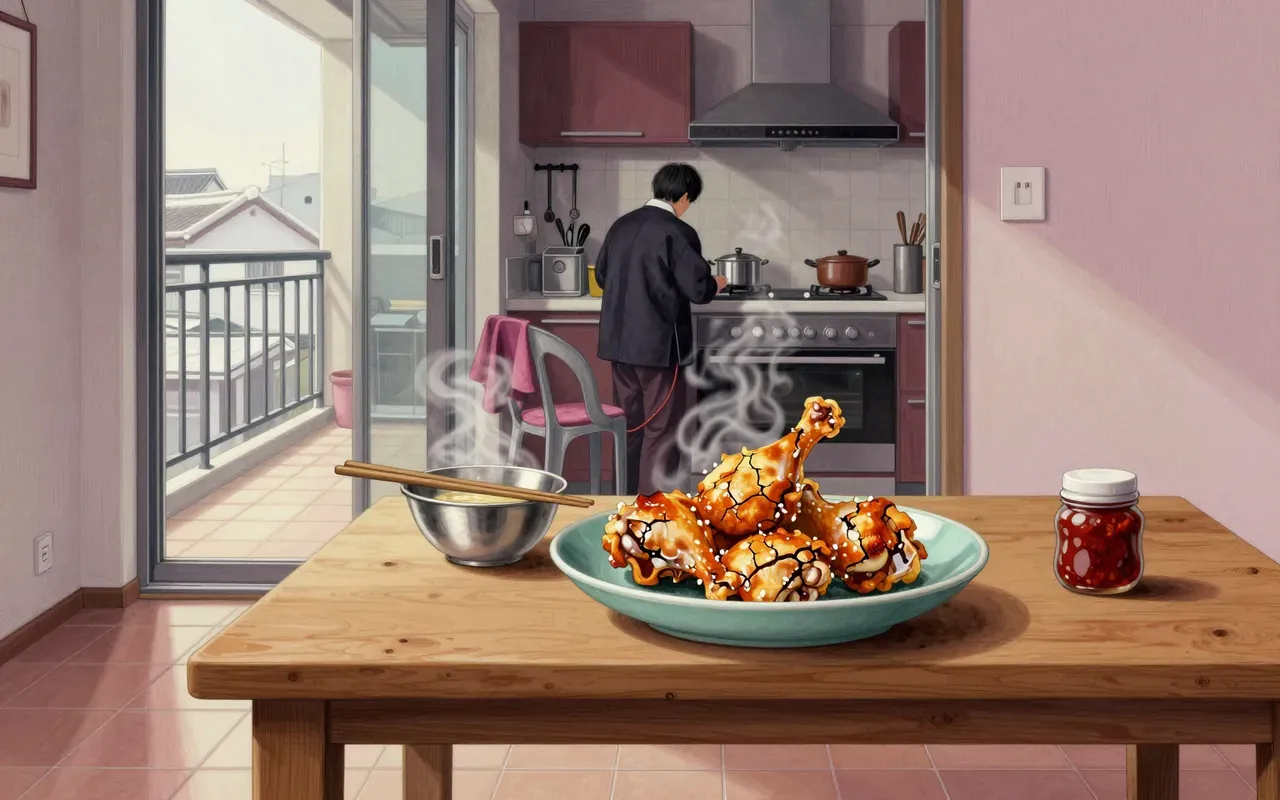
Korean fried chickenKorean fried chicken is a South Korean category of fried chicken dishes. It began as an adaptation of U.S. military-introduced deep-fried chicken after the Korean War. Modern forms appeared in the 1970s when cooking oil became widely available. Lims Chicken—the first franchise—opened in 1977 in Seoul. Yangnyeom-chikin originated in Daegu in 1982. Its defining sensory trait is a thin, crackly, almost transparent crust. It seasons chicken before and after frying. It matters now because it shows how food techniques migrate, constrain, and re-emerge—not as fusion, but as functional reinvention.
9:44
Moules-fritesMoules-frites is a main dish of mussels and French fries. It likely originated in Belgium, combining mussels from the Flemish coast with fried potatoes eaten in winter when other food was scarce. It is Belgium’s national dish. In northern France, it ranks second behind steak-frites (25%). In all of France, it ranks second at 20%. Between 25 and 30 tonnes of mussels are consumed annually in Belgium as moules-frites. During the 2009 braderie of Lille, 500 tons of mussels and 30 tons of fries were consumed.
9:00
Egg foo youngEgg foo young is a Cantonese omelette dish from Guangdong, made with beaten eggs and vegetables such as bean sprouts, bamboo shoots, cabbage, mushrooms, and water chestnuts. It may include roast pork, shrimp, chicken, beef, or lobster. In Chinese Indonesian cuisine, it is known as fu yung hai—literally 'Hibiscus crab'—and sometimes spelled pu yung hai. The name comes from Cantonese pronunciation. Most current versions are Cantonese hybrids across the U.S. and Asia.
Up next in Food

Enchilada

· 9:25

Enchiladas aren’t ancient tradition—they’re a 19th-century archive of survival, translation, and erasure.

9:25