Saved
Culture · Dishes

Korean fried chicken

Korean fried chicken is not Korean-American fusion—it’s American fried chicken, rebuilt in Seoul after the war.

Worth your time?4.5/5Yes.Cook the whole thing.What works, what does not, who it is for ↓
9:02in productionCh. 1 · Not native. Not imported whole./ 9:02 · ceiling 15 min
4 chapters · 9:02Ceiling 15:00

The brief is written and checked. The video joins this page when it is cut.4 chapters · 1 min read · 9:02 planned

Read the brief

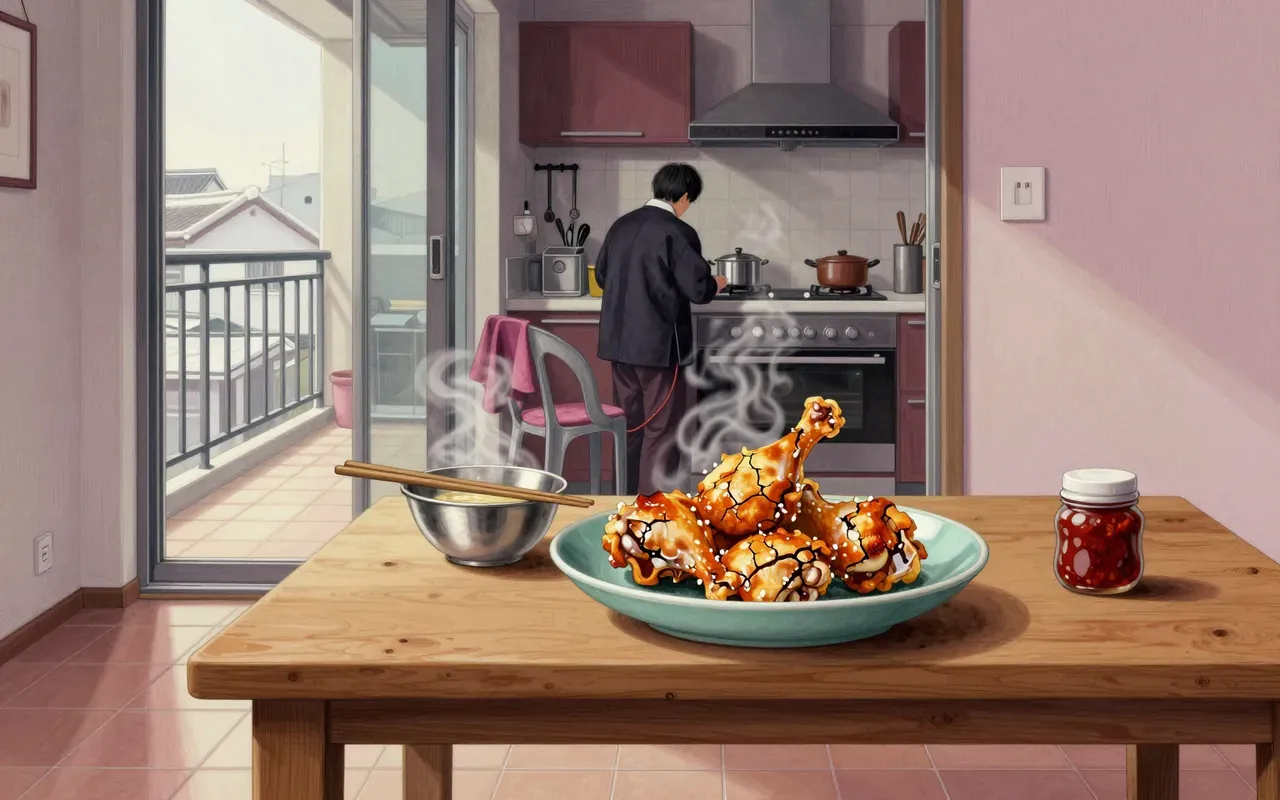
Korean fried chicken is a South Korean category of fried chicken dishes. It began as an adaptation of U.S. military-introduced deep-fried chicken after the Korean War. Modern forms appeared in the 1970s when cooking oil became widely available. Lims Chicken—the first franchise—opened in 1977 in Seoul. Yangnyeom-chikin originated in Daegu in 1982. Its defining sensory trait is a thin, crackly, almost transparent crust. It seasons chicken before and after frying. It matters now because it shows how food techniques migrate, constrain, and re-emerge—not as fusion, but as functional reinvention.

Chapters & takeaways4
  1. 0:51
    Not native. Not imported whole.

    U.S. military presence after the Korean War introduced deep-fried chicken as a popular Korean cuisine.

  2. 2:12
    Oil made it possible

    Modern Korean fried chicken started appearing in the 1970s—only after cooking oil became widely available.

  3. 3:40
    Spice came later—and was layered

    Yangnyeom-chikin began in 1982 in Daegu, seasoned with spices, sugar, and salt before and after frying.

  4. 5:22
    Crispness is architecture

    Julia Moskin described its crust as 'thin, crackly and almost transparent'.

1 more chapterFewer chapters
Worth your time?

Yes. Cook the whole thing.

4.5/ 5
What works
  • as-a-system-of-texture-control
  • as-a-response-to-oil-scarcity
  • as-a-rejection-of-greasy-heft
What does not
  • fusion
  • invention
  • tradition
Cook it if
  • urban-South-Koreans-in-the-1970s
  • chicken-eaters-with-access-to-cooking-oil
Skip it if
  • people-who-think-crispness-is-about-thickness
  • anyone-who-assumes-local-food-appears-without-infrastructure
Who should cook it, and who should skipHide who it is for
The written brief1 min read

What the thing is

Korean fried chicken is a category of fried chicken dishes created in South Korea. It is defined by double-frying, pre- and post-fry seasoning, and sauce-brushing—not by a single recipe or brand.

Where it came from

It emerged in the 1970s, once cooking oil became widely available. The first modern franchise, Lims Chicken, opened in 1977 in Seoul. Yangnyeom-chikin—a spicy variant—originated in Daegu in 1982. The trend of eating chicken began in the late 1960s, but deep-fried forms depended on U.S. military influence post-war.

What it gets right

It delivers crispness as texture logic: double-frying creates a thin, crackly, almost transparent crust. Seasoning before and after frying layers flavour without masking chicken.

What it gets wrong

It misrepresents its own origin story when framed as purely Korean invention. U.S. military presence post-Korean War introduced deep-fried chicken as a popular cuisine—this is not background context. It is the condition of possibility.

Why it matters now

It reveals how culinary adaptation works not through fusion but through functional recalibration: taking an imported technique, stripping it of grease and heft, and rebuilding it for local infrastructure, taste, and scale.

Is it worth your time

Yes—if you care how food technologies travel, adapt, and reassemble under constraint.
Same course · Culture4 of 156
9:37
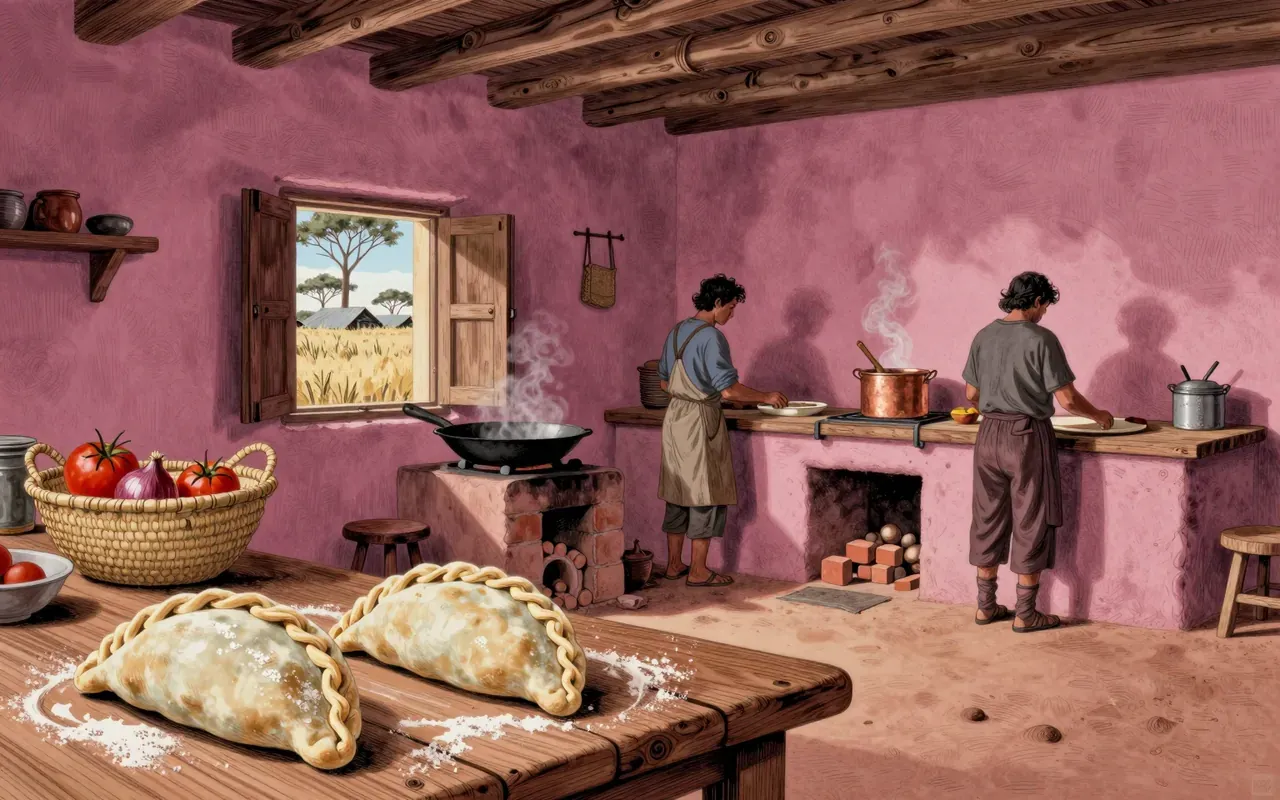
EmpanadaEmpanadas are portable grammar. They began as a Galician legal category in the 7th century—not a recipe, but a standardised act of enclosure. The verb 'empanar' predates the noun. Its spread wasn’t culinary imperialism, but lexical borrowing: West Africa adopted the form as 'meatpie'; the Philippines kept the Spanish term but filled it with local ingredients. It does not unify cultures. It reveals how food terms travel further than recipes—and how deeply regulation, not taste, shaped what we eat.
8:46
Chow meinChow mein is a linguistic and culinary shorthand that began as a descriptive Chinese term, travelled with immigrants, and was industrialised into something unrecognisable from its source. It matters not as heritage, but as evidence of how food loses fidelity in transit—and gains utility in translation.
9:23
Fusion cuisineFusion cuisine is a culinary tradition defined by the blending of ingredients, techniques, and styles from distinct countries, regions, or cultures. It is not a dish, not a trend, and not a chef’s invention. It is the material record of migration, trade, and adaptation — from Macanese tacho to budae-jjigae, from Greek symposia to Tex-Mex fajitas. Its strength is its honesty about how food actually moves. Its weakness is when it’s sold as novelty instead of necessity.
9:00
Egg foo youngEgg foo young is a Cantonese omelette dish from Guangdong, made with beaten eggs and vegetables such as bean sprouts, bamboo shoots, cabbage, mushrooms, and water chestnuts. It may include roast pork, shrimp, chicken, beef, or lobster. In Chinese Indonesian cuisine, it is known as fu yung hai—literally 'Hibiscus crab'—and sometimes spelled pu yung hai. The name comes from Cantonese pronunciation. Most current versions are Cantonese hybrids across the U.S. and Asia.
Up next in Food

Korma

· 9:23

Korma isn’t mild—it’s aromatic. And its name isn’t a menu category—it’s a verb.

9:23