foodbriefs
1:14in productionCh. 1 · What the dish is and where it came from/ 1:14 · ceiling 15 min
Dishes · Food history

Jambalaya

A savory Louisiana rice dish with African, Spanish, and French roots, built around meat or seafood, vegetables, rice, and spices.

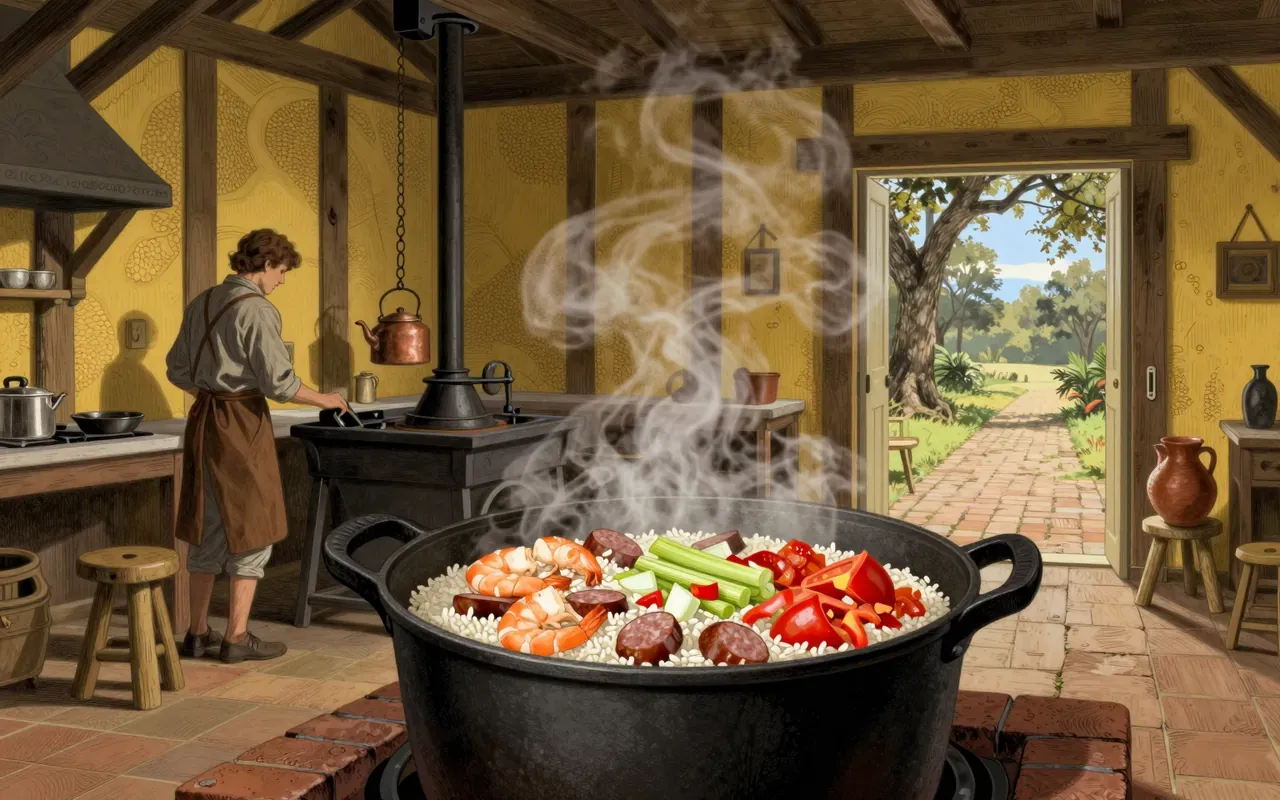
Jambalaya is a savory rice dish that developed in Louisiana during the colonial period, fusing African, Spanish, and French influences. It is a Creole/Cajun-American dish originating in French Louisiana.

Chapters & takeaways7
  1. 0:00
    What the dish is and where it came from

    Jambalaya is a savory rice dish that developed in Louisiana during the colonial period, fusing African, Spanish, and French influences.

  2. 0:12
    How it works, in terms someone would actually use

    It is cooked as a single pot: after browning meat and sautéing vegetables, raw rice is added with broth and seasonings, then simmered until the rice absorbs the flavorful stock.

  3. 0:24
    What it gets right

    It gets right a hearty, unified flavor profile—meat (often smoked sausage, pork, or chicken) and/or seafood combine with the 'trinity' of onion, celery, and bell pepper, plus tomatoes and spices.

  4. 0:36
    What it does not

    It is not primarily vegetable-forward; the inclusion of meat or seafood makes it less suitable if you seek a plant-based main dish.

  5. 0:45
    What it changed

    It changed by incorporating the tomato—introduced to West Africa by the French—into West African rice traditions, carried to Louisiana by enslaved people from Senegal.

  6. 0:55
    Who it is for, and who it is not

    It is for people who want a complete, protein-inclusive rice dish with layered savory notes.

  7. 1:05
    Is it worth your time

    It is worth your time if you enjoy one-pot meals with bold, integrated flavors and cultural resonance rooted in Louisiana’s layered history.

Worth your time?

Selectively. Start with the brief, then cook the parts we point at.

What works
  • It gets right a hearty, unified flavor profile—meat (often smoked sausage, pork, or chicken) and/or seafood combine with the 'trinity' of onion, celery, and bell pepper, plus tomatoes and spices.
What does not
  • It is not primarily vegetable-forward; the inclusion of meat or seafood makes it less suitable if you seek a plant-based main dish.
Cook it if
    Skip it if
      The written brief1 min read

      What the dish is and where it came from

      Jambalaya is a savory rice dish that developed in Louisiana during the colonial period, fusing African, Spanish, and French influences. It is a Creole/Cajun-American dish originating in French Louisiana.

      How it works, in terms someone would actually use

      It is cooked as a single pot: after browning meat and sautéing vegetables, raw rice is added with broth and seasonings, then simmered until the rice absorbs the flavorful stock.

      What it gets right

      It gets right a hearty, unified flavor profile—meat (often smoked sausage, pork, or chicken) and/or seafood combine with the ‘trinity’ of onion, celery, and bell pepper, plus tomatoes and spices.

      What it does not

      It is not primarily vegetable-forward; the inclusion of meat or seafood makes it less suitable if you seek a plant-based main dish.

      What it changed

      It changed by incorporating the tomato—introduced to West Africa by the French—into West African rice traditions, carried to Louisiana by enslaved people from Senegal.

      Who it is for, and who it is not

      It is for people who want a complete, protein-inclusive rice dish with layered savory notes. It is not for those avoiding meat, seafood, or tomatoes.

      Is it worth your time

      It is worth your time if you enjoy one-pot meals with bold, integrated flavors and cultural resonance rooted in Louisiana’s layered history.
      Same course · Dishes4 of 496
      8:48
      GumboGumbo is a stew from the U.S. Gulf Coast. It is defined by stock, meat or shellfish, the Creole 'holy trinity', and one of three thickeners: okra, filé powder, or roux. It originated in Louisiana in the early 18th century. It combines culinary practices from Central and West African, French, German, Spanish, and Native American Choctaw cultures. It was first described in 1802. It is traditionally served with rice. It simmers for a minimum of three hours, with shellfish and some spices added near the end. The preferred method in the historical New Orleans variation is with a French-inspired dark, even chocolate-like, roux. Gumbo is often categorized by the type of thickener used, whether okra or filé powder.
      1:14
      FeijoadaFeijoada is a bean stew with beef or pork, found in Portugal, Brazil, Angola, East Timor, Mozambique, and Macau. It uses white, black, or red beans and is usually served with rice.
      9:19
      Ackee and saltfishAckee and saltfish is Jamaica’s national dish. It combines ackee—the national fruit, brought from Ghana before 1725—with salted cod introduced for enslaved people as long-lasting protein. It is sautéed, not stewed: boiled ackee meets desalted cod, onions, Scotch bonnet, and tomato. It gets the balance of salt, heat, and creaminess right when timed precisely. It does not reflect West African foodways—where ackee is mostly medicinal—but asserts Jamaican sovereignty over two transplanted staples. Worth your time if you treat it as a technical dish with historical weight, not as folklore.
      8:46
      CannoliCannoli are Sicilian tube-shaped fried pastries filled with ricotta cream. Their origins lie in Arab-influenced Sicily between 827–1091, particularly in Caltanissetta. Candied orange zest (Palermo), pistachios (Catania), and purple artichokes (Ramacca) mark regional identity. Street vendors filled them on demand during Saturnalia and Carnival—making timing central to the experience.
      Up next in Food

      Jambon-beurre

      · 0:58

      A French ham sandwich: baguette, butter, and ham.

      0:58