1:12in productionCh. 1 · What the dish is and where it came from/ 1:12 · ceiling 15 min
Dishes · Technique
Duqqa
An Egyptian and Middle Eastern condiment of pounded herbs, nuts—usually hazelnut—and spices, served with bread or vegetables.
Dukkah is an Egyptian and Middle Eastern condiment made from herbs, nuts (usually hazelnut), and spices. Its name comes from the Arabic word for 'to pound'.
Dukkah is an Egyptian and Middle Eastern condiment made from herbs, nuts (usually hazelnut), and spices.
0:10
How it works, in terms someone would actually use
It is made by dry-roasting spices and nuts, then pounding them to a texture that is neither powdered nor paste-like.
0:18
What it gets right
It gets right a layered texture and flavor from toasted nuts, aromatic spices like cumin and coriander, and sesame, salt, and black pepper—ingredients commonly included across versions.
0:29
What it does not
It does not serve as a standalone meal in modern usage; historically it supplemented bread for those with limited means, but current use is as a dip, not a primary food source.
0:42
What it changed
It changed from a subsistence mixture—salt, pepper, za’atar or wild marjoram or mint or cumin-seed, plus optional coriander, cinnamon, sesame, or chickpeas—into a nut-forward condiment.
0:52
Who it is for, and who it is not
It is for people who enjoy dipping bread or fresh vegetables into textured, spiced mixtures.
1:03
Is it worth your time
It is worth your time if you want a quick, no-cook (beyond roasting) dip with aromatic, crunchy depth—used as an hors d'œuvre.
Worth your time?
Selectively. Start with the brief, then cook the parts we point at.
What works
It gets right a layered texture and flavor from toasted nuts, aromatic spices like cumin and coriander, and sesame, salt, and black pepper—ingredients commonly included across versions.
What does not
It does not serve as a standalone meal in modern usage; historically it supplemented bread for those with limited means, but current use is as a dip, not a primary food source.
Cook it if
Skip it if
The written brief1 min read
What the dish is and where it came from
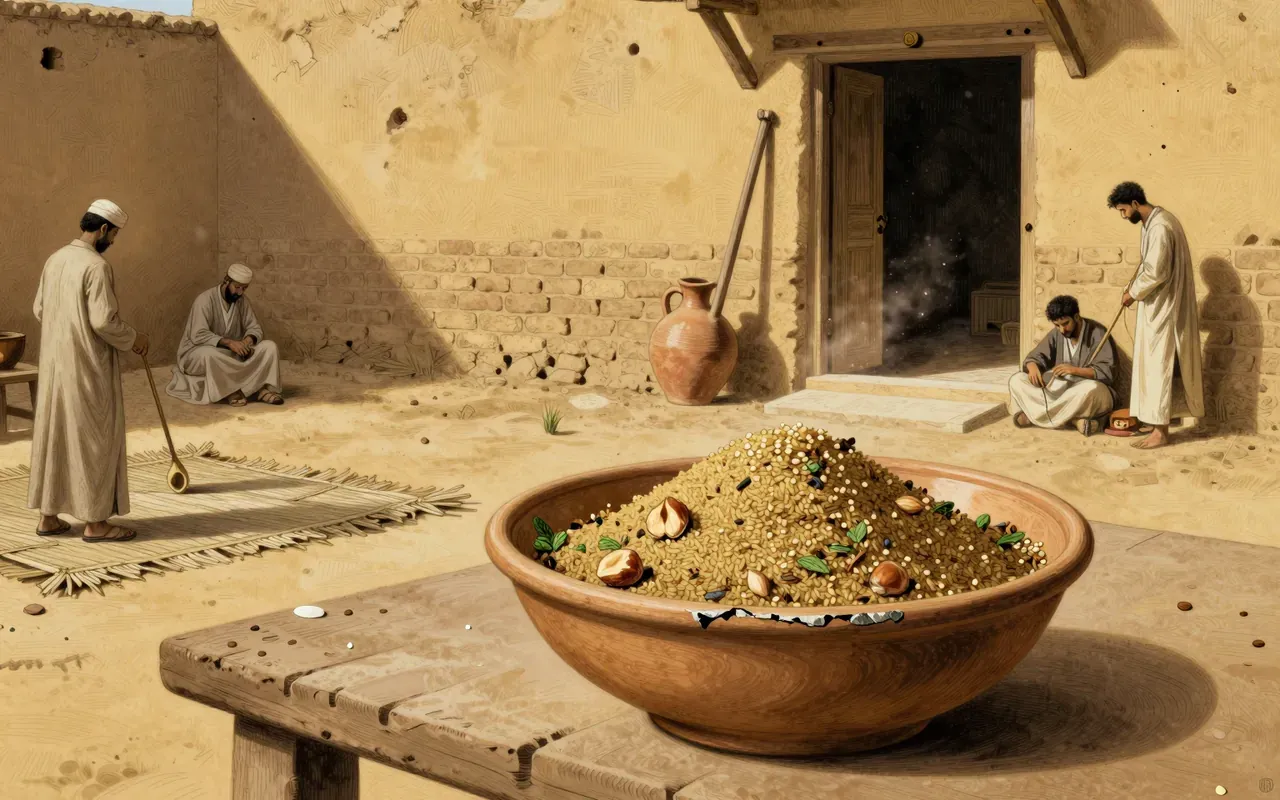
Dukkah is an Egyptian and Middle Eastern condiment made from herbs, nuts (usually hazelnut), and spices. Its name comes from the Arabic word for ‘to pound’.
How it works, in terms someone would actually use
It is made by dry-roasting spices and nuts, then pounding them to a texture that is neither powdered nor paste-like.
What it gets right
It gets right a layered texture and flavor from toasted nuts, aromatic spices like cumin and coriander, and sesame, salt, and black pepper—ingredients commonly included across versions.
What it does not
It does not serve as a standalone meal in modern usage; historically it supplemented bread for those with limited means, but current use is as a dip, not a primary food source.
What it changed
It changed from a subsistence mixture—salt, pepper, za’atar or wild marjoram or mint or cumin-seed, plus optional coriander, cinnamon, sesame, or chickpeas—into a nut-forward condiment.
Who it is for, and who it is not
It is for people who enjoy dipping bread or fresh vegetables into textured, spiced mixtures. It is not for those seeking a smooth, uniform, or nut-free condiment.
Is it worth your time
It is worth your time if you want a quick, no-cook (beyond roasting) dip with aromatic, crunchy depth—used as an hors d’œuvre.