1:13in productionCh. 1 · What the dish is and where it came from/ 1:13 · ceiling 15 min
Dishes
Ravioli
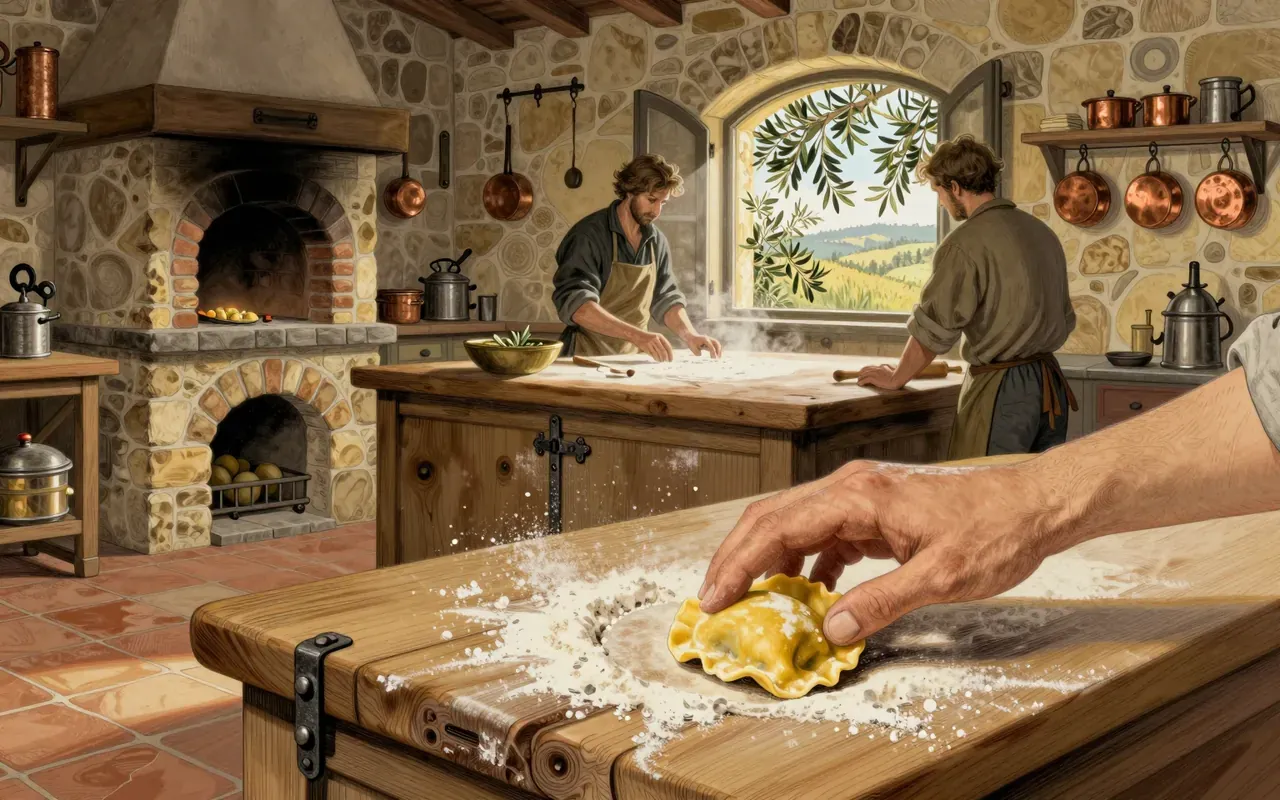
Ravioli are stuffed pasta parcels with thin dough enclosing a filling.
Ravioli are stuffed pasta: a filling enclosed in thin pasta dough. The earliest recorded mentions are 14th-century—'rauioles' in the English cookbook The Forme of Cury, letters of Francesco Datini in Prato, and a Venetian manuscript. By 1549, they were served to the papal conclave in Rome.
Ravioli are stuffed pasta: a filling enclosed in thin pasta dough.
0:18
How it works, in terms someone would actually use
A traditional method uses blanched, minced green herbs mixed with egg and fresh cheese, simmered in broth and seasoned with sweet and strong spices.
0:33
What it gets right
It delivers concentrated flavor and texture contrast: tender dough encasing savory, spiced fillings like herb-cheese or ricotta-spinach.
0:43
What it does not
The ricotta-spinach filling makes it less suitable if you prefer dairy-free or spinach-free dishes.
0:49
What it changed
By 1549, ravioli had entered elite ceremonial dining, appearing at the papal conclave in Rome.
0:55
Who it is for, and who it is not
It is for people who enjoy handmade or machine-made stuffed pasta.
1:06
Is it worth your time
Yes—it’s a durable, adaptable format, made at home or bought ready-made, with documented presence across centuries and contexts.
Worth your time?
Selectively. Start with the brief, then cook the parts we point at.
What works
It delivers concentrated flavor and texture contrast: tender dough encasing savory, spiced fillings like herb-cheese or ricotta-spinach. The thin dough and varied fillings support regional expression.
What does not
The ricotta-spinach filling makes it less suitable if you prefer dairy-free or spinach-free dishes.
Cook it if
Skip it if
The written brief1 min read
What the dish is and where it came from
Ravioli are stuffed pasta: a filling enclosed in thin pasta dough. The earliest recorded mentions are 14th-century—‘rauioles’ in the English cookbook The Forme of Cury, letters of Francesco Datini in Prato, and a Venetian manuscript. By 1549, they were served to the papal conclave in Rome.
How it works, in terms someone would actually use
A traditional method uses blanched, minced green herbs mixed with egg and fresh cheese, simmered in broth and seasoned with sweet and strong spices. In Rome and Latium, the filling combines ricotta, spinach, nutmeg, and black pepper.
What it gets right
It delivers concentrated flavor and texture contrast: tender dough encasing savory, spiced fillings like herb-cheese or ricotta-spinach. The thin dough and varied fillings support regional expression.
What it does not
The ricotta-spinach filling makes it less suitable if you prefer dairy-free or spinach-free dishes.
What it changed
By 1549, ravioli had entered elite ceremonial dining, appearing at the papal conclave in Rome.
Who it is for, and who it is not
It is for people who enjoy handmade or machine-made stuffed pasta. It is not for those avoiding wheat-based pasta or dairy, given typical ricotta and cheese use.
Is it worth your time
Yes—it’s a durable, adaptable format, made at home or bought ready-made, with documented presence across centuries and contexts.