foodbriefs
10:36in productionCh. 1 · Where it lives/ 10:36 · ceiling 15 min
Dishes · Technique

Pa amb tomàquet

It is not a snack. It is bread reconstituted by tomato pulp—and everything else is betrayal.

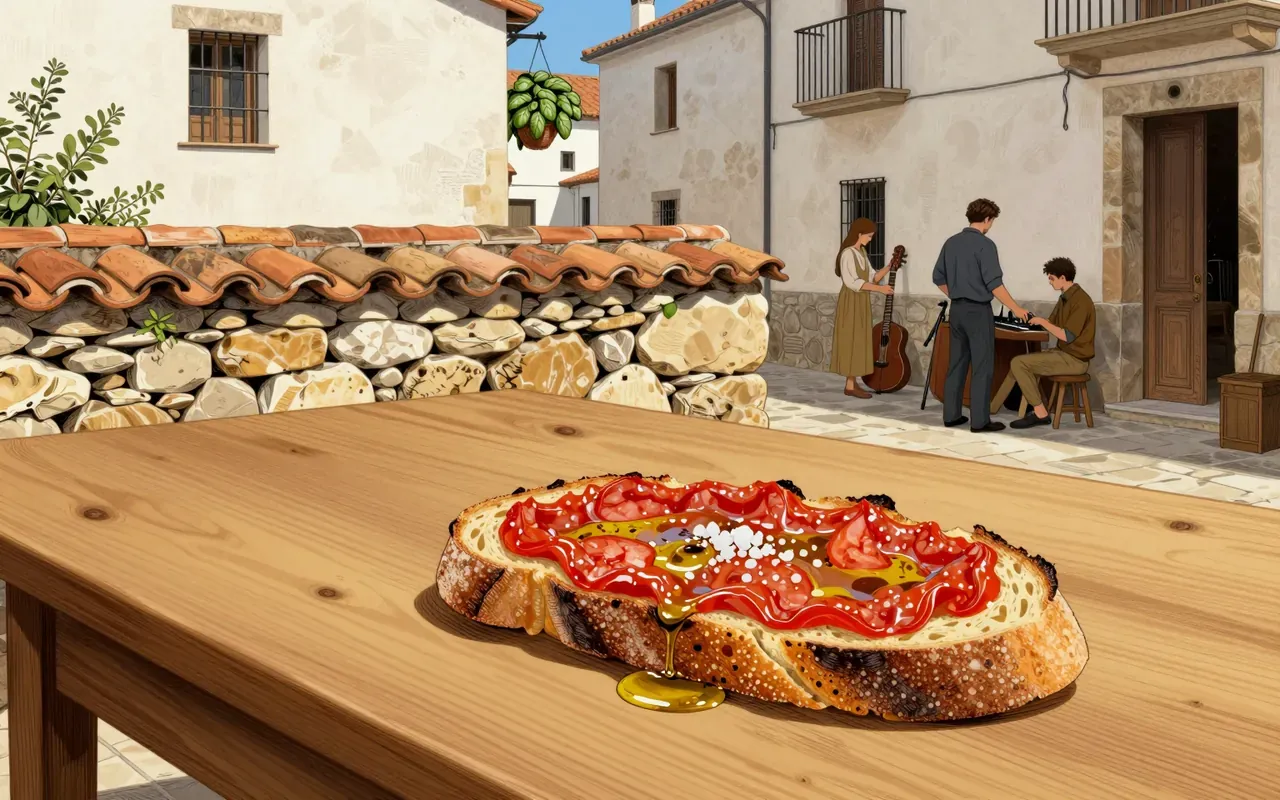
Pa amb tomàquet is bread softened and flavoured by rubbed tomato pulp—not juice, not sauce. It is Catalan and Balearic. It requires no heat, no vinegar, no herbs. Its success depends entirely on the bread’s structure and the tomato’s ripeness. It emerged in rural settings to rescue stale loaves. It is not flexible. It is not nostalgic. It is functional, immediate, and unforgiving.

Chapters & takeaways6
  1. 0:56
    Where it lives

    It belongs to Catalonia, the Balearics, and—less centrally—to Valencia and Aragon.

  2. 2:16
    Why it exists

    It was invented in the countryside to soften hard, dry bread using abundant tomatoes.

  3. 3:31
    When it appeared

    Its first written record is from 1884—but oral tradition and documentation place it in the 18th century.

  4. 4:55
    How it works

    It uses no cooking—only friction, pressure, and timing to fuse tomato pulp into bread.

  5. 6:11
    What it solves

    It turns scarcity—stale bread—into abundance—freshness—without adding water or heat.

  6. 7:10
    What it refuses

    It is regional, seasonal, and minimal—not universal, year-round, or adaptable.

Worth your time?

Yes. Cook the whole thing.

4.5/ 5
What works
  • transforms dry bread without sogginess
  • uses friction to bind oil and salt to the crumb
  • anchors tomato as a textural agent, not just a flavour
What does not
  • pa amb tomàquet is a modern tapas invention
  • it includes garlic by default
  • it originated in Barcelona city
  • it requires vinegar or lemon
Cook it if
  • people who value ingredient integrity over presentation
  • cooks who understand texture as structure
Skip it if
  • those who expect complexity or balance
  • people who treat bread as neutral background
The written brief1 min read

What the dish is and where it came from

Pa amb tomàquet is bread topped with rubbed-in fresh tomato, olive oil, and salt—originating in Catalonia and the Balearics, with documented use by the late 19th century and oral tradition reaching back to the 18th.

How it works, in terms someone would actually use

Rub fresh tomato flesh directly onto sturdy, slightly stale bread until the pulp embeds and softens the crumb. Drizzle with olive oil and salt. Garlic is optional and applied before the tomato.

What it gets right

It uses friction and moisture to rehydrate bread without soaking it. The rubbing technique forces tomato pulp—not juice—into the crumb, binding oil and salt to the surface.

What it does not

It does not require vinegar, basil, pepper, onion, or any herb or spice beyond salt and optional garlic. It is not a platform for complexity.

What it changed

It turned hard, dry rural bread from waste into a vehicle for freshness. It anchored tomato as a structural ingredient—not a garnish—in Catalan and Balearic eating.

Who it is for, and who it is not

It is for people who understand that texture and timing decide the dish—not origin stories or garnishes. It is not for those who expect heat, acidity, or layered seasoning.

Is it worth your time

Yes—if you have good bread, ripe tomatoes, olive oil and salt. It takes under two minutes. It fails completely with bland tomatoes or soft bread.

Same course · Dishes4 of 485
Up next in Food

Pandoro

· 9:34

Pandoro is not a cake — it’s a butter-rich, star-shaped bread whose industrial patent in 1894 turned Verona’s century-old formula into Italy’s most geometrically correct Christmas ritual.

9:34