1:13in productionCh. 1 · What the dish is and where it came from/ 1:13 · ceiling 15 min
Technique · Dishes
Roti canai
A thin, flaky unleavened flatbread from South India, now widespread across Southeast Asia.
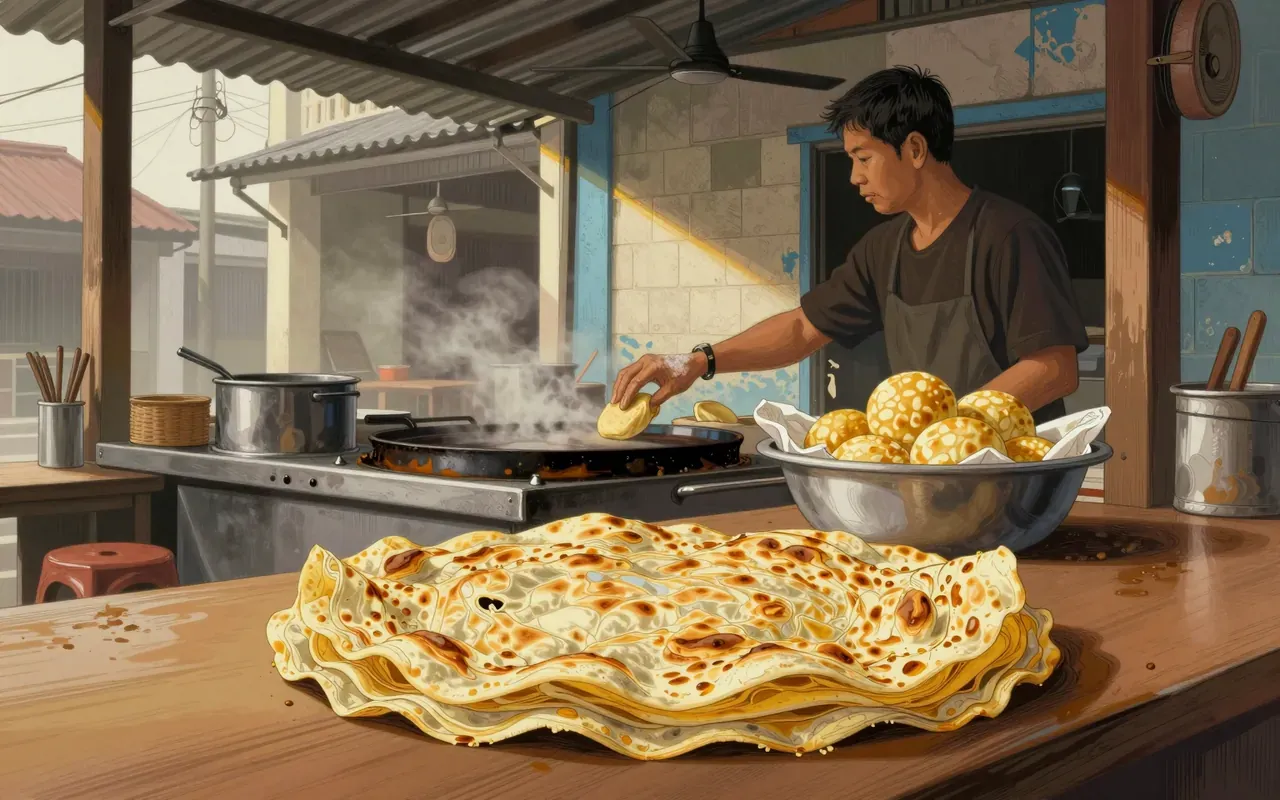
Roti canai is an unleavened flatbread of Indian origin, found in Brunei, Indonesia, Malaysia, Singapore, and Thailand. It is also called roti prata in Singapore, and roti chanai or roti cane elsewhere.
Roti canai is an unleavened flatbread of Indian origin, found in Brunei, Indonesia, Malaysia, Singapore, and Thailand.
0:13
How it works, in terms someone would actually use
The dough—made from flour, water, and fat (usually ghee)—is kneaded, flattened, oiled, and folded repeatedly.
0:27
What it gets right
Its layered, flaky texture comes directly from the folding and coiling method.
0:37
What it does not
It contains fat and sometimes sweetened condensed milk, making it less suitable for low-fat or dairy-free diets.
0:44
What it changed
Since arriving in Southeast Asia around the 19th century, it became a popular breakfast and snack dish—and one of the most common South Indian foods in the region.
0:55
Who it is for, and who it is not
It is for people who eat flatbreads with ghee or sweetened condensed milk.
1:06
Is it worth your time
Yes—it is widely available as a breakfast or snack across multiple Southeast Asian countries and remains consistently popular.
Worth your time?
Selectively. Start with the brief, then cook the parts we point at.
What works
Its layered, flaky texture comes directly from the folding and coiling method. The use of fat (typically ghee) contributes to richness and separation of layers.
What does not
It contains fat and sometimes sweetened condensed milk, making it less suitable for low-fat or dairy-free diets.
Cook it if
Skip it if
The written brief1 min read
What the dish is and where it came from
Roti canai is an unleavened flatbread of Indian origin, found in Brunei, Indonesia, Malaysia, Singapore, and Thailand. It is also called roti prata in Singapore, and roti chanai or roti cane elsewhere.
How it works, in terms someone would actually use
The dough—made from flour, water, and fat (usually ghee)—is kneaded, flattened, oiled, and folded repeatedly. Then it’s tossed to paper-thin, rolled into a rope, coiled into a knot or spiral, and flattened again before cooking.
What it gets right
Its layered, flaky texture comes directly from the folding and coiling method. The use of fat (typically ghee) contributes to richness and separation of layers.
What it does not
It contains fat and sometimes sweetened condensed milk, making it less suitable for low-fat or dairy-free diets.
What it changed
Since arriving in Southeast Asia around the 19th century, it became a popular breakfast and snack dish—and one of the most common South Indian foods in the region.
Who it is for, and who it is not
It is for people who eat flatbreads with ghee or sweetened condensed milk. It is not for those avoiding dairy fat or seeking savory-only or vegetable-forward dishes.
Is it worth your time
Yes—it is widely available as a breakfast or snack across multiple Southeast Asian countries and remains consistently popular.