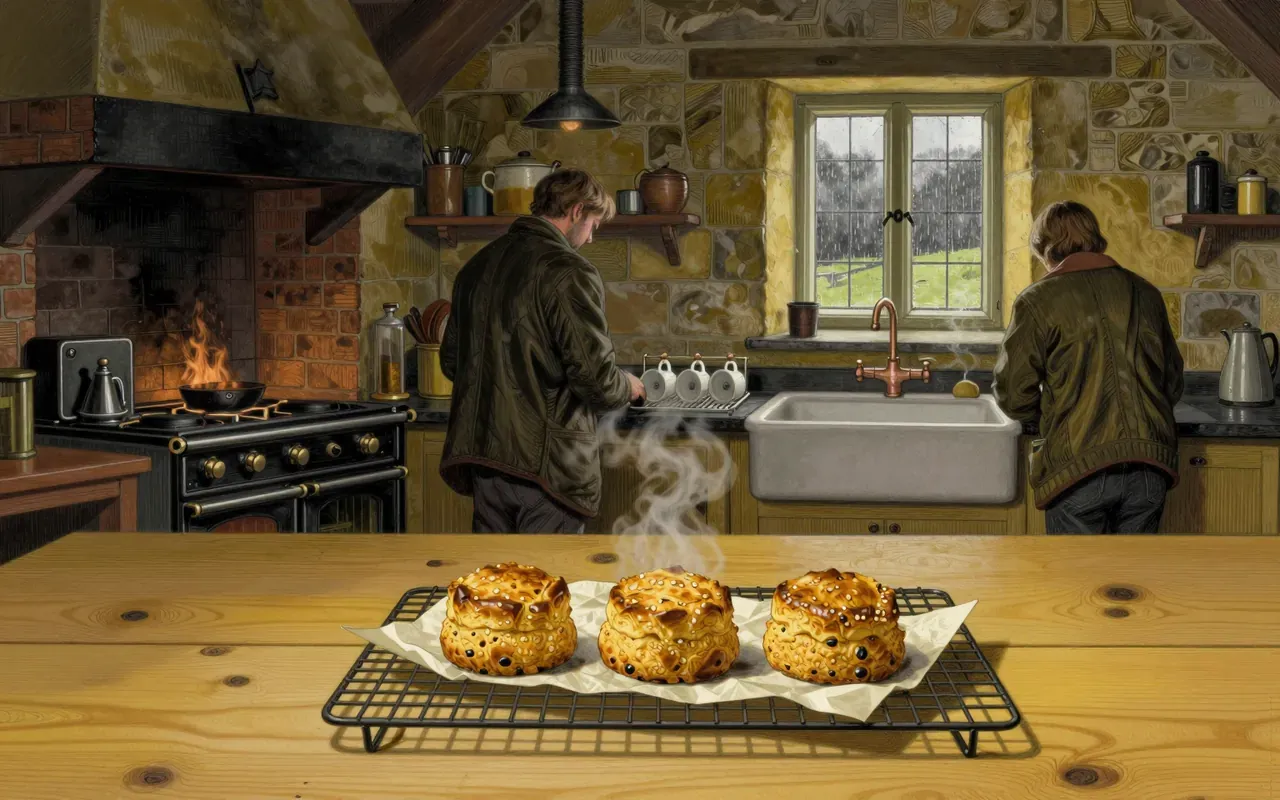
A scone is a traditional British and Irish baked good, popular in the United Kingdom, Ireland, Canada, Australia, and New Zealand.
0:08
How it works, in terms someone would actually use
Scones are usually made with wheat flour or oatmeal and baking powder, then baked on sheet pans or fried in a pan.
0:22
What it gets right
It anchors afternoon tea, a tradition reputedly popularized by Anna, Duchess of Bedford, in the early 19th century.
0:29
What it does not
It is not classified as bread or cake by Food Standards Australia New Zealand, placing it in its own regulatory category.
0:37
What it changed
The modern sweetened scone appeared after baking powder became widely available in 1843.
0:42
Who it is for, and who it is not
It suits someone looking for a baked accompaniment to tea, particularly when a scone-and-cream combination appeals.
0:48
Is it worth your time
It is worth your time if you seek a traditional baked good associated with British and Irish tea culture and made with simple, accessible ingredients.
Worth your time?
Selectively. Start with the brief, then cook the parts we point at.
What works
It anchors afternoon tea, a tradition reputedly popularized by Anna, Duchess of Bedford, in the early 19th century.
What does not
It is not classified as bread or cake by Food Standards Australia New Zealand, placing it in its own regulatory category.
Cook it if
Skip it if
The written brief1 min read
What the dish is and where it came from
A scone is a traditional British and Irish baked good, popular in the United Kingdom, Ireland, Canada, Australia, and New Zealand.
How it works, in terms someone would actually use
Scones are usually made with wheat flour or oatmeal and baking powder, then baked on sheet pans or fried in a pan. The dough is lightly worked—not kneaded like bread—and differs from cake, which uses batter.
What it gets right
It anchors afternoon tea, a tradition reputedly popularized by Anna, Duchess of Bedford, in the early 19th century.
What it does not
It is not classified as bread or cake by Food Standards Australia New Zealand, placing it in its own regulatory category.
What it changed
The modern sweetened scone appeared after baking powder became widely available in 1843.
Who it is for, and who it is not
It suits someone looking for a baked accompaniment to tea, particularly when a scone-and-cream combination appeals.
Is it worth your time
It is worth your time if you seek a traditional baked good associated with British and Irish tea culture and made with simple, accessible ingredients.