1:08in productionCh. 1 · What the dish is and where it came from/ 1:08 · ceiling 15 min
Technique
Dulce de leche
A thick, golden-brown confection made by slowly heating milk and sugar.
Dulce de leche is a caramelized milk confection. Records of similar preparations appear in Minas Gerais, Brazil from 1773; customs reports note manjar imported into Argentina from Chile in 1693 and 1712; Swiss naturalist Johann Rudolph Rengger documented its consumption in Paraguay between 1818 and 1825.
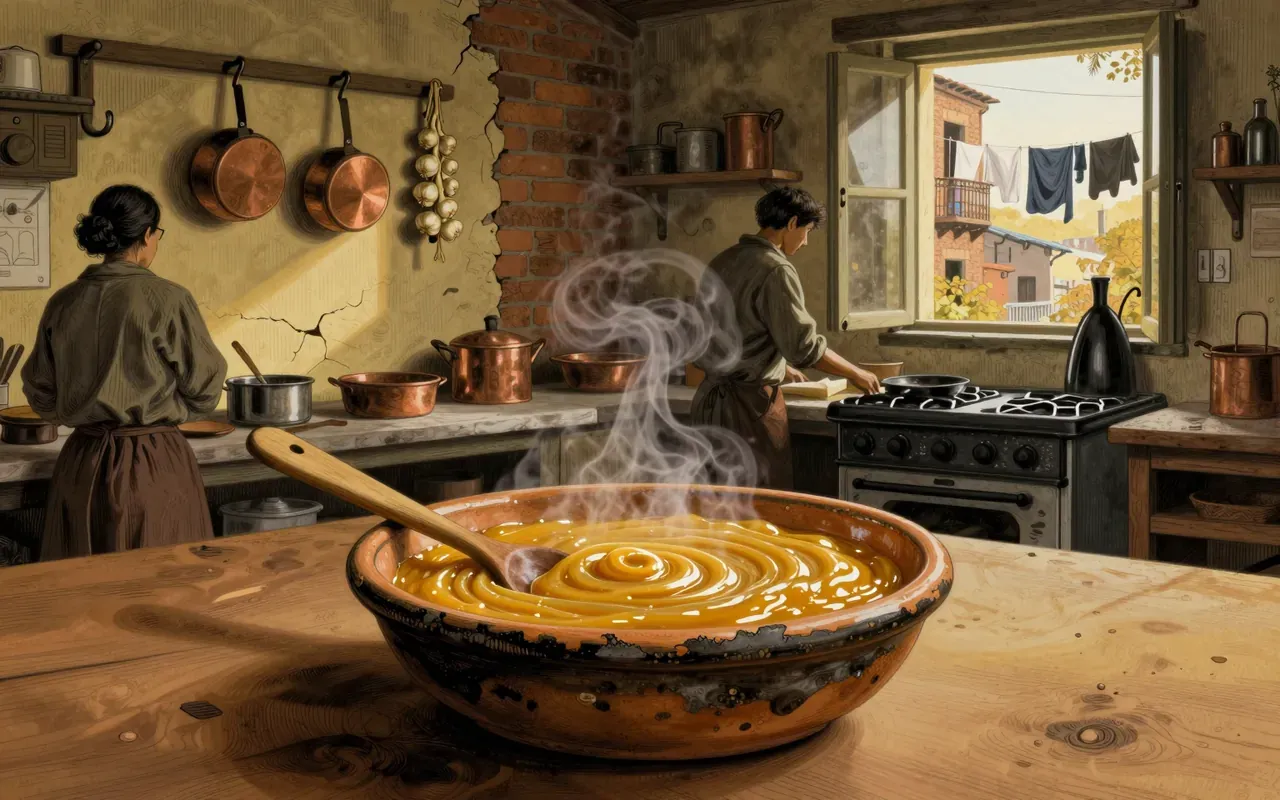
Milk and sugar are slowly simmered and stirred until the mixture thickens and becomes golden-brown.
0:24
What it gets right
It delivers rich flavour and colour from non-enzymatic browning—caramelization and the Maillard reaction—and reduces to about one-sixth the original milk volume, yielding a spreadable, sauce-like consistency.
0:34
What it does not
It is not a quick preparation: it requires several hours of heating and near-constant stirring.
0:40
What it changed
Records from Brazil, Chile, Argentina and Paraguay show related milk confections moving through several regional food traditions.
0:47
Who it is for, and who it is not
It is for people who want a sweet, spreadable confection made from milk and sugar.
0:58
Is it worth your time
It is worth your time if you enjoy rich, slow-cooked dairy-based sweets and have the time and attention for constant stirring over 1.5–2 hours.
Worth your time?
Selectively. Start with the brief, then cook the parts we point at.
What works
It delivers rich flavour and colour from non-enzymatic browning—caramelization and the Maillard reaction—and reduces to about one-sixth the original milk volume, yielding a spreadable, sauce-like consistency.
What does not
It is not a quick preparation: it requires several hours of heating and near-constant stirring.
Cook it if
Skip it if
The written brief1 min read
What the dish is and where it came from
Dulce de leche is a caramelized milk confection. Records of similar preparations appear in Minas Gerais, Brazil from 1773; customs reports note manjar imported into Argentina from Chile in 1693 and 1712; Swiss naturalist Johann Rudolph Rengger documented its consumption in Paraguay between 1818 and 1825.
How it works, in terms someone would actually use
Milk and sugar are slowly simmered and stirred until the mixture thickens and becomes golden-brown.
What it gets right
It delivers rich flavour and colour from non-enzymatic browning—caramelization and the Maillard reaction—and reduces to about one-sixth the original milk volume, yielding a spreadable, sauce-like consistency.
What it does not
It is not a quick preparation: it requires several hours of heating and near-constant stirring.
What it changed
Records from Brazil, Chile, Argentina and Paraguay show related milk confections moving through several regional food traditions.
Who it is for, and who it is not
It is for people who want a sweet, spreadable confection made from milk and sugar. It is not for people seeking a savoury, low-sugar, or no-dairy item.
Is it worth your time
It is worth your time if you enjoy rich, slow-cooked dairy-based sweets and have the time and attention for constant stirring over 1.5–2 hours.