foodbriefs
7:44in productionCh. 1 · Where it belongs/ 7:44 · ceiling 15 min
Dishes · Technique

Maqluba

Maqluba isn’t about authenticity — it’s about the physics of inversion.

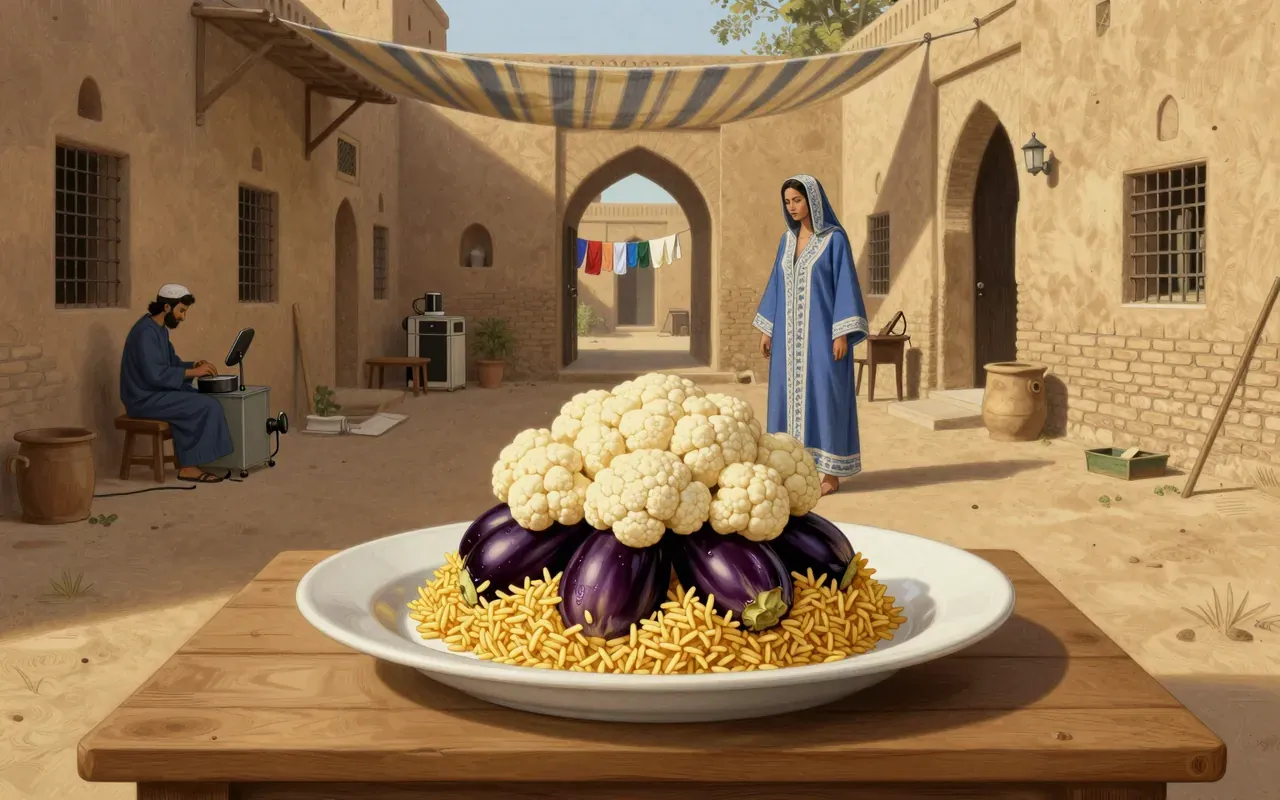
Maqluba is a Levantine layered pilaf. Fried cauliflower and eggplant sit beneath rice and chicken or lamb. Cooked sealed in a pot, then inverted for service. Its name means 'upside-down'. It appears in a 13th-century Abbasid cookbook. It is served across Palestine, Jordan, Syria, Lebanon, Israel, and Iraq.

Chapters & takeaways4
  1. 0:43
    Where it belongs

    Maqluba is Levantine — not Palestinian-only, not Arab-wide — and spans at least six modern countries.

  2. 1:43
    How old it is

    It appears in a 13th-century Abbasid cookbook, making it one of the oldest documented layered rice dishes.

  3. 3:15
    What’s inside

    Cauliflower and eggplant are the most common fried vegetables; chicken or lamb anchors the layers.

  4. 4:31
    Why it flips

    Layering isn’t decorative — it’s structural. Inversion only works if ingredients hold shape and density during cooking.

Worth your time?

Yes. Cook the whole thing.

4/ 5
What works
  • interplay of textures: crisp-edged vegetables softened by steam, rice grains distinct but cohesive, meat tender from slow contact with rice steam
What does not
  • standardise meat or vegetable choice
  • require broth, tomato paste, or specific spices
Cook it if
  • cooks who value deliberate assembly and visual payoff
  • those avoiding frying or multi-pot workflows
Skip it if
  • those avoiding frying or multi-pot workflows
The written brief1 min read

What the dish is and where it came from

Maqluba is a traditional Levantine pilaf dish from Palestine, Jordan, Syria, Lebanon, Israel, and Iraq. It dates to the 13th century and is defined by layered fried vegetables, rice, and meat, served upside-down.

How it works, in terms someone would actually use

Layers of fried cauliflower and eggplant sit beneath rice and chicken or lamb. The pot is sealed and cooked until the rice absorbs all liquid. It is inverted onto a platter so the bottom layer becomes the top.

What it gets right

It gets right the interplay of textures: crisp-edged vegetables softened by steam, rice grains distinct but cohesive, meat tender from slow contact with rice steam.

What it does not

It does not standardise meat or vegetable choice. It does not require broth, tomato paste, or spices beyond what the cook adds.

What it changed

It changed how layered pilafs are served — by inversion rather than slicing or scooping — making structure part of the presentation.

Who it is for, and who it is not

It is for cooks who value deliberate assembly and visual payoff. It is not for those avoiding frying or multi-pot workflows.

Is it worth your time

Yes, if you want a layered rice dish that rewards attention to frying temperature and layering order. No, if you need speed or minimal equipment.

Same course · Dishes4 of 485
Up next in Food

Masala dosa

· 10:16

Masala dosa is a 1930s Madras invention—not ancient tradition, but brilliant modern street food.

10:16