What the thing is
Vermouth is an Italian aromatized, fortified wine. It is flavoured with botanicals. It is produced mainly in Italy, France and Spain.
Where it came from
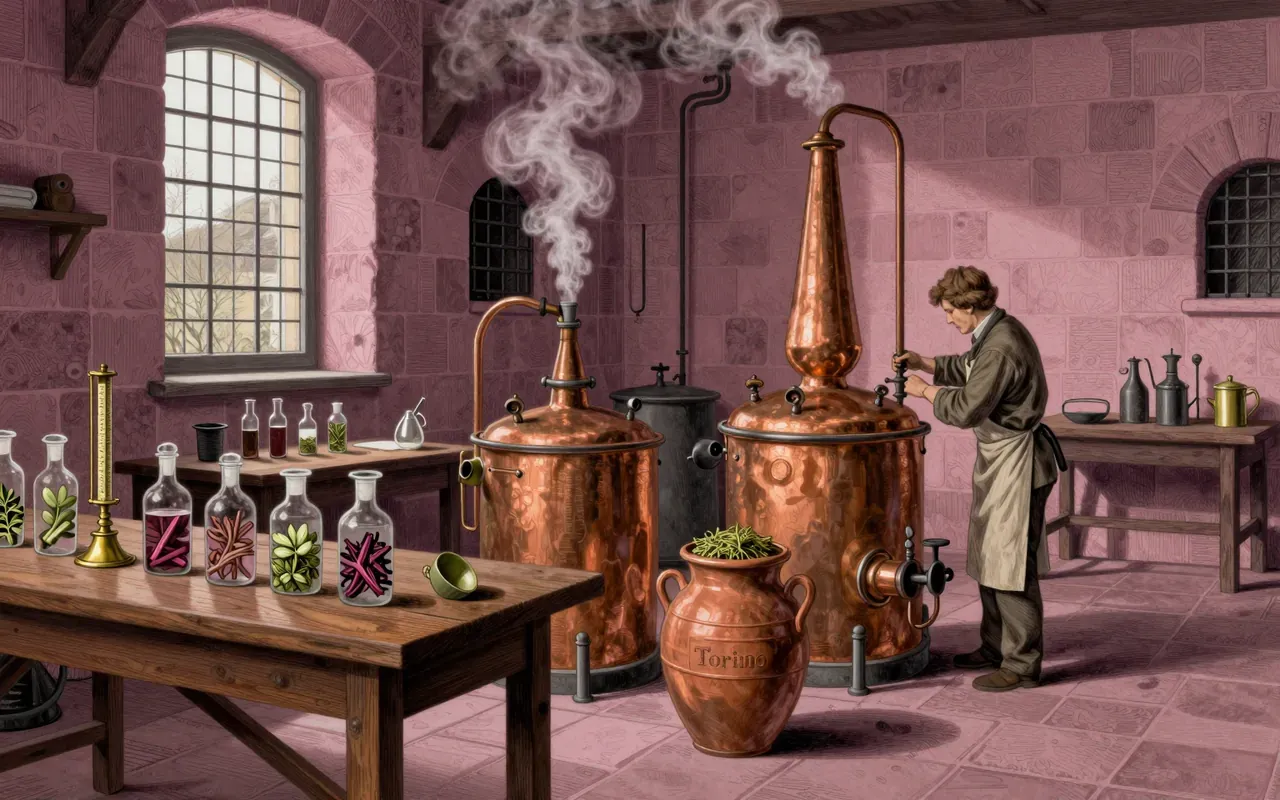
Modern vermouth began in Turin in the mid- to late 18th century. Antonio Benedetto Carpano introduced the first sweet version there in 1786. The first pale, dry vermouth followed in France between 1800 and 1813.
What it gets right
It honours botanical complexity without masking wine’s structure. It bridges apéritif ritual and mixology function. It rewards attention to regional difference: sweet from Turin, dry from France.
What it gets wrong
It conflates ancient herbal wines with vermouth. Fortified herb-infused wine in Shang-dynasty China was not vermouth. Vermouth is defined by 18th-century Italian production logic—not precedent.
Why it matters now
It anchors the cocktail revival not as nostalgia but as a return to intentionality: a drink built on balance, botanical transparency, and regional identity—countering industrial spirit shortcuts.
Is it worth your time
Yes—if you care about how a medicinal wine became a cocktail cornerstone, and why its Italian origin story matters more than its French reinterpretation.