What the thing is
Wine is an alcoholic beverage made from fermented grape juice.
Where it came from
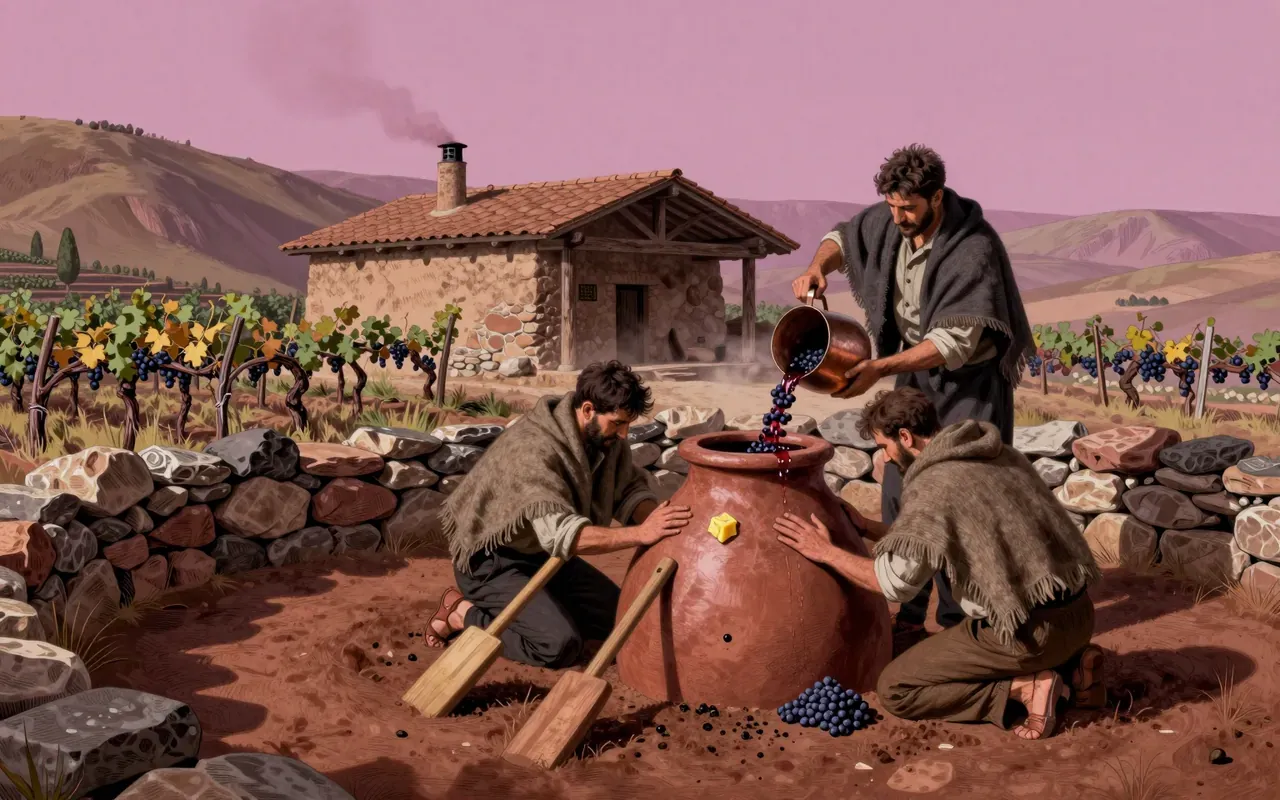
Wine production began around 6000 BCE near Tbilisi in present-day Georgia; the earliest known winery dates to c. 4100 BCE at Areni-1 in Armenia.
The origins predate written records, and the details of the first cultivation of wild grapevines are uncertain. The spread of wine culture around the Mediterranean was probably due to the Phoenicians (from c. 1000 BCE) and the Greeks (from c. 600 BCE). The Romans then increased the scale of production and trade networks, especially in Gaul around the time of the Gallic Wars. In medieval Europe, monks grew grapes and made wine for the Eucharist, and their monasteries established vineyards in many of today’s most successful wine regions. Bordeaux was a notable exception: between the 12th and 15th centuries it was a purely commercial enterprise serving the Duchy of Aquitaine and, by association, Britain.
What it gets right
It establishes continuity. From Georgia to Armenia to the Mediterranean, wine links ritual, agriculture, and empire through material evidence.
Colonists carried European wine grape traditions to the New World, planting vineyards in order to celebrate the Eucharist. Vineyards were established in Mexico by 1530 and in Peru by the 1550s.
What it gets wrong
It implies universality. The document says nothing about wine outside Eurasia before modernity—no claims about Africa, the Americas, or East Asia are supported.
Why it matters now
Because its history exposes how deeply infrastructure—vineyards, trade routes, appellation systems—embeds power, resilience, and cultural memory in everyday consumption.
The Great French Wine Blight began in the latter half of the 19th century. It was caused by phylloxera, an aphid brought over from America whose louse stage feeds on vine roots and eventually kills the plant. Almost every vine in Europe had to be replaced, and by necessity the new vines were grafted onto American rootstock, which is naturally resistant to the pest. The practice continues today, except in a small number of phylloxera-free regions such as South Australia.
In the twentieth century the Institut national de l’origine et de la qualité was established in 1947 to oversee France’s appellation laws, the first to set comprehensive restrictions on grape varieties, maximum yields, alcoholic strength and vinification techniques. After the Second World War all major producing countries adopted appellation laws, which increased consumer confidence, and winemakers focused on quality and marketing as consumers became more discerning and wealthy.
Is it worth your time
Yes—if you care about how a single fermented drink shaped religion, trade, and survival across six millennia.