foodbriefs
11:15in productionCh. 1 · Where it really began/ 11:15 · ceiling 15 min
Dishes · Food history

Beef Wellington

A patriotic pastry shell built around French technique — and no proof Wellington ever ate it.

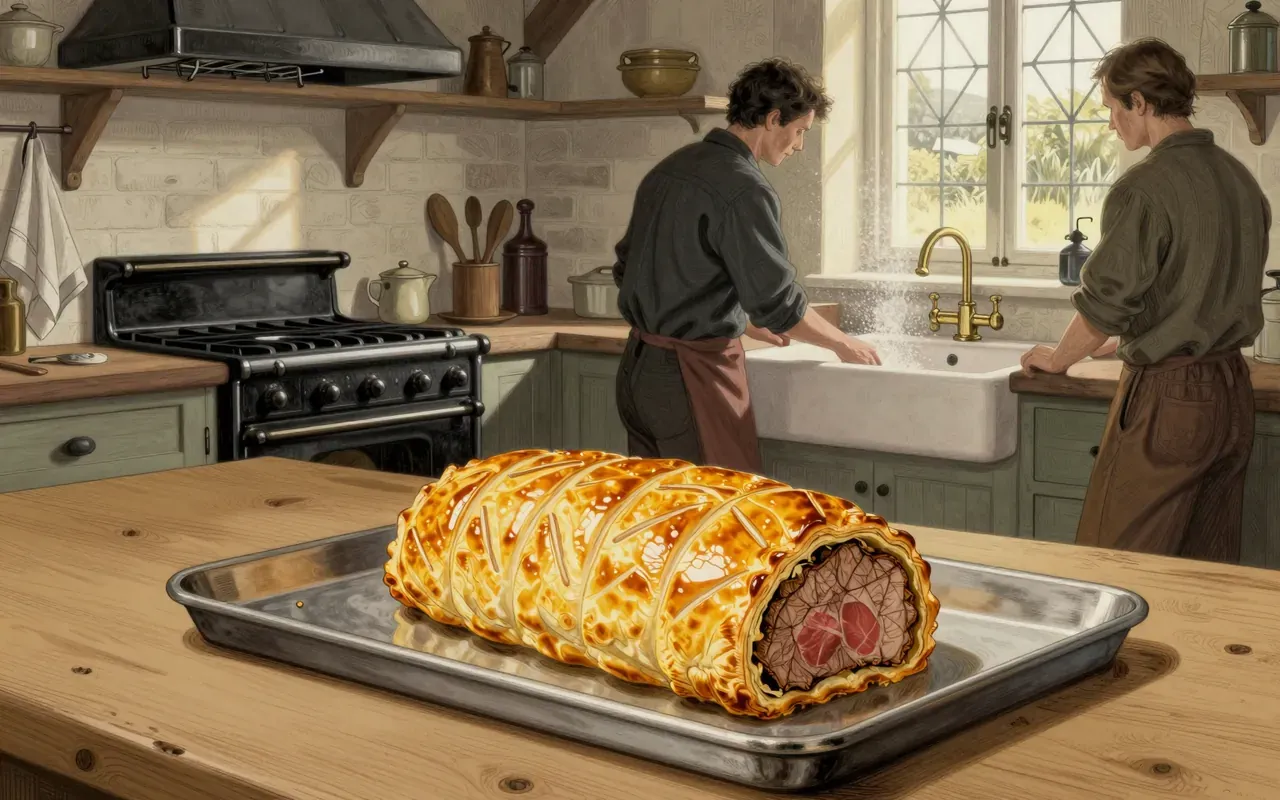
Beef Wellington is a baked dish of beef fillet and duxelles wrapped in puff pastry. It appeared in an 1891 Austrian cookbook as Filet à la Wellington, in an 1899 Hamburg-America line menu, and in the US in 1899. Its name is presumed to reference Arthur Wellesley, 1st Duke of Wellington, but the connection is unknown.

Chapters & takeaways4
  1. 1:10
    Where it really began

    The dish predates its British name by eight years — and appears first in Austria, not England.

  2. 3:03
    How the wrap works

    Pastry is the frame, not the star — its job is to hold steam, not dominate flavour.

  3. 5:00
    Why it got its name

    Naming it after Wellington was likely marketing, not memory — a wartime-era rebrand of a continental classic.

  4. 6:50
    What counts as 'Wellington'

    Duxelles isn’t mandatory — classical versions use pâté or skip mushrooms entirely.

Worth your time?

Yes. Cook the whole thing.

3.5/ 5
What works
  • unifies tender beef, savoury duxelles and flaky pastry in one slice
  • uses pastry as both barrier and vessel, sealing steam while insulating the meat from direct oven heat
What does not
  • guarantee crisp pastry
  • require duxelles, prosciutto or mustard
  • originate in Britain
  • depend on the Duke of Wellington
Cook it if
  • cooks who want a structured, visually dramatic roast
  • cooks who can manage pastry integrity under heat
Skip it if
  • cooks who lack oven control
  • cooks who lack time for precise chilling
  • cooks who cannot tolerate soggy bottoms
The written brief1 min read

What the dish is and where it came from

Beef Wellington is a baked dish of beef fillet and duxelles wrapped in puff pastry. It appeared in an 1891 Austrian cookbook as Filet à la Wellington, in an 1899 Hamburg-America line menu, and in the US in 1899. Its name is presumed to reference Arthur Wellesley, 1st Duke of Wellington, but the connection is unknown.

How it works, in terms someone would actually use

It wraps beef fillet and duxelles in puff pastry and bakes them together. Prosciutto may line the pastry to seal moisture. Mustard may coat the beef. Shortcrust, pâté or crêpes may substitute for puff, duxelles or prosciutto. The fillet may be baked whole then sliced, or portioned before wrapping.

What it gets right

It unifies three textures — tender beef, savoury duxelles, flaky pastry — in a single cut. It uses pastry as both barrier and vessel, sealing steam while insulating the meat from direct oven heat.

What it does not

It does not guarantee crisp pastry. It does not require duxelles, prosciutto or mustard. It does not originate in Britain. It does not depend on the Duke of Wellington.

What it changed

It rebranded filet de bœuf en croûte as a British dish during a period of Anglo-French cultural rivalry, aligning it with Wellington’s military fame without documentary proof of his connection to it.

Who it is for, and who it is not

It is for cooks who want a structured, visually dramatic roast and can manage pastry integrity under heat. It is not for cooks who lack oven control, time for precise chilling, or tolerance for soggy bottoms.

Is it worth your time

It is worth your time only if you need a showpiece dish that delivers crisp pastry and tender beef in one slice — provided you control moisture and heat precisely.


Same course · Dishes4 of 485
Up next in Food

Bifana

· 8:47

A sandwich that proves simplicity works — when you don’t need subtlety, just pork, garlic, wine and heat.

8:47