Deep-dish pizza was invented at Pizzeria Uno in Chicago in 1943 by Ike Sewell and Richard Riccardo.
0:07
How it works, in terms someone would actually use
The thick crust rises up the sides of a pan.
0:19
What it gets right
It delivers substantial cheese and a tall, structured crust.
0:28
What it does not
The sauce sits atop the cheese instead of beneath it, which differs from many other pizza styles.
0:35
What it changed
In the 1960s and ’70s, the dough ball grew larger to cover full pan sides, and fat content increased.
0:46
Who it is for, and who it is not
It is for people who prefer a hearty, layered, pan-baked meal with cheese and tomato sauce as distinct components.
0:59
Is it worth your time
It is worth your time if you want a substantial, Chicago-originated pizza with a tall crust and sauce layered on top of cheese.
Worth your time?
Selectively. Start with the brief, then cook the parts we point at.
What works
It delivers substantial cheese and a tall, structured crust. The chunky tomato sauce on top provides a bright contrast to rich fillings.
What does not
The sauce sits atop the cheese instead of beneath it, which differs from many other pizza styles.
Cook it if
Skip it if
The written brief1 min read
What the dish is and where it came from
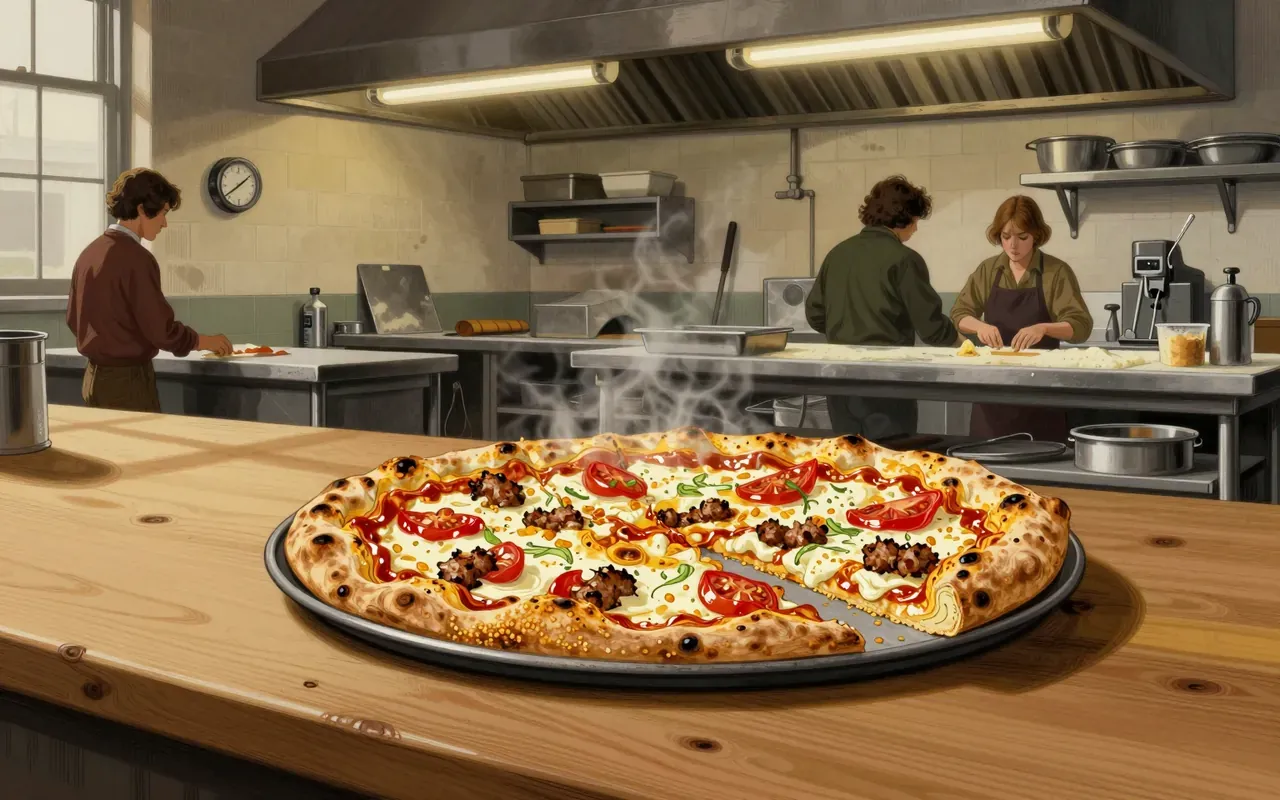
Deep-dish pizza was invented at Pizzeria Uno in Chicago in 1943 by Ike Sewell and Richard Riccardo.
How it works, in terms someone would actually use
The thick crust rises up the sides of a pan. Toppings—meats, vegetables, and mozzarella—are layered inside, then covered with crushed tomatoes before baking. The crust may be parbaked first for spring.
What it gets right
It delivers substantial cheese and a tall, structured crust. The chunky tomato sauce on top provides a bright contrast to rich fillings.
What it does not
The sauce sits atop the cheese instead of beneath it, which differs from many other pizza styles.
What it changed
In the 1960s and ’70s, the dough ball grew larger to cover full pan sides, and fat content increased. At Gino’s East, a biscuit-like, fattier dough emerged.
Who it is for, and who it is not
It is for people who prefer a hearty, layered, pan-baked meal with cheese and tomato sauce as distinct components. It is less suited for those seeking a thin, crisp, or sauce-first pizza experience.
Is it worth your time
It is worth your time if you want a substantial, Chicago-originated pizza with a tall crust and sauce layered on top of cheese.