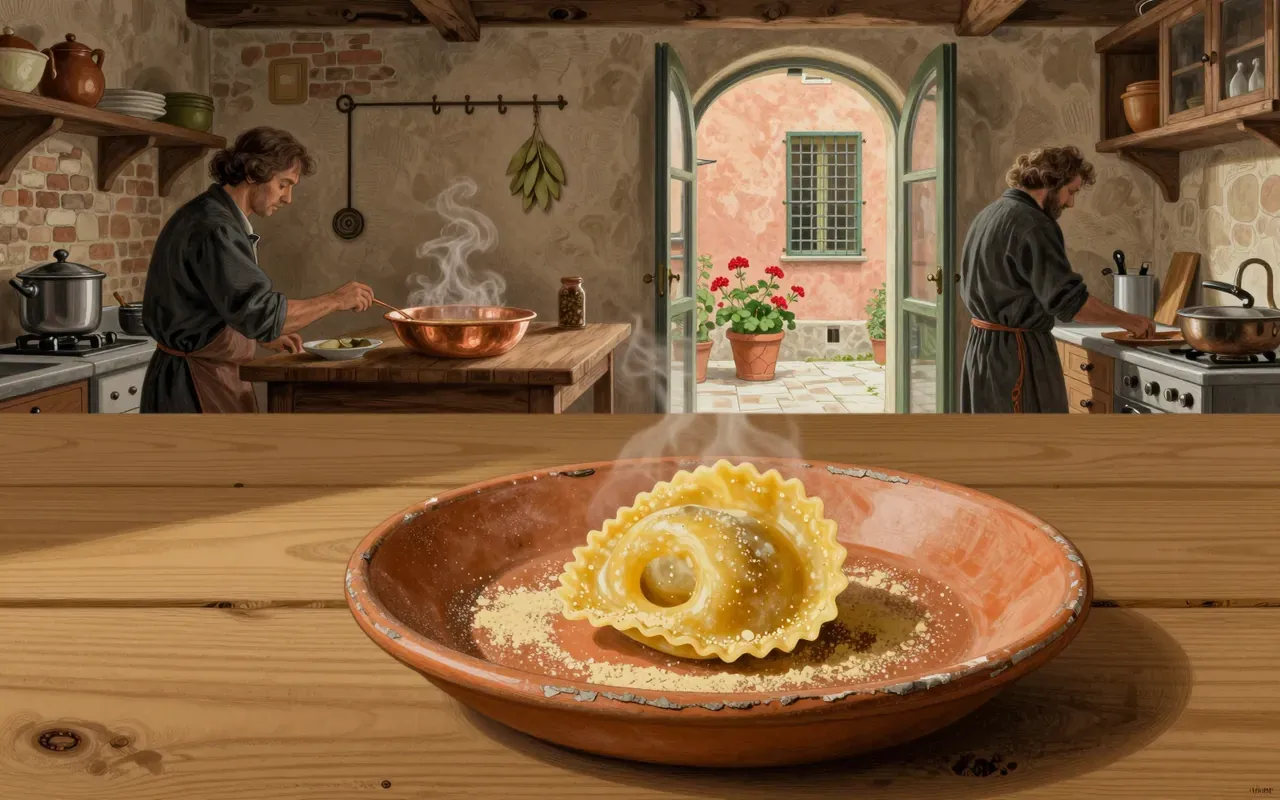
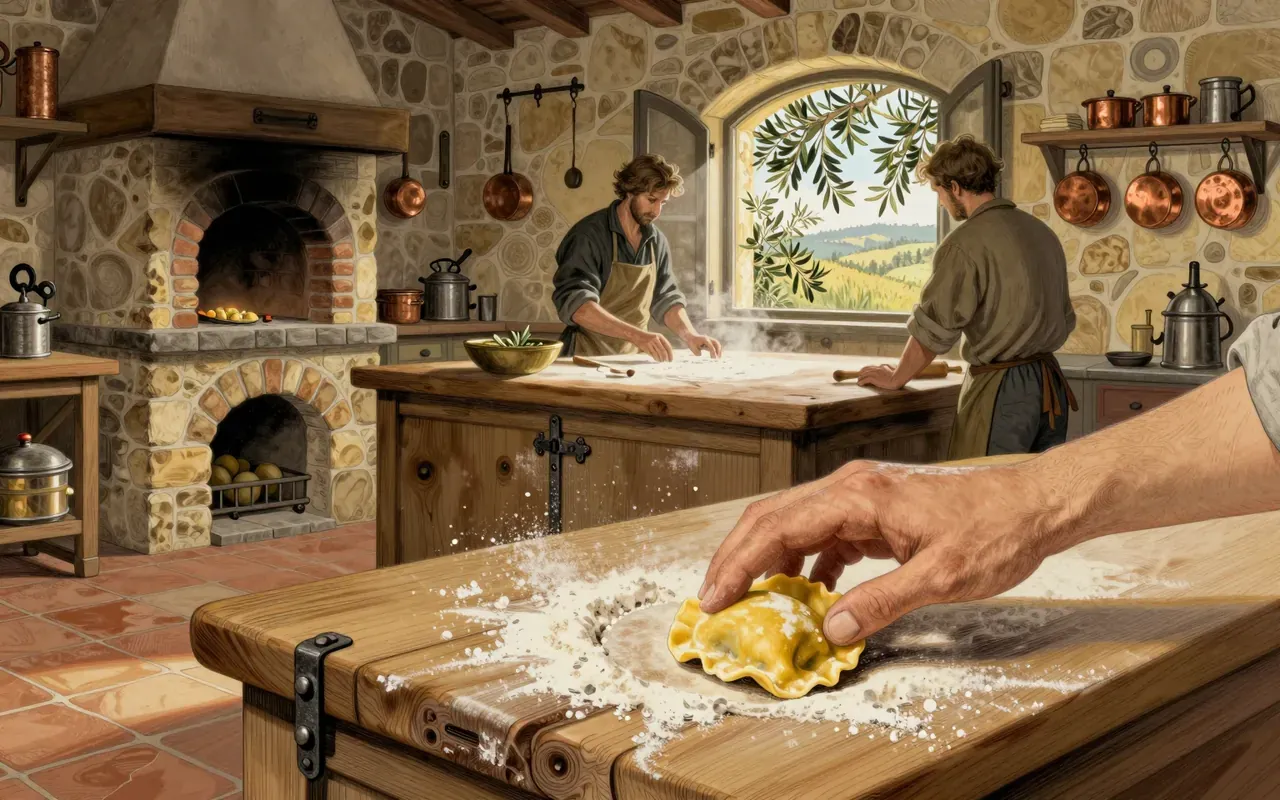
Tortellini is a type of stuffed pasta typical of Bologna and Modena in Italy’s Emilia-Romagna region.
0:06
How it works, in terms someone would actually use
It is traditionally stuffed with pork loin, prosciutto, mortadella, Parmesan cheese, egg, and nutmeg, and served in capon broth.
0:14
What it gets right
Its appeal lies in the savory combination of cured meats, aged cheese, and warm broth—a rich, cohesive format for those ingredients.
0:22
What it does not
It is not vegetarian: the traditional filling contains multiple meats.
0:31
What it changed
The dish evolved from 'tortelletti' (first recorded in 1570) to 'tortellini' by the mid-17th century; a larger variant, tortelloni, emerged with distinct fillings and serving methods.
0:41
Who it is for, and who it is not
It is for people who enjoy meat-based pasta in broth.
0:50
Is it worth your time
It is worth your time if you seek a traditional Italian pasta with a specific regional profile and meat-and-cheese filling served in broth.
Worth your time?
Selectively. Start with the brief, then cook the parts we point at.
What works
Its appeal lies in the savory combination of cured meats, aged cheese, and warm broth—a rich, cohesive format for those ingredients.
What does not
It is not vegetarian: the traditional filling contains multiple meats. It also differs from tortelloni, which uses ricotta and is served dry.
Cook it if
Skip it if
The written brief1 min read
What the dish is and where it came from
Tortellini is a type of stuffed pasta typical of Bologna and Modena in Italy’s Emilia-Romagna region.
How it works, in terms someone would actually use
It is traditionally stuffed with pork loin, prosciutto, mortadella, Parmesan cheese, egg, and nutmeg, and served in capon broth.
What it gets right
Its appeal lies in the savory combination of cured meats, aged cheese, and warm broth—a rich, cohesive format for those ingredients.
What it does not
It is not vegetarian: the traditional filling contains multiple meats. It also differs from tortelloni, which uses ricotta and is served dry.
What it changed
The dish evolved from ‘tortelletti’ (first recorded in 1570) to ‘tortellini’ by the mid-17th century; a larger variant, tortelloni, emerged with distinct fillings and serving methods.
Who it is for, and who it is not
It is for people who enjoy meat-based pasta in broth. It is not for vegetarians or those avoiding pork or cured meats.
Is it worth your time
It is worth your time if you seek a traditional Italian pasta with a specific regional profile and meat-and-cheese filling served in broth.